Introduction: The Versatile Applications of Vacuum Tube Solar Water Heaters
Solar energy represents one of the most abundant and inexhaustible energy sources available today, and its applications continue to expand across residential, commercial, and industrial sectors. Vacuum tube solar water heaters have emerged as one of the most efficient technologies for harnessing this renewable energy, converting sunlight into usable hot water for countless applications.
Unlike traditional water heating methods that rely on fossil fuels or electricity, vacuum tube solar water heaters operate automatically and silently, providing hot water without noise, pollution, emissions, or ongoing fuel costs. This technology offers remarkable versatility, serving needs ranging from basic household hot water to sophisticated industrial process heating.

Modern vacuum tube solar water heater installation
Why Vacuum Tube Technology Matters:
This advanced solar thermal technology delivers superior performance across diverse climates and applications, making it the preferred choice for those seeking reliable, efficient, and environmentally responsible hot water solutions.
Shandong Soletks Solar Technology Co., Ltd., as a leading manufacturer of solar thermal solutions, has witnessed the transformative impact of vacuum tube technology across diverse applications. This comprehensive guide explores the many uses of vacuum tube solar water heaters and explains why this technology has become increasingly important in our transition toward sustainable energy systems.
Understanding Vacuum Tube Solar Water Heater Technology
Definition and Basic Concept
A vacuum tube solar water heater is a sophisticated heating device that converts solar radiation into thermal energy, heating water from ambient temperature to usable hot water temperatures to meet various domestic, commercial, and industrial needs.
Core Components
| Component |
Function |
Key Features |
| Vacuum Tube Collectors |
Capture and convert solar energy to heat |
High efficiency, excellent insulation |
| Storage Tank |
Stores heated water with minimal heat loss |
Insulated, various capacities available |
| Support Frame |
Positions collectors at optimal angle |
Adjustable, weather-resistant |
| Circulation System |
Moves water between collectors and storage |
Passive or active operation |
| Control System |
Monitors and optimizes performance |
Temperature sensors, automation |
Types of Vacuum Tube Solar Water Heaters
Vacuum tube solar water heaters can be subdivided into three main categories, each with specific advantages for different applications:
1. All-Glass Vacuum Tube
The most common and cost-effective design, featuring direct water flow through evacuated glass tubes. Excellent efficiency in moderate climates with lower initial investment. Ideal for residential applications.
2. Heat Pipe Vacuum Tube
Advanced technology with sealed heat pipes for superior performance. Dry connection prevents freezing damage, allows individual tube replacement. Optimal for freeze-prone climates.
3. U-Tube Vacuum Tube
Specialized design with U-shaped copper pipes inside evacuated tubes. Indirect heat transfer through heat exchanger. Suitable for pressurized systems and commercial installations.
Explore our all-glass evacuated tube collectors, heat pipe solar collectors, and U-type tube solar collectors for your specific needs.
Working Principle: How Vacuum Tube Solar Water Heaters Operate
Understanding the operating principle helps appreciate the versatility and efficiency of this technology.
The Solar Collection Process
- Solar Absorption: The vacuum tube’s inner surface features a selective coating that efficiently absorbs solar radiation across a broad spectrum
- Energy Conversion: The absorbed solar energy converts to thermal energy, heating the absorber surface to temperatures exceeding 200°C under optimal conditions
- Heat Transfer: Thermal energy transfers to water or heat transfer fluid within the tube through conduction
- Natural Convection: Hot water, being less dense than cold water, naturally rises within the tube while cooler water descends, creating a thermosiphon effect
- Heat Storage: Heated water accumulates in the insulated storage tank, maintaining temperature for extended periods
- Continuous Circulation: This natural convection cycle continues throughout daylight hours, progressively heating the entire water volume
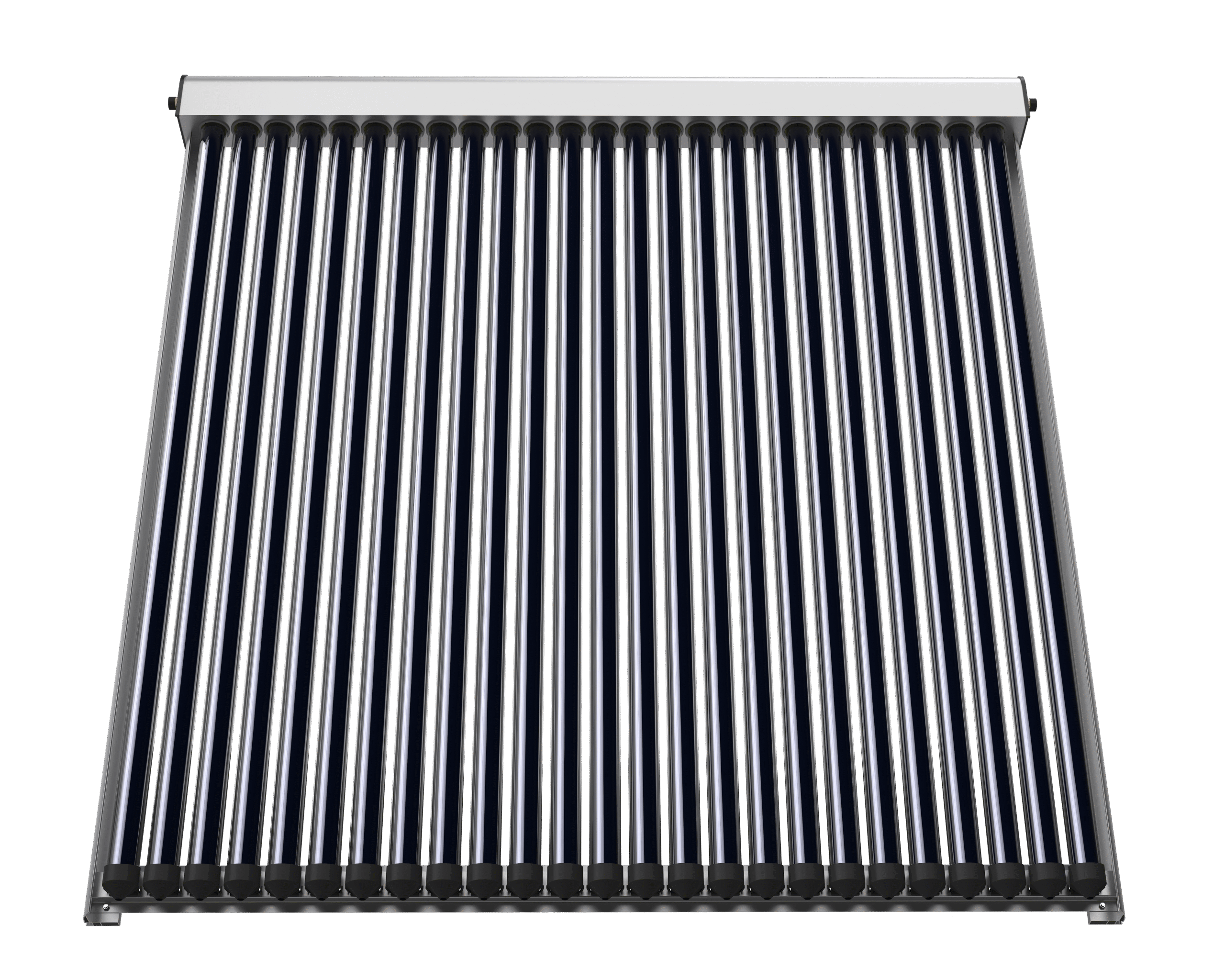
How vacuum tube collectors capture and convert solar energy
The Vacuum Insulation Advantage
The vacuum between the inner and outer glass tubes provides exceptional insulation by eliminating conductive and convective heat loss. This allows vacuum tube collectors to:
- Maintain high efficiency even in cold ambient temperatures
- Operate effectively in cloudy or overcast conditions
- Capture diffuse solar radiation, not just direct sunlight
- Achieve higher water temperatures than flat plate collectors
- Minimize heat loss during non-collection periods
System Configuration
The support frame positions the collector array at an optimal angle to maximize solar gain throughout the year. The angle typically equals the site’s latitude, though adjustments can optimize for seasonal variations:
- Winter optimization: Latitude + 10-15° captures low-angle winter sun
- Summer optimization: Latitude – 10-15° accommodates high-angle summer sun
- Year-round balance: Latitude angle provides optimal annual performance
Primary Applications: Residential Hot Water Uses
1. Bathing and Personal Hygiene
The most common application for vacuum tube solar water heaters is providing hot water for bathing and personal hygiene needs.
Residential Bathing Applications
| Application |
Daily Hot Water Requirement |
Typical Temperature |
System Size |
| Shower (per person) |
40-60 liters |
38-42°C |
1.5-2 m² collector per person |
| Bath (per use) |
80-120 liters |
38-42°C |
3-4 m² collector |
| Hand washing |
5-10 liters |
35-40°C |
Minimal additional capacity |
| Face washing |
3-5 liters |
30-35°C |
Minimal additional capacity |
Benefits for Bathing
- Consistent Temperature: Thermostatic mixing valves deliver safe, comfortable water temperature
- Ample Supply: Properly sized systems provide sufficient hot water for entire household
- Cost Savings: Eliminate or dramatically reduce water heating energy costs
- Comfort: Enjoy hot showers even in winter without guilt about energy consumption
- Reliability: Insulated storage ensures hot water availability morning and evening
Family Sizing Considerations
1-2
People
100-150L tank
2-3 m² collector
3-4
People
200-300L tank
4-5 m² collector
5-6
People
300-400L tank
5-6 m² collector
7+
People
400-500L tank
6-8 m² collector
Our residential solar water heaters are specifically designed to meet family bathing needs with reliable, efficient performance.
2. Kitchen Applications: Dishwashing and Food Preparation
Hot water in the kitchen improves hygiene, cleaning effectiveness, and convenience.
Kitchen Hot Water Uses
Dishwashing
Removes grease and food residue more effectively, sanitizes dishes, reduces harsh chemical detergents, speeds cleaning process, provides comfort during winter.
Food Preparation
Blanching vegetables, preparing hot beverages, thawing frozen foods safely, cleaning produce, sterilizing jars for preserving.
Daily Kitchen Hot Water Demand
| Household Size |
Daily Kitchen Hot Water |
Temperature Required |
| 1-2 people |
20-30 liters |
45-55°C |
| 3-4 people |
35-50 liters |
45-55°C |
| 5-6 people |
50-70 liters |
45-55°C |
Energy Savings: Kitchen hot water typically represents 15-20% of total household hot water consumption. Solar water heating this portion saves:
- Annual energy: 500-800 kWh electricity or 50-80 therms natural gas
- Annual cost savings: $50-120 depending on energy prices
- Lifetime savings: $1,250-3,000 over 25-year system life
3. Laundry Applications
Hot water significantly improves laundry cleaning effectiveness while reducing detergent requirements.
Laundry Benefits
- Enhanced Cleaning: Dissolves detergents more effectively, removes oils and stubborn stains
- Sanitization: Kills bacteria and dust mites in bedding, sanitizes heavily soiled items
- Fabric Care: Warm water preserves colors and fabric integrity, reduces static and wrinkles
- Chemical Reduction: Reduces need for pre-treatment and harsh chemicals
Typical Laundry Hot Water Requirements
| Load Type |
Water Volume |
Recommended Temperature |
Hot Water Needed |
| Cold wash |
60-80 liters |
15-20°C |
0 liters |
| Warm wash |
60-80 liters |
30-40°C |
30-40 liters |
| Hot wash |
60-80 liters |
50-60°C |
60-80 liters |
Cost-Benefit Analysis
Using solar-heated water for laundry:
- Reduces annual water heating energy by 800-1,500 kWh
- Saves $80-180 annually in energy costs
- Reduces detergent consumption by 10-15%
- Extends washing machine life by reducing mineral buildup
4. General Household Cleaning
Hot water improves effectiveness and efficiency for various household cleaning tasks.
Cleaning Applications
- Floor cleaning: Hot water cuts through grease and grime more effectively
- Surface sanitization: High-temperature water kills bacteria and viruses
- Window washing: Warm water prevents streaking and improves clarity
- Bathroom cleaning: Hot water dissolves soap scum and mineral deposits
- Pet washing: Warm water provides comfort while removing dirt and odors
Seasonal Comfort Benefits
During cold winter months, solar hot water provides significant comfort advantages—warm water for hand washing prevents chapped skin, hot water for cleaning eliminates discomfort, and pleasant laundry experience even in unheated utility rooms.
Advanced Residential Applications
5. Space Heating Support
Vacuum tube solar water heaters can contribute to residential space heating through various systems.
Radiant Floor Heating
Solar-heated water circulates through tubing embedded in floor structures. Optimal temperature 35-45°C. Provides even, gentle heat distribution with 40-60% reduction in space heating costs.
Radiator Heating
Traditional radiator systems utilize solar-heated water at 50-70°C. Most effective in spring and fall shoulder seasons. Conventional boiler supplements during peak winter demand.
Hydronic Baseboard
Solar water heaters preheat water for baseboard heating systems. Reduces boiler fuel consumption by 30-50%. Cost-effective without complete system redesign.
Space Heating Sizing
| Home Size |
Heating Load |
Collector Area |
Storage Volume |
| 100 m² |
8-12 kW |
15-20 m² |
500-750 liters |
| 150 m² |
12-18 kW |
20-30 m² |
750-1,000 liters |
| 200 m² |
16-24 kW |
30-40 m² |
1,000-1,500 liters |
For combined domestic hot water and space heating applications, our solar hot water systems can be configured with appropriate capacity and controls.
6. Swimming Pool and Spa Heating
Vacuum tube solar collectors excel at heating swimming pools and spas due to their high efficiency and ability to achieve elevated temperatures.
Pool Heating Advantages
- Extended season: Adds 2-4 months to swimming season in temperate climates
- Comfortable temperature: Maintains 26-28°C pool temperature
- Low operating cost: Minimal pumping energy, no fuel consumption
- Environmental benefit: Eliminates gas heater emissions
- Return on investment: 3-5 year payback typical for pool heating systems
System Sizing for Pools
| Pool Size |
Collector Area (Uncovered Pool) |
Collector Area (Covered Pool) |
| 20 m² |
12-16 m² |
8-12 m² |
| 40 m² |
24-32 m² |
16-24 m² |
| 60 m² |
36-48 m² |
24-36 m² |
Spa and Hot Tub Heating
Vacuum tube collectors are ideal for maintaining spa temperatures:
- High temperature capability: Easily maintains 38-40°C spa temperature
- Rapid heating: Efficient energy collection heats spa quickly
- Year-round operation: Effective even in cold weather
- Energy independence: Eliminates expensive electric spa heating
7. Domestic Water Preheating
Even in applications where solar cannot provide 100% of hot water needs, preheating delivers substantial benefits.
Preheating Concept
Solar collectors heat water to intermediate temperature (30-50°C), then conventional water heater raises temperature to final setpoint (55-60°C).
Preheating Benefits
| Conventional Heater Type |
Energy Reduction |
Annual Savings |
Payback Period |
| Electric resistance |
50-70% |
$300-500 |
4-7 years |
| Natural gas |
40-60% |
$150-300 |
6-10 years |
| Heat pump |
30-50% |
$100-200 |
8-12 years |
| Oil |
50-70% |
$400-600 |
4-6 years |
System Configuration
Two-tank configuration provides optimal preheating:
- Solar storage tank: Receives solar-heated water, no auxiliary heating
- Conventional water heater: Receives preheated water from solar tank, boosts to final temperature
- Thermostatic control: Only activates conventional heater when solar preheat insufficient
- Backup assurance: Guarantees hot water availability regardless of weather
Retrofit Applications
Preheating systems easily retrofit to existing water heaters with minimal plumbing modifications, preserving investment in conventional equipment while gradually transitioning to solar energy.
Commercial Applications
8. Hotels and Hospitality Industry
Hotels represent ideal applications for vacuum tube solar water heaters due to consistent, high-volume hot water demand.
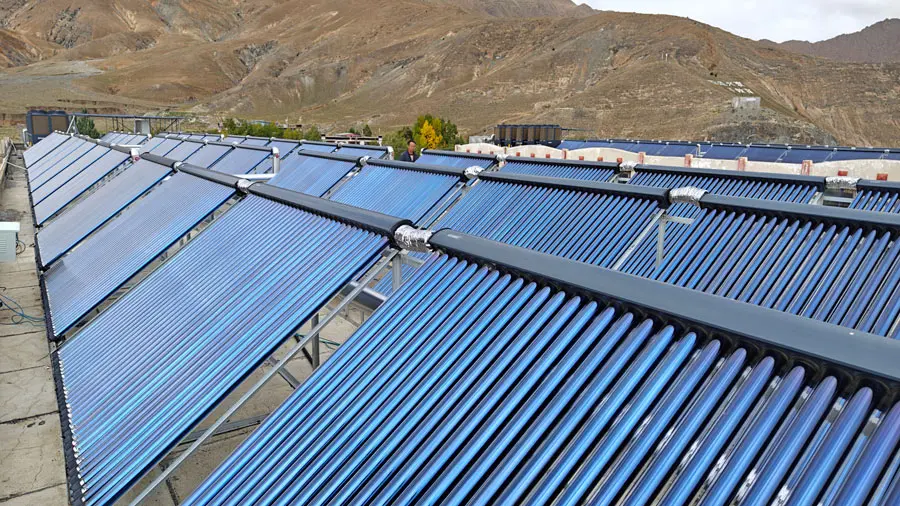
Large-scale commercial solar water heating system
Hotel Hot Water Requirements
| Hotel Type |
Hot Water per Room per Day |
Peak Demand Period |
| Budget hotel |
80-120 liters |
6-9 AM, 6-10 PM |
| Mid-range hotel |
120-180 liters |
6-10 AM, 5-11 PM |
| Luxury hotel |
180-250 liters |
Throughout day |
| Resort with spa |
200-300 liters |
Throughout day |
Commercial Benefits for Hotels
Economic Advantages
50-70% reduction in water heating costs, 3-5 years typical payback, lower utility bills improve profitability, protection from fuel price volatility, increased property value.
Marketing Benefits
Appeal to environmentally conscious travelers, contribute to LEED and Green Key certifications, competitive differentiation, meet corporate sustainability requirements, positive publicity.
Guest Experience
Reliable hot water ensures guest satisfaction, consistent temperature delivery, guests appreciate supporting sustainable practices, enhanced reputation.
Example: 50-Room Hotel Installation
Our solar hot water systems for hotels are specifically designed for the demanding requirements of hospitality applications.
9. Healthcare Facilities
Hospitals, clinics, and care facilities require large volumes of hot water for patient care, sanitation, and sterilization.
Healthcare Hot Water Applications
- Patient bathing and hygiene: Comfort and dignity for patients
- Surgical scrubbing: Sterile preparation for medical procedures
- Instrument cleaning: Initial cleaning before sterilization
- Laundry services: Sanitizing linens, gowns, and towels
- Food service: Kitchen cleaning and sanitation
- Facility cleaning: Maintaining hygienic environment
Healthcare Facility Requirements
| Facility Type |
Daily Hot Water Demand |
Temperature Requirements |
| Small clinic (10-20 patients) |
500-1,000 liters |
55-60°C |
| Medical office building |
1,000-2,000 liters |
55-60°C |
| Nursing home (50 beds) |
3,000-5,000 liters |
55-60°C |
| Hospital (100 beds) |
8,000-12,000 liters |
60-65°C |
Special Considerations for Healthcare:
- Legionella prevention: Maintain storage temperature above 60°C or implement thermal disinfection cycles
- Backup reliability: Redundant heating ensures continuous hot water availability
- Regulatory compliance: Meet health department and accreditation standards
- Water quality: Appropriate materials for potable water and medical applications
10. Restaurants and Food Service
Commercial kitchens consume substantial hot water for cooking, cleaning, and sanitation.
Restaurant Hot Water Uses
- Dishwashing: Commercial dishwashers require 60-80°C water for sanitization
- Pot and pan washing: Hot water removes grease and baked-on food
- Floor cleaning: Daily cleaning of kitchen floors
- Equipment cleaning: Sanitizing food preparation surfaces and equipment
- Hand washing: Frequent hand washing for food safety
- Food preparation: Various cooking and preparation processes
Daily Hot Water Consumption
| Restaurant Size |
Meals Served Daily |
Hot Water Demand |
| Small café |
50-100 |
300-500 liters |
| Family restaurant |
100-200 |
500-1,000 liters |
| Large restaurant |
200-400 |
1,000-2,000 liters |
| Hotel restaurant |
300-600 |
1,500-3,000 liters |
Economic Benefits for Restaurants:
- High energy costs—restaurants typically pay premium commercial energy rates
- Consistent demand—daily operation provides excellent solar utilization
- Fast payback—3-5 years typical for restaurant installations
- Operating cost reduction—significant impact on thin profit margins
11. Fitness Centers and Athletic Facilities
Gyms, sports clubs, and athletic facilities require substantial hot water for showers and cleaning.
Facility Hot Water Requirements
| Facility Type |
Peak Users per Day |
Hot Water Demand |
| Small gym |
50-100 |
1,000-2,000 liters |
| Medium fitness center |
100-300 |
2,000-5,000 liters |
| Large athletic club |
300-600 |
5,000-10,000 liters |
| University recreation center |
500-1,000 |
8,000-15,000 liters |
Peak Demand Challenges
Fitness facilities experience concentrated demand periods:
- Morning peak: 6-9 AM before work
- Lunch peak: 12-2 PM midday workouts
- Evening peak: 5-8 PM after work
- Weekend patterns: More distributed throughout day
System Design Solutions
Addressing peak demand:
- Large storage capacity: Buffer tanks accommodate peak demand periods
- High collector area: Rapid heating replenishes storage between peaks
- Backup heating: Ensures adequate supply during extreme demand
- Staged heating: Multiple tanks at different temperatures optimize efficiency
12. Industrial Process Heating
Many industrial processes require hot water or low-
temperature heat that vacuum tube solar collectors can provide efficiently.
Industrial Applications
Food & Beverage Processing
Bottle washing, pasteurization, blanching, clean-in-place (CIP) systems, ingredient preparation—all benefit from solar thermal energy.
Textile Industry
Fabric dyeing, washing and rinsing processes, finishing treatments—solar heat reduces energy costs significantly.
Chemical Industry
Reactor heating, product washing, process water heating—low-temperature chemical reactions ideal for solar thermal.
Agricultural Applications
Greenhouse heating, dairy operations, aquaculture, crop drying—diverse agricultural processes benefit from solar heat.
Industrial System Sizing
| Process Heat Demand |
Collector Area |
Storage Capacity |
Typical Application |
| 50-100 kW |
80-150 m² |
3,000-5,000 liters |
Small processing facility |
| 100-250 kW |
150-400 m² |
5,000-10,000 liters |
Medium industrial process |
| 250-500 kW |
400-800 m² |
10,000-20,000 liters |
Large industrial application |
For large-scale commercial and industrial projects, our 25 Engineering Header Collectors provide the capacity and reliability required for demanding applications.
Agricultural Applications
13. Dairy Farm Operations
Dairy farms require substantial hot water for cleaning and sanitization to meet food safety standards.
Dairy Hot Water Uses
- Milking equipment cleaning: Daily cleaning of milking machines, pipelines, and bulk tanks
- Udder washing: Pre-milking hygiene
- Facility sanitization: Cleaning milking parlors and holding areas
- Calf feeding: Warming milk or milk replacer for young calves
- Equipment sterilization: Maintaining food safety standards
Daily Hot Water Requirements
| Dairy Size |
Cows Milked |
Daily Hot Water |
Temperature |
| Small dairy |
20-50 cows |
400-800 liters |
60-70°C |
| Medium dairy |
50-150 cows |
800-2,000 liters |
60-70°C |
| Large dairy |
150-500 cows |
2,000-6,000 liters |
60-70°C |
Economic Benefits for Dairy Farms:
- High energy costs—dairy operations have substantial water heating expenses
- Daily demand—consistent use provides excellent solar system utilization
- Regulatory compliance—hot water essential for food safety standards
- Operating cost reduction—significant savings on tight profit margins
- Environmental benefits—reduces farm carbon footprint
14. Greenhouse Operations
Greenhouses benefit from solar water heating for both irrigation water warming and space heating.
Greenhouse Applications
Irrigation Water Heating
Warm irrigation water promotes plant growth, prevents cold water shock to root systems, extends growing season, improves nutrient uptake efficiency.
Greenhouse Space Heating
Radiant floor heating maintains optimal soil temperature, hot water radiators heat air, thermal mass storage buffers temperature swings, reduces fuel consumption by 40-60%.
System Sizing for Greenhouses
| Greenhouse Size |
Heating Load |
Collector Area |
Storage Volume |
| 100 m² |
10-15 kW |
15-25 m² |
1,000-1,500 liters |
| 500 m² |
50-75 kW |
75-125 m² |
4,000-6,000 liters |
| 1,000 m² |
100-150 kW |
150-250 m² |
8,000-12,000 liters |
15. Aquaculture and Fish Farming
Maintaining optimal water temperature is critical for aquaculture operations, making solar water heating highly valuable.
Aquaculture Applications
- Hatchery operations: Precise temperature control for egg incubation
- Grow-out tanks: Maintaining optimal growth temperatures
- Recirculating systems: Heating water in closed-loop aquaculture
- Seasonal extension: Extending production season in temperate climates
- Species diversification: Enabling warm-water species in cooler climates
Temperature Requirements by Species
| Species |
Optimal Temperature Range |
Solar Heating Suitability |
| Trout |
10-16°C |
Moderate (cooling may be needed) |
| Tilapia |
25-30°C |
Excellent |
| Catfish |
24-28°C |
Excellent |
| Shrimp |
26-32°C |
Excellent |
| Ornamental fish |
22-28°C |
Excellent |
Environmental and Safety Benefits
Automatic, Silent, and Safe Operation
Vacuum tube solar water heaters offer numerous operational advantages over conventional water heating systems.
Operational Benefits
Fully Automatic
No manual intervention required for daily operation. Intelligent controls optimize performance automatically. Self-regulating temperature management. Hands-off operation provides convenience and reliability.
Silent Operation
No combustion noise from burners. Quiet circulation pumps in active systems. Passive thermosiphon systems operate completely silently. Ideal for residential areas and noise-sensitive applications.
Multiple Safety Advantages
No fire or explosion risk. No carbon monoxide production. Minimal electrical components. Cool external surfaces. No flammable fuel storage required.
Safety Comparison
| Safety Aspect |
Conventional Systems |
Vacuum Tube Solar Systems |
| Fire risk |
Gas/oil combustion hazard |
No combustion, no fire risk |
| Explosion risk |
Gas leaks can explode |
No explosive fuels |
| Carbon monoxide |
Combustion produces CO |
No combustion gases |
| Electrical shock |
High-power heating elements |
Minimal electrical components |
| Burns from equipment |
Hot surfaces, exhaust pipes |
Cool external surfaces |
| Fuel storage |
Flammable/toxic fuel storage |
No fuel storage required |
Environmental Protection and Pollution Reduction
The environmental benefits of vacuum tube solar water heaters extend beyond individual installations to create broader ecological impacts.
Air Quality Improvement
Replacing conventional water heaters with solar systems eliminates:
- Annual CO₂ emissions: 1.5-2.5 tons per residential system
- NOx emissions: 3-5 kg per system annually
- SO₂ emissions: 5-8 kg per system annually
- Particulate matter: 1-2 kg per system annually
Cumulative Impact
1.5-2.5M
Tons CO₂ Reduced
If 1 million households adopt solar
300-500k
Cars Removed
Equivalent environmental impact
75-125M
Trees Planted
Forest equivalent benefit
Measurable
Air Quality
Improvement in urban areas
Water Quality Protection
Solar water heaters indirectly protect water resources:
- Reduced power plant operation: Less cooling water consumption
- Decreased thermal pollution: Lower waste heat discharge to waterways
- Reduced mercury emissions: Less coal combustion means less mercury deposition
- Cleaner watersheds: Reduced acid rain and atmospheric deposition
Resource Conservation
Vacuum tube solar water heaters conserve finite natural resources:
- Fossil fuel savings: 200-300 therms natural gas or 2,500-4,000 kWh electricity annually per residential system
- Coal conservation: 2,000-3,200 kg coal saved annually (if electricity from coal)
- Natural gas reserves: Extended lifespan of finite resources
- Reduced extraction impacts: Less mining, drilling, and associated environmental damage
Water Purification and Clean Water Source
Solar water heating systems can contribute to water quality and purification.
Thermal Disinfection
High temperatures achieved in vacuum tube collectors provide natural disinfection:
- Bacterial elimination: Temperatures above 60°C kill most harmful bacteria
- Virus inactivation: High temperatures inactivate many viruses
- Parasite destruction: Heat kills parasites and their eggs
- Natural purification: No chemical disinfectants required
Applications for Water Purification
Emergency Water Treatment
Solar water heaters can purify questionable water sources in emergency situations.
Rural Applications
Provides safe water in areas without treatment infrastructure.
Disaster Relief
Portable solar water heaters for emergency situations.
Developing Regions
Low-cost water purification for communities without electricity.
Clean, Pollution-Free Water Source
Solar-heated water remains free from contamination—no combustion byproducts, no chemical additives, no taste or odor. Pure, clean water suitable for drinking, cooking, and bathing.
Thermal Insulation and Climate Adaptation
Excellent Heat Retention
Vacuum tube solar water heaters excel at maintaining water temperature due to superior insulation properties.
Heat Retention Performance
| Storage Tank Type |
Heat Loss Rate |
Temperature Drop (12 hours) |
| Standard electric water heater |
3-5°C per hour |
36-60°C |
| Basic solar storage tank |
1-2°C per hour |
12-24°C |
| High-quality insulated solar tank |
0.3-0.5°C per hour |
3.6-6°C |
| Premium vacuum-insulated tank |
0.1-0.2°C per hour |
1.2-2.4°C |
Insulation Technologies
Polyurethane Foam Insulation
50-80mm thickness typical, R-value of 20-32 (metric), minimal thermal bridging, long-lasting performance.
Vacuum Insulation Panels
Ultra-high insulation performance, thin profile saves space, premium systems only, exceptional heat retention.
Benefits of Superior Insulation
- Extended hot water availability: Water remains hot overnight and into next day
- Reduced backup heating: Less auxiliary energy needed
- Higher solar fraction: Better utilization of collected solar energy
- Year-round performance: Effective even in cold climates
- Energy independence: Longer periods without backup heating
Strong Freeze Resistance
Vacuum tube collectors demonstrate exceptional performance in cold climates due to their unique design.
Freeze Protection Mechanisms
Vacuum Insulation
Eliminates conductive heat loss, maintains absorber temperature even in sub-zero conditions, allows operation down to -40°C.
Heat Pipe Systems
Dry connection prevents water freezing damage, minimal fluid won’t damage tube if frozen, individual tube failure doesn’t compromise system.
Drainback Systems
Collectors drain when not operating, no water in collectors to freeze, automatic freeze protection without antifreeze.
Glycol Systems
Antifreeze solution prevents freezing, closed-loop indirect heat transfer, suitable for extreme cold climates.
Cold Climate Performance
| Climate Zone |
Winter Temperature |
System Type |
Performance |
| Mild (Zone 7-10) |
Rarely below 0°C |
Any type |
Excellent |
| Moderate (Zone 5-6) |
-10 to 0°C |
Heat pipe or drainback |
Very good |
| Cold (Zone 3-4) |
-20 to -10°C |
Heat pipe with glycol |
Good |
| Extreme (Zone 1-2) |
Below -30°C |
Heat pipe with glycol |
Moderate |
Our solar hot water systems for cold climates are specifically engineered to perform reliably in harsh winter conditions.
Building Thermal Benefits
Large-scale installation of vacuum tube solar collectors on rooftops provides additional thermal benefits to buildings.
Summer Cooling Benefits
Roof Shading and Thermal Buffer:
- Collectors shade roof surface from direct solar radiation
- Reduces heat gain into building
- Lowers cooling load and air conditioning costs
- Creates cooler attic or top-floor spaces
- Air gap between collectors and roof provides insulation
- Reduces peak roof temperatures by 15-25°C
- Extends roof membrane lifespan
Quantified Cooling Benefits
| Building Type |
Roof Area Covered |
Annual Cooling Savings |
Peak Demand Reduction |
| Residential |
20-30 m² |
$50-100 |
0.5-1 kW |
| Small commercial |
50-100 m² |
$200-400 |
2-4 kW |
| Large commercial |
200-500 m² |
$800-2,000 |
8-20 kW |
Winter Insulation Benefits
While less significant than summer benefits, winter insulation advantages include additional insulation layer above roof, reduced heat loss, wind protection for roof surface, and modest heating cost savings.
Economic Benefits and Return on Investment
Elimination of Ongoing Fuel Costs
One of the most compelling advantages of vacuum tube solar water heaters is the elimination of fuel costs for water heating.
Fuel Cost Comparison
| Energy Source |
Annual Cost (Residential) |
25-Year Cost |
Solar System Cost |
Net Savings |
| Electricity |
$400-600 |
$10,000-15,000 |
$3,000-5,000 |
$5,000-10,000 |
| Natural Gas |
$250-400 |
$6,250-10,000 |
$3,000-5,000 |
$1,250-5,000 |
| Propane |
$600-900 |
$15,000-22,500 |
$3,000-5,000 |
$10,000-17,500 |
| Oil |
$500-800 |
$12,500-20,000 |
$3,000-5,000 |
$7,500-15,000 |
Commercial Scale Savings
$12-18k
50-Room Hotel
Annual savings
$8-12k
Fitness Center
Annual savings
$4-7k
Restaurant
Annual savings
$15-25k
Nursing Home
Annual savings
Energy Independence and Price Stability
Solar water heating provides protection from energy price volatility.
Historical Energy Price Trends
Over the past 20 years, energy prices have shown significant volatility:
- Electricity: 3-5% average annual increase
- Natural gas: 4-7% average annual increase
- Propane: 5-8% average annual increase
- Oil: 6-10% average annual increase
Solar Energy Price
Complete price stability with solar:
- Current cost: $0 per kWh after system installation
- Future cost: $0 per kWh (no fuel price risk)
- Price stability: Complete protection from energy market volatility
- Predictable costs: Only minimal maintenance expenses
Energy Security Benefits
- Supply independence: Not dependent on fuel delivery or grid reliability
- Geopolitical insulation: Unaffected by international energy market disruptions
- Local energy production: Reduces dependence on distant energy sources
- Resilience: Continues operating during power outages (passive systems)
Cost-Effectiveness and Value Proposition
Vacuum tube solar water heaters represent excellent value when considering total cost of ownership.
Lifecycle Cost Analysis (25-Year Total Cost of Ownership)
| System Type |
Initial Cost |
Energy Costs |
Maintenance |
Total Cost |
| Electric water heater |
$800-1,200 |
$10,000-15,000 |
$800-1,500 |
$11,600-17,700 |
| Gas water heater |
$1,200-1,800 |
$6,250-10,000 |
$1,200-2,000 |
$8,650-13,800 |
| Vacuum tube solar (after incentives) |
$2,000-4,000 |
$1,500-3,000 |
$1,000-2,000 |
$4,500-9,000 |
Net Savings: $4,150-13,200 over 25 years compared to conventional systems
Return on Investment Metrics
| Metric |
Value |
Explanation |
| Simple payback |
4-8 years |
Time to recover initial investment through energy savings |
| Internal rate of return |
12-18% |
Annual return on investment |
| Net present value |
$3,000-8,000 |
Present value of future savings minus initial cost |
| Benefit-cost ratio |
2.5-4.0 |
Total benefits divided by total costs |
These financial metrics compare favorably to many other home improvements and investments.
Conclusion: The Versatile Value of Vacuum Tube Solar Water Heaters
Vacuum tube solar water heaters offer remarkable versatility, serving applications ranging from basic residential hot water to sophisticated industrial process heating. This technology delivers compelling benefits across environmental, economic, and practical dimensions.
Key Applications Summary
Residential Uses
Bathing, kitchen applications, laundry, cleaning, space heating, pool heating, water preheating
Commercial Applications
Hotels, healthcare facilities, restaurants, fitness centers, industrial process heating
Agricultural Uses
Dairy operations, greenhouse heating, aquaculture temperature control
Universal Benefits
- Environmental Protection: Eliminates combustion emissions and reduces carbon footprint
- Safety: No fire, explosion, or carbon monoxide risks
- Economic Savings: Eliminates ongoing fuel costs with 4-8 year payback
- Reliability: Automatic operation with minimal maintenance
- Versatility: Suitable for countless hot water applications
- Climate Adaptability: Performs well in diverse climates from tropical to cold regions
- Energy Independence: Protection from fuel price volatility
Why Choose Vacuum Tube Technology
Compared to alternative solar thermal technologies, vacuum tube collectors offer:
- Superior cold weather performance: Vacuum insulation maintains efficiency in freezing conditions
- Higher temperature capability: Achieves temperatures suitable for diverse applications
- Modular design: Individual tube replacement without system drainage
- Space efficiency: Higher output per unit area than flat plate collectors
- Aesthetic flexibility: Cylindrical tubes integrate well with various architectural styles
Making the Right Choice
When selecting a vacuum tube solar water heater system, consider:
- Application requirements: Temperature needs, daily demand, usage patterns
- Climate conditions: Local weather, freeze risk, solar radiation levels
- System type: All-glass, heat pipe, or U-tube configuration
- Quality and warranty: Choose reputable manufacturers with comprehensive warranties
- Professional installation: Ensure proper installation for optimal performance
Your Partner in Solar Water Heating
Shandong Soletks Solar Technology Co., Ltd. offers comprehensive vacuum tube solar water heating solutions for all applications:
- Evacuated Tube Solar Collectors: High-efficiency collectors for residential and commercial use
- Heat Pipe Solar Collectors: Advanced technology for demanding applications
- U-Type Tube Solar Collectors: Specialized systems for commercial and industrial use
- Complete Solar Hot Water Systems: Integrated solutions with all necessary components
- Engineering Solutions: Large-scale systems for commercial and industrial projects
Whether you’re looking to reduce energy costs, improve environmental performance, or ensure reliable hot water supply, vacuum tube solar water heaters offer a proven, cost-effective solution.
Ready to Harness the Power of Solar Water Heating?
Contact us today to discuss your specific hot water needs. Our experienced technical team will help you select the optimal system configuration for your application, climate, and budget.
Get Your Custom Solution
Invest in vacuum tube solar water heating—invest in energy independence, environmental responsibility, and long-term savings.