
Solar Thermal Systems for Hotels and Hospitals: Sizing, Backup and Hygiene Risks
Solar thermal systems for hotels and hospitals guide covering hot-water load, storage, hygiene controls, recirculation loss, Legionella risk, and RFQs.
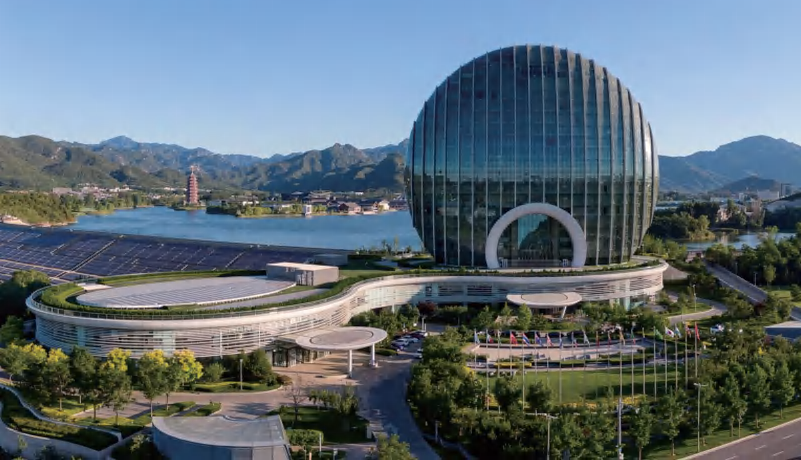
Tərəfindən SOLETKS Mühəndislik Komandası — Top-5 qlobal düz lövhə istehsalçısının kommersiya günəş termal qrupu ilə 117+ patent. We have commissioned hotel and quasi-hospital solar hot-water plants from the 50 t/day APEC Summit hotel (Beijing, 2014 — 12+ years operation, ~150,000 kWh/year backup avoided, ~74 tonnes CO₂/year) to the Harz church parish facility (Germany, 2021) and resort villa systems in Florida (USA, 2022).
Mənzərə həddi: this article addresses hotel and hospital load patterns, backup reliability, recirculation, and building-water hygiene controls. It does not replace project payback analysis, component-only procurement comparison, collector selection, or detailed hydraulic calculations.
Qısaca — Sürətli cavab
Solar thermal for hotels and hospitals should be designed around reliable hot water — not only fuel savings.
- Otellər → comfort during morning + evening peaks
- Hospitals + care → stronger reliability + temperature control + hygiene discipline (Legionella risk management is non-negotiable)
Əsas məqamlar:
1. Hesablama edin peak draw window as well as daily volume.
2. Use storage + backup heat together — neither alone is sufficient.
3. Separate solar preheat from final hygiene temperature when required.
4. Keep recirculation losses visible (huge silent killer of solar fraction).
5. Log tank temperature, pump status, and backup runtime after commissioning.
6. Never let solar replace the hygiene control layer — it preheats, the backup ensures setpoint.
For complete projects, use the Kommersiya / Sənaye Günəş Isı ilə Su Isitmə Sistemi scope and connect it to the right Günəş Kolektor choice for the building temperature range.[1]
1. Hotel and Hospital Design Answer
Hotels and hospitals need different control priorities. Pacific Northwest National Laboratory operations guidance treats solar water-heating systems as complete assemblies with collectors, storage, pumps, controls, and backup heat[2] — the correct frame for these buildings. ASHRAE’s HVAC Applications Handbook (Service Water Heating chapter) is an engineering reference for both hotel and hospital hot-water systems. Legionella risk management should follow a documented building water-management program under the applicable code and healthcare policy.[12][13][14]
| İnşaat | Hot-water pattern | Design priority |
|---|---|---|
| Business hotel | Morning + evening guest peaks, weekday-heavy | Comfort + fuel savings |
| Luxury hotel | Larger per-guest demand, spa loads | Comfort + temperature precision |
| Resort | Seasonal, occupancy swings | Solar fraction by season |
| Hostel / dormitory-style | Dense 1–2 hour shower peaks | Storage + recovery speed |
| Hospital (general) | 24-hour demand, cleaning + care | Reliability + hygiene |
| Healthcare kitchen / laundry | Process + cleaning demand | Temperature + backup capacity |
| Care home | Steady daily routines | Reliability + Legionella control |
2. Hot-Water Consumption by Hotel Type — Design Reference Table
Daily hot-water consumption varies significantly by hotel category. Use these per-guest values as starting points for sizing.
| Hotel type | Hot water per guest/day (L) | Notes |
|---|---|---|
| Hostel / budget | 30–45 | Shared bathrooms, short showers |
| Business hotel (3-star) | 50–70 | Standard room with shower |
| Mid-range (4-star) | 70–100 | Tub + shower, in-room amenities |
| Luxury (5-star) | 100–150 | Larger tubs, spa-like fixtures |
| Resort | 80–120 | + pool/spa allowance separately |
| All-inclusive resort | 120–180 | Heavy laundry + kitchen loads |
| Boutique / villa | 150–250 | Per-villa, with private pool/spa |
APEC Summit hotel reference (Beijing, 2014): the 50 t/day plant covers approximately 300–500 guests depending on occupancy, plus kitchen and laundry — confirming ~100–150 L/guest/day total at this scale. Always validate per-guest values against actual utility data for the specific hotel.
Additional loads (always size separately)
| Load type | Allowance |
|---|---|
| Restaurant kitchen (per cover/meal) | 8–15 L hot water |
| In-house laundry (per kg dry laundry) | 15–35 L hot water |
| Spa / wellness (per visitor) | 50–150 L |
| Swimming pool top-up | Use pool surface + evaporation rate |
| Staff use | 30–50 L per staff member |
3. Hospital Hot-Water Load Breakdown
Hospital design must enumerate every load category because hospital demand is more diverse than hotel demand.
| Load category | Typical allowance | Risk if undersized |
|---|---|---|
| Patient room (per bed) | 80–150 L/day | Reduced patient comfort |
| Nurse stations + staff | 30–60 L/person/day | Hand washing compliance risk |
| Kitchen (per meal served) | 8–20 L | Service delay |
| Laundry (per kg dry) | 15–40 L | Bedding shortage |
| Sterilization | High-temp specialized | Critical safety risk |
| Cleaning rooms | 20–40 L/room/day | Infection control gap |
| Hydrotherapy / dialysis | Specialized | Specialized treatment failure |
Design rule: sterilization and critical clinical demand should usually be served by a dedicated backup heat circuit, with solar feeding non-critical hot water (patient rooms, kitchen, laundry, cleaning). This protects clinical workflows from any solar variability.
4. Sizing Calculation — Worked Hotel Example
Mənbə qeyd: screening example; final design needs occupancy data, fixture count, laundry/kitchen loads, local inlet temperature, hygiene policy.[2]
Example input — 160-room business hotel
| Parametr | Dəyər |
|---|---|
| Rooms | 160 |
| Occupancy | 80% |
| Guests per occupied room | 1.8 |
| Hot-water allowance | 55 L/guest/day |
| Laundry + kitchen allowance | 3,000 L/day |
| Soyuq su girişi | 15 °C |
| Çatdırılma hədəfi | 55 °C |
| Solar fraction target | 50% |
Formula
Guest count        = rooms × occupancy × guests per room
Guest hot water    = guest count × allowance
Total daily volume = guest hot water + laundry/kitchen
Daily heat demand  = total volume × ΔT × 4.186 / 3600
Solar heat target  = daily heat × solar fraction
Əvəzlənmə
Guest count        = 160 × 80% × 1.8           = 230 guests
Guest hot water    = 230 × 55                  = 12,650 L/day
Total daily volume = 12,650 + 3,000            = 15,650 L/day
Daily heat demand  = 15,650 × 40 × 4.186/3600  = 728 kWh/day
Solar heat target  = 728 × 50%                 = 364 kWh/day
Recommendation: size collector area, storage, and HX around ~364 kWh/day useful solar heat, then verify whether the morning peak needs 60–90 minutes of high-flow storage support. For hospitals, run a separate calculation for 24-hour continuity and backup-heater capacity.
5. Storage and Backup Strategy
Storage and backup heat must be designed as one system because solar output and hotel demand peak at different times:
- Solar gain is strongest around midday
- Hotels draw heavily in morning + evening
- Hospitals need continuous readiness — backup heat is never optional
| Design item | Hotel rule | Hospital rule |
|---|---|---|
| Storage volume | Cover largest guest draw window | Cover clinical, cleaning, kitchen continuity |
| Ehtiyat istilik | Sized for peak comfort | Sized for critical service reliability |
| Solar tank control | Leave lower tank cool for solar recovery | Maintain policy temperature while preserving preheat value |
| Recirculation | Optimize schedule to reduce loss | Maintain required delivery readiness |
| Monitoring | Occupancy-linked trend review | 24-hour alarm + service response plan |
The recirculation loss problem (hotel-specific)
Recirculation improves user comfort because hot water reaches fixtures faster, but it also loses heat continuously through pipework. Weak insulation or uncontrolled return loops can erase solar savings even when the collector field is well sized.
Field rule (APEC Summit, Beijing): annual recirculation heat loss in a 160-room hotel can be 10–25% of total hot-water energy. The single fix that produces the best ROI: timer-controlled recirculation that runs continuously only during peak hours (06:00–10:00 + 18:00–23:00) and on demand the rest of the day.
6. Legionella and Hygiene Temperature Rules
Hospitals and many hotels are subject to Legionella risk-management requirements. The building water-management plan and applicable local or healthcare code control the final temperatures, monitoring frequency, corrective actions, and scald protection.[12][13][14]
| Vəziyyət | Control implication |
|---|---|
| Cold water below 20 °C | Common temperature-control target where practicable. |
| 25–45 °C | CDC identifies this as the range where Legionella grows best; stagnation and low flow increase risk.[13] |
| Circulating hot water above 49 °C | CDC control benchmark when temperature is the selected control measure.[13] |
| Stored hot water at 60 °C or higher | UK HSE temperature-control benchmark; the approved building policy may differ by jurisdiction.[12] |
| Outlet temperature within 1 minute | UK HSE benchmark: 50 °C generally and 55 °C in healthcare premises.[12] |
Water-management plan controls
- Use a documented building water-management plan with responsible persons, control limits, monitoring, and corrective actions.
- Where UK HSE temperature control is adopted, store hot water at 60 °C or higher and verify 50 °C at outlets within 1 minute, or 55 °C in healthcare premises.[12]
- Monitor circulation temperature, disinfectant residual, water age, and low-flow areas according to the approved plan.[13]
- Use thermal or chemical remediation only when defined by the water-management plan, local authority, and competent healthcare team; there is no universal weekly disinfection cycle.
How solar thermal interacts with Legionella rules
Cold water → Solar preheat tank → Backup heating to ≥ 60 °C → Hot water store → Delivery
              (any temperature)     (final hygiene control)
Tendər qaydası: for hospitals and hotels under a building water-management plan, specify solar feeding a preheat tank or lower tank zone, with backup heat controlling the final delivery zone at the approved policy temperature. Never let the solar loop replace the hygiene control layer.
For potable-water contact materials, NSF/ANSI 61 is the reference where drinking-water approval is required.[3]
Anti-scald protection
Where storage temperatures create a scald risk, assess and fit thermostatic mixing valves as close as practicable to affected outlets, consistent with local healthcare and plumbing rules, especially in:
- Patient rooms
- Care home bathrooms
- Public-facing taps in hotels
7. Hotel vs Hospital Decision Tree
[Start: building type + hygiene policy known]
        │
        ▼
┌──────────────────────────────────────────────────┐
│ 1. Hospital / care / clinical building?          │
└──────────────────────────────────────────────────┘
        │
        ├─ Yes → HOSPITAL DESIGN MODE
        │       • Preheat / indirect architecture per water-management plan
        │       • Solar = preheat only
        │       • Backup maintains approved policy temperature
        │       • Dedicated critical heat circuit for sterilization
        │       • 24-hour monitoring + alarm
        │
        └─ No → continue
        │
        ▼
┌──────────────────────────────────────────────────┐
│ 2. Hotel under strict hygiene code?              │
│    (EU / luxury / large chains)                  │
└──────────────────────────────────────────────────┘
        │
        ├─ Yes → HYGIENE-FIRST HOTEL MODE
        │       • Storage temperature per applicable code
        │       • Solar = preheat tank
        │       • Return-loop control limit documented
        │       • Anti-scald TMVs at fixtures
        │
        └─ No → STANDARD HOTEL MODE
                • Standard storage + recovery design
                • Recirculation optimization for fuel saving
                • Backup matches peak comfort
        │
        ▼
┌──────────────────────────────────────────────────┐
│ 3. Seasonal vs year-round occupancy?             │
└──────────────────────────────────────────────────┘
        │
        ├─ Seasonal → Size solar for shoulder season
        │             (avoid summer overheating)
        │             Add stagnation protection
        │
        └─ Year-round → Standard sizing
        │
        ▼
       [Output: design mode + storage + backup spec]
8. APEC Summit Hotel — A 12-Year Operating Reference
The APEC Summit hotel hot water plant in Beijing (commissioned 2014) is a real, multi-year reference for hotel-scale solar thermal in cold-climate urban operation.
| Metric | Dəyər |
|---|---|
| Daily hot-water capacity | 50 t/day |
| Annual backup energy avoided | ~150,000 kWh/il |
| İllik qarşısı alınmış CO₂ | ~74 tonnes/year |
| Operating climate | Beijing winter ~−12 °C design min |
| System type | Indirect glycol (35% PG) |
| Solar fraction (after control tuning) | ~40–45% sustained |
| Years operating | 12+ |
| Cumulative backup energy avoided | ~1.8 million kWh over 12 years |
| Cumulative CO₂ avoided | ~888 tonnes over 12 years |
Lessons from 12+ years of operation
- Control logic dominates solar fraction. Initial year-2 backup-heater “shadowing” reduced solar fraction. Re-tuning the boiler enable window recovered measurable solar fraction the following winter.
- Recirculation pump upgrade caused stratification loss. A year-4 recirculation pump replacement (higher head, same controller) increased tank mixing. The fix was a smaller pump with timer control, not a bigger one.
- Expansion tank pre-charge drifts annually. A year-1 expansion pre-charge drift of 0.4 bar caused relief-valve discharge on the hottest day. Lesson: measure and reset expansion pre-charge every annual service.
- Insulation degrades from above. UV jackets on horizontal piping degraded 3–4 years earlier than vertical runs. Specifying double-thickness UV jacketing recovered overnight heat loss in under one heating season.
These same patterns repeat at virtually every long-running commercial hotel plant we visit.
9. Lifecycle and Maintenance Matrix
Hotels and hospitals should plan service intervals before purchase because downtime costs more than a scheduled inspection.
| Aktiv / tapşırıq | Hotel baseline | Hospital baseline | Action trigger |
|---|---|---|---|
| Tank temperature log | Per water-management plan | Per healthcare water-management plan | Deviation from the approved control limit |
| Recirculation insulation | 12 ay | 6–12 ay | Hot return heat loss or guest complaint |
| Pump station flow | 12 ay | 6–12 ay | Flow falls 15% below baseline |
| Backup heater runtime | 12 ay | 3–6 months | Runtime rises without occupancy increase |
| Hygiene temperature record | Owner policy | Automated log plus competent-person review | Any failure to meet the approved setpoint |
| Legionella remediation | Per water-management plan | Per healthcare policy and competent-person instruction | Any missed control limit or specified corrective-action trigger |
For the full maintenance procedure, see Kommersiya Günəş İstilikli İstismar və Baxım Planı.
10. Standartlar və sənədləşdirmə
| Standart / sertifikat | Hansı hallarda tətbiq edilir | RFQ qaydası |
|---|---|---|
| ISO 9806:2017 | Yığıcı test üsulları | Use model data for sizing.[5] |
| Günəş Açarı | Avropa kollektor sertifikatı | Use where required.[6] |
| ISO 9001 | Keyfiyyət idarəetməsi | Təchizatçı proses sübutu.[7] |
| UL 508A | İdarəetmə panelləri | UL bazar paneli.[8] |
| ASME BPVC | Təzyiq avadanlığı | Təzyiq altında olan tanklar/qablar qaydaları.[9] |
| NSF/ANSI 61 | İçməli su ilə təmas | İçməli su təsdiqi.[3] |
| ASHRAE HVAC tətbiqləri | Xidmət suyu isitmə mühəndisliyi | Hotel + hospital design reference.[10] |
| Building water-management requirements | Hospitals and applicable hotels | UK HSE ACOP L8/HSG274, US ASHRAE 188, and the applicable national or healthcare code.[12][14] |
11. SOLETKS üçün RFQ girişləri
İnkişaf mühəndisliyi dəstəyini vasitəsilə tələb edin SOLETKS əlaqə səhifəsi when hotel or hospital hot-water reliability must be reviewed with solar savings.
İnşaat
- Type (hotel category / hospital / care home)
- Room count, bed count, occupancy %, operating season
- Star rating or hospital service level
Yüklə
- Daily hot-water volume OR fixture schedule
- Laundry, kitchen, sterilization, cleaning loads
- Cold-water inlet, storage setpoint, delivery setpoint
- Peak draw windows (morning, evening, both)
Existing system
- Boiler, heat pump, storage, recirculation, controls
- Backup energy fuel + cost
Uyğunluq
- Hygiene policy + local code (for example, UK HSE ACOP L8/HSG274 or ASHRAE 188 where adopted)
- NSF/ANSI 61 or local potable rules
- Documentation needs (LEED / BREEAM / ESG reporting)
Sayt
- Roof area, shading, plant-room space, access
12. Təcrübə Təfərrüatları Siyahısı
| Məhsul | Tələb olunan dəyər |
|---|---|
| Daily load | L/day + kWh/day |
| Peak draw | Time window + flow rate |
| Saxlama | Volume + sensor map |
| Backup | Capacity, fuel, enable setpoint |
| Recirculation | Schedule, insulation, return temperature |
| Hygiene policy temperature | Storage °C + delivery °C + recirculation return °C |
| Anti-scald TMVs | Required points-of-use |
| Monitoring | Temperature, flow, pump, backup runtime, daily auto-log |
| Legionella thermal disinfection | Cycle frequency + target °C |
Tez-tez Soruşulan Suallar
Are solar thermal systems suitable for hotels?
Solar thermal systems are highly suitable for hotels when hot-water demand is stable, roof area is available, and storage covers guest peak periods. The APEC Summit hotel in Beijing (50 t/day) has operated since 2014, saving ~150,000 kWh/year of backup energy and ~74 tonnes CO₂/year. The strongest projects have daily showers, laundry, or kitchen loads that use heat consistently across most of the year.
Are solar thermal systems safe for hospitals?
Solar thermal systems are safe for hospitals when designed as preheat or controlled hot-water systems with backup heat, temperature monitoring, and local hygiene compliance. Solar should support reliability, deyil remove the backup layer that protects clinical and cleaning workflows. Sterilization and other critical loads should be served by a dedicated backup heat circuit, with solar feeding non-critical hot water.
How does Legionella risk affect solar thermal design?
Legionella grows best at roughly 25–45 °C, especially where water is stagnant.[13] Temperature limits must follow the building water-management plan and local healthcare code. As a UK HSE benchmark, hot water is stored at 60 °C or higher and should reach 50 °C at outlets within one minute, or 55 °C in healthcare premises.[12] Solar should feed a preheat layer while backup heat maintains the approved hygiene control limit.
How much hot water does a hotel guest use per day?
Depends on hotel category: 30–45 L (hostel/budget), 50–70 L (business hotel), 70–100 L (mid-range), 100–150 L (luxury), 150–250 L (resort villas). Always add laundry, kitchen, spa, and staff loads separately. APEC Summit hotel data confirms ~100–150 L/guest/day total at 50 t/day scale.
How much storage does a hotel solar hot-water system need?
Storage should cover the largest morning or evening draw window plus recovery margin — typically 0.8–1.2 × peak draw volume. For a 160-room business hotel with 80% occupancy and 728 kWh/day total load, storage starts around 12–15 m³ with detailed peak-shape adjustment.
What is the difference between solar thermal in business hotels vs luxury hotels?
Business hotels have predictable morning + evening peaks → standard storage + recovery design. Luxury hotels have higher per-guest demand (100–150 L) + spa/wellness loads → larger storage + stronger backup. Resort hotels add seasonality → solar oversizing risks summer stagnation; design for shoulder season.
What is the APEC Summit hotel reference data?
The APEC Summit hotel hot water plant in Beijing (commissioned 2014) delivers 50 t/day with annual savings of ~150,000 kWh backup energy and ~74 tonnes CO₂. After 12+ years operation, cumulative savings approach ~1.8 million kWh and ~888 tonnes CO₂.
What data is needed for a hospital or hotel quote?
Room/bed count, occupancy, daily hot-water volume, peak draw timing, laundry + kitchen + sterilization loads, inlet + outlet temperatures, roof area, plant-room space, backup heater data, hygiene policy + Legionella code requirement, and documentation requirements (ESG, LEED, BREEAM if applicable). Existing utility bills + tank temperature logs improve first-sizing accuracy substantially.
What is the difference between hotel and dormitory hot-water sizing?
Otellər have a longer peak window (60–90 minutes morning, 60–120 minutes evening) and varying occupancy. Yatakhana (university, school, factory dorm) have shorter, more concentrated peaks (often 30–60 minutes morning) with higher peak flow rates per liter of daily total. The Tianjin məktəbi PVT Pro+ zavodu (2024, 3,000 m²) is a dormitory-style hot-water + heating reference where peak draw concentration drives storage sizing more than total daily volume.
Can solar thermal serve a hospital with PVT for combined heat and electricity?
Yes. PVT (photovoltaic-thermal) systems combine solar heat for non-critical HW + electricity for daytime hospital loads. This is increasingly attractive for hospitals with mixed thermal + electrical demand (e.g., daytime air-conditioning + 24-hour HW + lighting). The architecture: PVT array → preheat tank → backup-controlled hygiene tank → distribution. See İsıtma nasoslu PVT günəş panelləri for the full architecture. Critical clinical loads (sterilization, dialysis) should still have a dedicated backup heat circuit.
Mənbələr
[1] Soləts, Kommersiya / Sənaye Günəş Isı ilə Su Isitmə Sistemi.
[2] Sakit Okean Şimal-Qərb Milli Laboratoriyası, Günəş su isitmə sistemləri.
[3] NSF, su emal sistemləri üçün standartlar, o cümlədən NSF/ANSI 61 konteksti.
[4] Soləts, Keyfiyyətə Zəmanət.
[5] ISO, ISO 9806:2017 Günəş enerjisi – Günəş termal kollektorlar – Sınaq metodları.
[6] Solar Keymark, Solar Keymark sertifikatlaşdırma sxemi.
[7] ISO, ISO 9001:2015 Keyfiyyət idarəetmə sistemləri.
[8] UL Həllər, Sənaye idarəetmə panelləri – UL 508A.
[9] ASME, Qazandır və Təzyiq Qabları Kodu.
[10] ASHRAE, ASHRAE Əlyazması — HVAC tətbiqləri, xidmət suyu isitmə fəsli.
[11] Fraunhofer Günəş Enerjisi Sistemləri İnstitutu (ISE), Long-term Commercial Solar Thermal Monitoring Research.
[12] UK Health and Safety Executive, Hot and cold water systems.
[13] U.S. Centers for Disease Control and Prevention, Monitoring Building Water.
[14] ASHRAE, ANSI/ASHRAE Standard 188-2021.
Engineering review completed: 2025-07-06 by SOLETKS Engineering Team. Publication QA updated: 2026-08-10. Project data referenced: APEC Summit hotel (Beijing, 2014, 50 t/day, 12+ years, 150,000 kWh/yr saved, 74 t CO₂/yr), Harz church (Germany, 2021), Saga County centralized heating (Tibet, 2019, 107,000 m², 2,424 t coal/yr avoided), Florida resort villas (USA, 2022), Tianjin school PVT Pro+ (2024, 3,000 m² dormitory analogue).
Layihəyə Xüsusi Mühəndislik İcmalı Lazımdır?
SOLETKS-ə obyektin iqlim şəraitini, gündəlik yükü, dam və ya texniki otaq məhdudiyyətlərini, məhsulun həcmini və hədəf sənəd tələblərini göndərin ki, mühəndislik komandası praktik kommersiya tövsiyəsi verə bilsin.
SOLETKS ilə əlaqə saxlayın