
Solar Air Heating Architecture: Direct-Air vs Liquid-to-Air Collector Systems
Decide whether a project needs a direct-air collector or a liquid loop with an air coil before comparing DVC, AFPC or ATPC product labels.
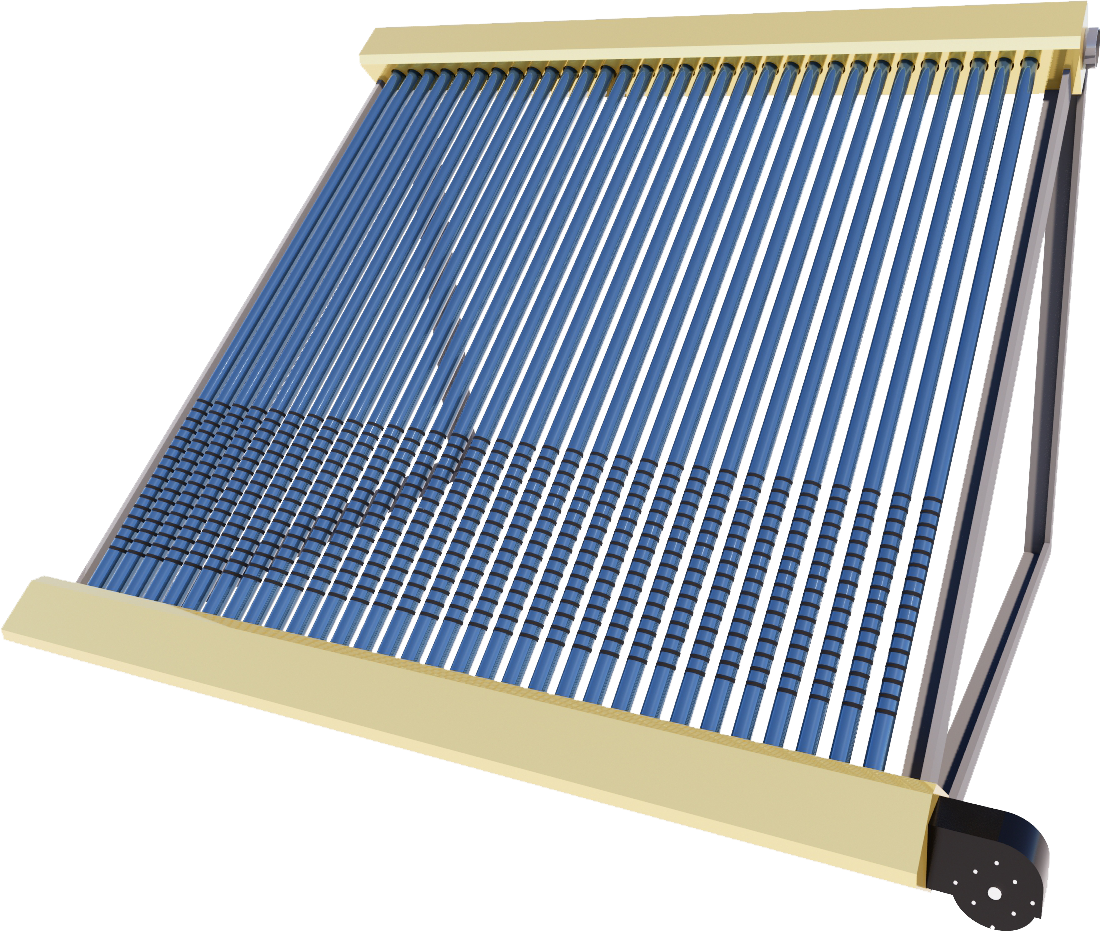
Before comparing DVC, AFPC or ATPC, decide what the collector is actually heating. A direct-air system moves air through the solar collector or an air-side heat exchanger. A liquid-to-air system heats water or glycol first, then transfers that heat through an air coil. The two arrangements need different collectors, controls, pumps, fans, freeze protection and evidence.
The short answer is:
- Choose a direct-air architecture when the load is fresh-air preheating, space heating, ventilation or a process that can accept solar-heated air directly.
- Choose a liquid-to-air architecture when the project needs hydraulic storage, long-distance heat transport, a closed-loop freeze strategy, an existing hydronic plant or a heat exchanger between the collector and the air stream.
- Do not let the words “air collector” or “hot-air collector” decide the architecture. Confirm the heat-transfer medium, airflow, pressure drop and control boundary on the current model datasheet.
SOLETKS already has a detailed AFPC-versus-ATPC industrial drying guide. That page addresses application-level drying selection. This article answers the earlier question: which heat-transfer architecture and evidence package should the buyer specify before comparing products?
The two architectures
Direct air: the collector is part of the air path
In a direct-air system, a fan moves air through the collector or through a collector-connected air-side heat exchanger. The useful duty is defined by air mass flow, inlet condition, outlet condition and pressure drop. Duct leakage, fan power, filtration, bypass control and the backup heater are part of the same design.
Tento SOLETKS DVC Air Collector page describes DVC as a direct vacuum-tube air collector for fast temperature rise, stable airflow, drying, space heating and ventilation. That is a clear product-direction statement. It is not, by itself, a design airflow, a guaranteed outlet temperature or a complete fan selection.
Liquid to air: the collector is on a hydraulic loop
In a liquid-to-air system, a flat-plate or evacuated-tube collector heats water or glycol. A pump moves that fluid to storage or to a liquid-to-air heat exchanger. The air side then has its own fan, coil, duct, filter and control sequence.
This arrangement can be useful when heat must be stored, when the collector is far from the building, when the site needs a closed loop for freeze protection, or when the building already has a hydronic heating system. It also creates additional design boundaries: fluid compatibility, expansion, relief, pump head, heat-exchanger pressure drop and tank control.
Calling a liquid collector an “air collector” because its heat ultimately warms air makes the RFQ ambiguous. The medium, not the end-use label, defines the architecture.
A first-pass architecture comparison
| Decision point | Direct-air system | Liquid-to-air system |
|---|---|---|
| Heat-transfer medium | Air through the collector or air-side heat exchanger | Water or glycol in the collector loop, air on the load side |
| Main moving equipment | Fan, dampers and possibly a bypass | Pump, valves, expansion/relief equipment, heat exchanger and fan |
| Storage | Usually limited unless a separate thermal store is added | Straightforward to connect to a tank or buffer, subject to design |
| Freeze strategy | Protect the collector, duct and fan path against the site condition | Protect the fluid loop with a suitable fluid, heat exchanger, drainback or controls |
| Main performance inputs | Airflow, inlet/outlet temperature, static pressure, leakage and fan power | Fluid flow, temperature difference, pressure loss, heat exchanger duty and storage |
| Typical decision trigger | Direct fresh-air or process-air duty | Storage, long pipe runs, hydronic integration or indirect heat transfer |
| Evidence required | Air path, airflow curve, pressure drop, duct connections and control sequence | Fluid, pressure, flow, heat exchanger, pump duty, expansion and freeze documentation |
Neither architecture is automatically more efficient. The correct choice is the one that can deliver useful heat to the actual load with an auditable control and maintenance plan.
How to treat DVC, AFPC and ATPC product names
The current accessible product evidence is not equally complete for all three labels. Use the following discipline in a quotation:
| Product label | Safe statement from the available evidence | Do not infer without the current model sheet |
|---|---|---|
| DVC vzdušný kolektor | SOLETKS describes DVC as a direct vacuum-tube air collector for drying, space heating and ventilation | Design airflow, static pressure, outlet temperature, fan power, duct dimensions and seasonal output |
| AFPC solární vzdušný kolektor | The SOLETKS catalogue uses the AFPC air-collector name | Whether the quoted body is an air collector or a liquid flat-plate product, plus airflow, pressure drop and temperature range |
| ATPC horkovzdušný kolektor | The SOLETKS catalogue uses the ATPC hot-air name | Whether the model is direct air or liquid-assisted, its process limits, airflow, controls and industrial capacity |
The AFPC and ATPC rows are intentionally cautious. A product name can be correct while a page, revision or category description is incomplete. The buyer should reconcile the name, medium, drawing and datasheet before publishing a capability statement or comparing performance.
Five questions that choose the architecture
1. Does the load need air or only heat?
If the load needs outdoor air preheated before entering a building or dryer, a direct-air design may be appropriate. If the load only needs heat at a coil, tank or process loop, a liquid system may provide better separation and storage. Write the load boundary in one sentence before selecting a collector.
2. Must heat be stored or transported?
Air is difficult to store economically at a useful scale. A liquid loop can connect to a buffer or hot-water tank, but it adds pumps, heat exchangers and protection devices. If the process runs only during sunny hours, direct air may be simpler. If the building needs heat after sunset or across intermittent cloud, storage and backup must be designed explicitly.
3. What happens in freezing weather?
Direct air does not make the whole installation automatically frost-safe: outdoor ducts, fans, dampers and any condensate path still need a low-temperature strategy. Liquid loops need a fluid and protection design that matches the collector, pressure boundary and local minimum temperature. “No freezing” is not a product conclusion without a system design.
4. What is the pressure boundary?
For direct air, request static pressure at the design airflow and identify the fan, filter, duct and damper losses. For liquid systems, request collector pressure drop, pipe lengths, heat-exchanger pressure loss, static height, fluid concentration and pump duty. A temperature claim without the matching pressure or flow condition is incomplete.
5. Can the control system protect the load?
The control sequence should define fan or pump start, bypass, backup heat, over-temperature, low-temperature, no-flow/no-airflow, sensor failure and manual override. Drying products can be damaged by overheating; buildings can become uncomfortable when the fan runs without useful solar heat; liquid systems can stagnate when storage is full.
Normalize product evidence before comparing it
Use one row per proposed model and require the same fields for every supplier:
| Field | Why it changes the decision | Evidence to request |
|---|---|---|
| Heat-transfer medium | Distinguishes direct air from liquid-to-air architecture | Current product drawing and written medium statement |
| Design airflow or fluid flow | Output depends on the operating point | Curve or table with test conditions |
| Pokles tlaku | Determines fan or pump duty | Air-side static pressure or liquid-side pressure-drop data |
| Inlet and outlet condition | A hot no-load outlet value is not a load result | Test irradiance, ambient condition, inlet temperature and flow |
| Connections and dimensions | Determines duct, pipe and mounting interfaces | Dimensioned drawing and connection schedule |
| Control boundary | Determines safe response in cloud, high temperature or no demand | Sequence of operation and sensor list |
| Životní prostředí | Dust, moisture, corrosion and frost affect service | Material, cleaning, protection and operating limits |
| Warranty and parts | Determines downtime and lifecycle risk | Warranty exclusions, replacement procedure and parts list |
If one supplier reports air temperature at a very low airflow while another reports temperature at the design airflow, mark the values not comparable until the test basis is aligned.
Application map after the architecture decision
Drying
After the heat-transfer medium is chosen, the drying project still needs wet-product mass, initial and target moisture, drying time, maximum product-air temperature, chamber geometry, airflow, pressure drop and backup energy. Use the existing industrial drying guide for the AFPC-versus-ATPC application branch; do not repeat its product ranking in this architecture article.
Space heating
Direct air can preheat fresh or recirculated air. A liquid-to-air system can charge a buffer or feed a building coil. Compare comfort control, fan/pump energy, storage, noise, filter maintenance, freeze protection and backup operation—not just collector temperature.
Ventilation and make-up air
Ventilation projects usually start with an air-volume requirement. Confirm outdoor design condition, allowable pressure loss, bypass location, fan interlock, filter resistance, condensate management and the temperature at which the backup heater starts. A product label does not provide those values.
Process air
Industrial process air may impose contamination, hygiene, high-limit temperature, continuous operation or fast recovery requirements. If solar heat cannot be accepted during cloud or shutdown, design a backup and mixing path before selecting the collector. Direct air and liquid-to-air solutions can both work, but their safety and control documents are different.
RFQ template for the architecture gate
Send these fields before asking for a model recommendation:
- Project location, operating season and minimum outdoor temperature.
- End use: fresh-air preheat, space heating, drying, ventilation or process air.
- Required airflow or fluid flow, inlet condition and target outlet condition.
- Static pressure, duct/pipe length, filters, dampers and heat-exchanger resistance.
- Need for storage, buffer tank, long-distance transport or hydronic integration.
- Existing boiler, heat pump, electric heater, fan coil or air-handling unit.
- Dust, moisture, corrosion, hygiene and cleaning requirements.
- Available roof or ground area, shading, wind, snow and access route.
- Control points: fan/pump start, bypass, backup, overheat, freeze and alarm.
- Exact product model, current drawing, datasheet revision, warranty and spare parts.
Ask the supplier to answer this sentence directly: “The proposed product transfers heat through ___, at ___ flow and ___ pressure, into ___ load, with ___ backup and ___ protection.” If the blank fields cannot be filled, the comparison is not ready.
Common architecture mistakes
Comparing the collector before defining the medium
Two products can both be advertised for “air heating” while one carries air and the other heats a liquid loop feeding an air coil. They are not substitutes until the complete system boundary is defined.
Treating a catalogue category as a datasheet
AFPC and ATPC names are useful starting points for a supplier conversation, but the exact model, medium, connections and design point must come from the current technical document.
Ignoring storage and operating hours
Direct-air systems can be attractive for daytime loads, but a building or process that needs heat after sunset may require storage, backup or a different architecture. State the schedule before comparing output.
Publishing one performance number
Airflow, pressure, inlet condition, irradiance and ambient temperature must travel with any performance value. A single outlet temperature is not a seasonal result, a guaranteed process temperature or a payback calculation.
Frequently asked questions
Is a direct-air collector always better for drying?
No. It can be a good fit when the dryer accepts air directly and operates in a compatible daytime window. A liquid loop may be preferable when storage, long pipe runs, freeze protection or an existing hydronic plant controls the design.
Can DVC, AFPC and ATPC be compared in one table?
Only after the heat-transfer medium and test basis are confirmed. Compare airflow and pressure for air systems; compare fluid flow, pressure loss and heat-exchanger duty for liquid systems.
Does the AFPC/ATPC drying guide replace this article?
No. The existing guide addresses industrial drying selection after the application is defined. This article addresses the architecture and evidence gate that should come first.
What is the most important missing document?
The current model drawing or datasheet that identifies the heat-transfer medium, connections, design flow, pressure loss and operating limits. Without it, product names cannot support a safe comparison.
Final selection rule
First choose the heat-transfer architecture. Then normalize the supplier data. Only after those two steps should a buyer compare DVC, AFPC or ATPC labels. The DVC page currently provides the clearest accessible evidence for a direct-air product direction; AFPC and ATPC remain model-specific verification tasks until their current technical documents resolve the medium and duty point.