
Solar Collector Stagnation and Overheating Protection: Drainback, Heat Dump and Controller Strategies
Stagnation is normal. Fluid loss, glycol damage and steam in the wrong place are not. Here is how to design for it.
Last updated: November 11, 2026
Kurze Antwort: collectors are built to survive stagnation. The risk is to the glycol, the expansion vessel and other parts of the loop. Size the expansion vessel for steam volume, add a pre-cooling vessel or heat dump where needed, use drainback where the roof layout allows it, and set the controller protection functions at commissioning.
A power cut or pump failure causes stagnation even in buildings with steady hot water demand, so every system should be able to ride it out.
Freeze protection gets most of the attention in solar thermal design. But in many projects, solar collector stagnation and summer overheating cause more damage than winter frost. A school system that sits idle during the holidays, a hotel with low occupancy in a heat wave, or a villa whose owners travel for a month: in each case the collectors keep receiving sunshine while nobody uses the hot water.
When the storage tank reaches its maximum temperature and the pump stops, the collector field goes into stagnation. This guide explains what happens during stagnation, why it matters, and which protection strategies work for residential, commercial and industrial systems.
What Is Solar Collector Stagnation?
Stagnation is the condition when a solar collector receives solar radiation but no heat is removed from it. The fluid stops flowing, the absorber keeps heating up, and the collector reaches its maximum (stagnation) temperature. At that point heat losses to the environment equal the energy absorbed.
Typical stagnation temperatures (actual values depend on the product, irradiance and ambient temperature; always check the test report):
| Collector type | Typical stagnation temperature range |
|---|---|
| Flat plate collector (selective coating) | approx. 170–210 °C |
| Flat plate collector (non-selective coating) | approx. 115–150 °C |
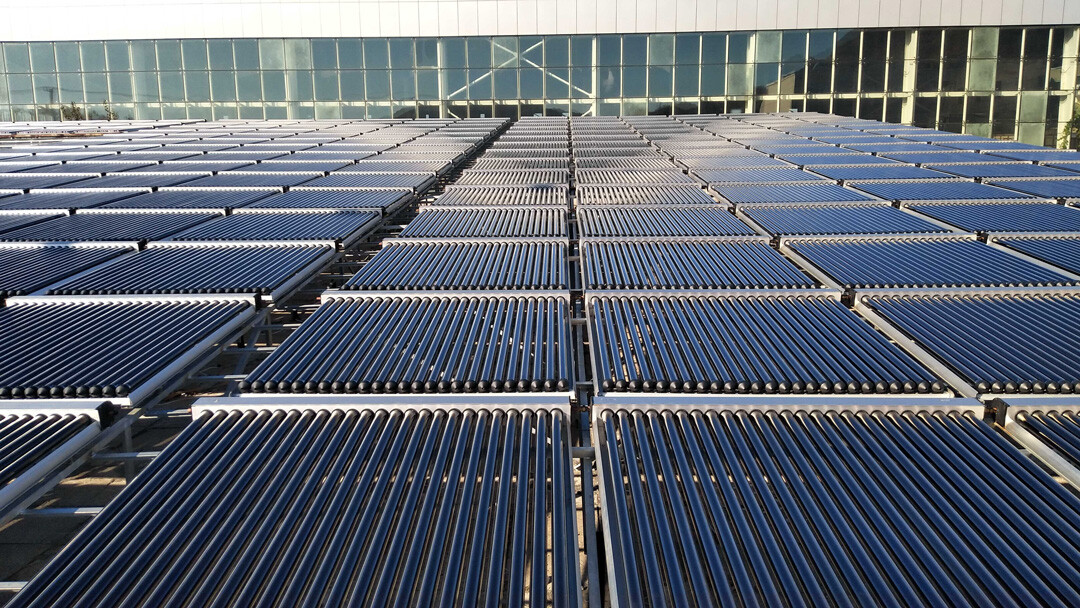
| Evacuated tube collector (CTC / HPC heat pipe) | approx. 220–350 °C |
| Glazed (single-cover) PVT panel | up to approx. 145 °C |
| Unglazed PVT panel | much lower; reported around 75 °C and above |
For PVT panels, stagnation also matters for the PV laminate. The EVA encapsulant in standard PV modules starts to lose its mechanical properties at about 130–140 °C, so glazed PVT systems need overheating protection just like thermal collectors.
The higher the collector efficiency at high temperature, the higher the stagnation temperature. That is why high-performance evacuated tube systems need more careful overheating design, not less.
Why Stagnation Is a Problem
A well-designed system can survive stagnation many times. A poorly designed system can be damaged in one summer. The main risks:
- Glycol degradation. Propylene glycol heat transfer fluid breaks down when it is exposed to very high temperatures again and again. It becomes acidic, darkens, forms sludge and loses its freeze and corrosion protection. Blocked pipes and corroded heat exchangers often follow.
- Steam formation and pressure peaks. When the fluid boils in the collector, steam pushes liquid out of the collector into the pipes and the expansion vessel. If the vessel is too small, the safety valve opens and the system loses fluid.
- Fluid loss and dry running. After the safety valve discharges, the system pressure is too low. When the pump restarts, it may run dry or circulate air.
- Component damage. Pump seals, sensors, plastic parts, insulation and the expansion vessel membrane can all be damaged by steam that reaches parts of the system not rated for it.
- Scalding risk at the taps. Very hot tank water creates a scalding risk at the taps. Installers sometimes try to fix this by lowering setpoints, which can create hygiene problems. A thermostatic mixing valve is the correct answer.
Strategy 1: Design the System to Stagnate Safely
The first goal is not to avoid stagnation completely. It is to make sure the system comes back to normal operation by itself after stagnation, with no fluid loss and no damage.
Key design rules:
- Good emptying behaviour. When steam forms, it should push the liquid out of the collector quickly, so only a small amount of liquid stays in the hot absorber and boils. Collector fields with their connections at the lower end, and connecting pipes that run downward from the collector, usually empty better. Avoid pipe layouts (for example, pipes that rise after leaving the collector) that trap liquid in the collector during steam formation.
- Correctly sized expansion vessel. The vessel must take the normal thermal expansion plus the volume of the collectors and any pipes that may fill with steam. Undersized expansion vessels are one of the most common causes of fluid loss.
- Pre-cooling vessel (stagnation vessel). On larger systems, or where steam can reach the pump station, install a small un-insulated vessel between the collector field and the expansion vessel. It cools the hot fluid before it reaches the membrane.
- Correct system pressure. Set the cold fill pressure according to the static height and the expansion vessel pre-charge. A slightly higher operating pressure raises the boiling point and reduces steam volume.
- Rated safety valve. Use a solar-rated safety valve and route the discharge into a collecting container, not the drain, so lost fluid can be checked and reused.
Strategy 2: Drainback Systems
In a drainback system, the collector loop is only partly filled. When the pump stops, the fluid drains by gravity from the collectors into a drainback tank inside the building. The collectors are left empty, filled with air.
Vorteile
- No fluid in the collectors during stagnation, so no glycol degradation and no steam
- Often can run with water instead of glycol in mild climates, because the collectors also drain in frost
- Fewer components (often no pre-cooling vessel, smaller expansion requirements)
Beschränkungen
- Collectors and pipes must have continuous fall back to the drainback tank. This is not always possible on flat roofs or complex buildings.
- The pump must be strong enough to refill the system (higher static head at start-up)
- Not every collector is approved for drainback operation; the collector's internal pipe design must allow it to drain completely. Check with the manufacturer before choosing drainback.
Drainback is a strong choice for schools, holiday homes and seasonal buildings where long idle periods are expected.
Strategy 3: Heat Dump (Heat Rejection)
A heat dump removes excess heat when the storage is full. Common options:
- Fan-coil or dry cooler in the solar loop, switched on by the controller when the tank or collector temperature is too high
- Diverting heat to a secondary load: a swimming pool, a buffer tank, a ground loop, or a process that can use low-grade heat
- Night cooling: the pump runs at night and releases heat back through the collectors (works well for flat plate collectors, much less for evacuated tubes, which lose very little heat)
For commercial projects, the best heat dump is one that creates value. Hotels can send summer surplus to a pool. Factories can preheat process water. This turns a protection measure into extra solar yield.
Strategy 4: Controller Functions
Modern solar controllers include several protection functions. Make sure they are enabled and set correctly at commissioning:
| Funktion | What it does |
|---|---|
| Maximum tank temperature | Stops loading when the tank reaches its safe limit |
| Collector emergency shut-off | Stops the pump above a set collector temperature to avoid pumping steam through the system |
| Collector cooling function | Lets the tank go above normal setpoint (within a safe limit) to absorb more heat before stagnation |
| Recooling / holiday mode | Runs the pump at night to cool the tank back through the collectors |
| Heat dump output | Switches a fan coil, valve or pool pump when there is surplus heat |
Holiday mode is especially useful for villas and schools. Users should know how to activate it, and it should be explained in the handover documents.
Strategy 5: Reduce Surplus at the Design Stage
Many overheating problems start with oversized collector areas. Designers sometimes size the collector field for winter demand, which creates large summer surpluses.
Good practice:
- Size for a realistic solar fraction, not for 100% coverage
- Use the summer load profile (not the annual average) to check surplus
- Consider a steeper tilt angle. It reduces summer gain and improves winter gain.
- For buildings with very seasonal use, consider fewer collectors plus a heat pump or boiler as backup
Strategy 6: Glycol Maintenance
Even with good design, heat transfer fluid ages. Include fluid checks in the O&M plan:
- Check pH und freeze protection level (refractometer) every year
- Look at the fluid colour: dark brown or black fluid, or sediment, means it has degraded
- Replace the fluid when pH falls below the manufacturer's limit or freeze protection is not enough
- After any stagnation event with fluid loss, find the cause before refilling
Choosing the Right Strategy by Project Type
| Project type | Typical risk | Empfohlene Vorgehensweise |
|---|---|---|
| Villa / residential | Owners travel, small daily load | Correct expansion vessel, holiday mode, thermostatic mixing valve |
| School / campus | Long summer holidays | Drainback if layout allows; otherwise heat dump + recooling |
| Hotel / resort | Low season, heat wave | Heat dump to pool or buffer, oversizing check |
| Hospital | Stable year-round load | Low stagnation risk; still design for pump or power failure |
| Industrial process heat | Weekend and holiday shutdowns | Heat dump or dry cooler, emergency shut-off, pre-cooling vessel |
Remember: a power cut or pump failure creates stagnation even in systems with constant demand. Every system should be able to survive it.
How SOLETKS Supports Overheating-Safe Design
SOLETKS supplies flat plate collectors, evacuated tube collectors (CTC and HPC heat pipe) and PVT panels for residential, commercial and industrial projects. For engineering projects, our team can support:
- Collector selection based on load profile and stagnation behaviour
- Expansion vessel and pump station sizing
- Controller configuration and commissioning checklists
- Technical documents for EPC contractors and distributors
Related reading:
- Freeze Protection for Solar Hot Water Systems: Glycol, Controls, and Best Practices
- Glycol Loop Solar Thermal System Design for Commercial Hot Water
- Solar Thermal Pump Station and Expansion Tank Sizing Guide
- Solar Pool Heating for Hotels and Commercial Pools
Need help with a project? Contact our engineering team or send your load data via WhatsApp for a system proposal.
FAQ
Is stagnation bad for a solar collector?
The collector itself is designed and tested to survive stagnation. The risk is mainly for the heat transfer fluid, the expansion vessel and other system components. With correct design, stagnation is a normal and safe operating state.
Do evacuated tube collectors overheat more than flat plate collectors?
Evacuated tube collectors usually reach higher stagnation temperatures because they lose less heat. They need careful expansion vessel sizing and fluid management. Flat plate collectors reach lower temperatures and can use night recooling more effectively.
Can I just cover the collectors in summer?
Covering works for small residential systems as a temporary measure, but it is not practical or reliable for commercial projects. Design-based solutions (correct sizing, heat dump, drainback, controller functions) are better.
How often should solar glycol be checked?
At least once a year, and always after a stagnation event with fluid loss. Check pH, freeze protection level and colour.
What happens during a power cut in summer?
The pump stops and the collectors go into stagnation. A properly designed system will push fluid into the expansion vessel and return to normal operation when power comes back, without fluid loss.
References
- Stagnation temperature ranges for flat plate, evacuated tube and PVT collectors: literature review in a PVT stagnation study, Universidade NOVA de Lisboa (run.unl.pt).
- Eismann R., Hummel S., Giovannetti F. (2023). A Thermal-Hydraulic Model for the Stagnation of Solar Thermal Systems with Flat-Plate Collector Arrays. LAPSE:2023.29411.