
Solar Space Heating with Underfloor Heating and Radiators: Combisystem Design and Sizing Guide
Match the collectors, buffer tank, heat emitters and backup heat so solar actually reaches your radiators and floors.
Last updated: November 11, 2026
Kurze Antwort: pair solar with low-temperature heat emitters, ideally underfloor or wall heating at about 30–40 °C. Size the buffer tank at roughly 50–100 litres per m² of collector, and always size the backup heater for 100% of the design heat load. In a well-insulated house, expect solar to cover about 20–40% of heating demand, and less in older buildings.
Plan the summer surplus at the same time, or the collector field will overheat.
Most solar thermal systems are built for one job: domestic hot water. But in cold and sunny regions, space heating is often the largest energy demand in a building. A solar space heating system that supports both hot water and heating is called a solar combisystem.
Combisystems are more complex than hot-water-only systems. The heating demand is highest in winter, when solar gain is lowest. Good design is about matching the collector field, the buffer tank, the heat distribution system and the backup heat source so they work together.
This guide explains how to plan a solar space heating system for villas, apartment buildings, schools and public buildings.
How a Solar Combisystem Works
A typical combisystem has five main parts:
- Kollektorfeld – flat plate, evacuated tube or PVT collectors on the roof or ground
- Buffer (combi) tank – stores solar heat for both heating and hot water, often stratified
- Domestic hot water preparation – an internal coil, a tank-in-tank design, or an external fresh water station
- Heat distribution – underfloor heating, wall heating, low-temperature radiators or fan coils
- Backup heat source – heat pump, gas or biomass boiler, or electric heater
The solar loop charges the buffer tank. The heating circuit and hot water system take heat from the tank. When solar heat is not enough, the backup heater keeps the top of the tank at the required temperature.
Step 1: Understand the Heating Load
Before sizing any collectors, you need to know the building's heat demand:
- Design heat load (kW) – the peak heating power needed on the coldest day
- Annual heating demand (kWh/year) – the total energy for the whole heating season
- Hot water demand (kWh/year) – often 10–30% of total demand in a heated residential building, and a higher share in well-insulated new buildings
Building insulation makes a big difference. A well-insulated new building may need a fraction of the heat of an old building with the same floor area. For an existing building, real fuel bills from the last two or three winters are the best starting point.
Step 2: Choose the Right Heat Distribution System
Die supply temperature of the heating system decides how much solar heat can be used. Lower temperature means higher collector efficiency and more useful solar hours.
| Heat distribution | Typical supply temperature | Solar suitability |
|---|---|---|
| Underfloor / wall heating | approx. 30–40 °C | Ausgezeichnet |
| Low-temperature radiators / fan coils | approx. 40–55 °C | Gut |
| Standard radiators (old buildings) | approx. 60–75 °C | Begrenzt |
Underfloor heating is the best partner for solar. The concrete floor also works as extra thermal storage, so heat collected at midday is released slowly in the evening.
For buildings with old high-temperature radiators, consider replacing some radiators or adding fan coils before investing in a large collector field.
Step 3: Size the Collector Area
There is no single rule, because climate, building and target solar fraction all differ. As a first estimate for planning:
- Hot water only (residential): roughly 1–1.5 m² collector per person
- Combisystem (residential, well-insulated): a common starting point is about 1 m² collector per 10 m² of heated floor area. Use less in mild climates or for a low solar fraction, and more only if you also plan large storage and a summer heat use.
Then check the design with a simulation tool or monthly energy balance:
- Calculate monthly solar yield of the collector field
- Compare it with the monthly heating + hot water demand
- Make sure the summer surplus is acceptable (see overheating section below)
Typical energy savings from combisystems in Central Europe or similar climates are roughly 20–40% of total heat demand in well-insulated houses, and lower in older buildings with high heat loss. For example, IEA SHC Task 26 simulations of a single-family house in Zurich found savings of about 23–39% when the collector area was varied from 4 to 20 m², with a base case of 12 m² of flat plate collectors and an 830-litre store. Higher values are possible with large storage or sunny winter climates (for example, high-altitude regions).
Step 4: Choose the Collector Type and Tilt
| Sammler | Strengths for space heating |
|---|---|
| Flachkollektor | Cost-effective, robust, good for large fields and underfloor heating |
| Large size flat plate collector | Fewer connections and faster installation on big projects |
| Evacuated tube (CTC / HPC heat pipe) | Higher efficiency in cold weather and at higher temperatures; good for radiators and cold climates |
| PVT panel + heat pump | Produces electricity and low-temperature heat; the heat pump lifts the temperature for heating |
Tilt angle matters more for heating than for hot water. A steep tilt (often around 50–70°, or close to vertical on facades) increases winter yield, reduces summer overheating and helps snow slide off.

Step 5: Size the Buffer Tank
The buffer tank stores solar heat from sunny hours for use in the evening and on cloudy days.
- A common planning range is about 50–100 litres of storage per m² of collector for combisystems
- Larger storage increases solar fraction but also costs more, needs more space and has higher heat losses
- Stratification is important: keep hot water at the top for domestic hot water and cooler water at the bottom so the collectors work at low temperature
- Use stratifying inlets, correct connection heights and low flow rates in the heating return
For apartment buildings, schools and district systems, several tanks in series, or a large central tank, are common.
Step 6: Plan the Backup Heat Source
The backup heater must be able to cover 100% of the design heat load, because there will be cloudy cold weeks with little solar heat.
- Heat pump: the best partner for low-temperature underfloor heating. Solar raises the source or tank temperature, which improves heat pump efficiency.
- Gas or biomass boiler: common in retrofits. Make sure the boiler only heats the top part of the tank, so solar can use the lower part.
- Electric heater: simple, but expensive to run; better for small systems or as an emergency backup.
The controller should give solar priority: the backup heater starts only when solar cannot reach the required temperature.
Step 7: Control Summer Overheating
A combisystem has a large collector field for winter heating, but in summer only hot water is needed. This creates large surplus heat.
Solutions include:
- Steeper tilt angles to reduce summer yield
- Heat dump to a pool, ground loop or other summer load
- Drainback design for buildings with long idle periods
- Correct expansion vessel sizing and controller protection functions
See our guide to solar collector stagnation and overheating protection for details.
Project Example: Centralized Solar Heating in Saga County, Shigatse
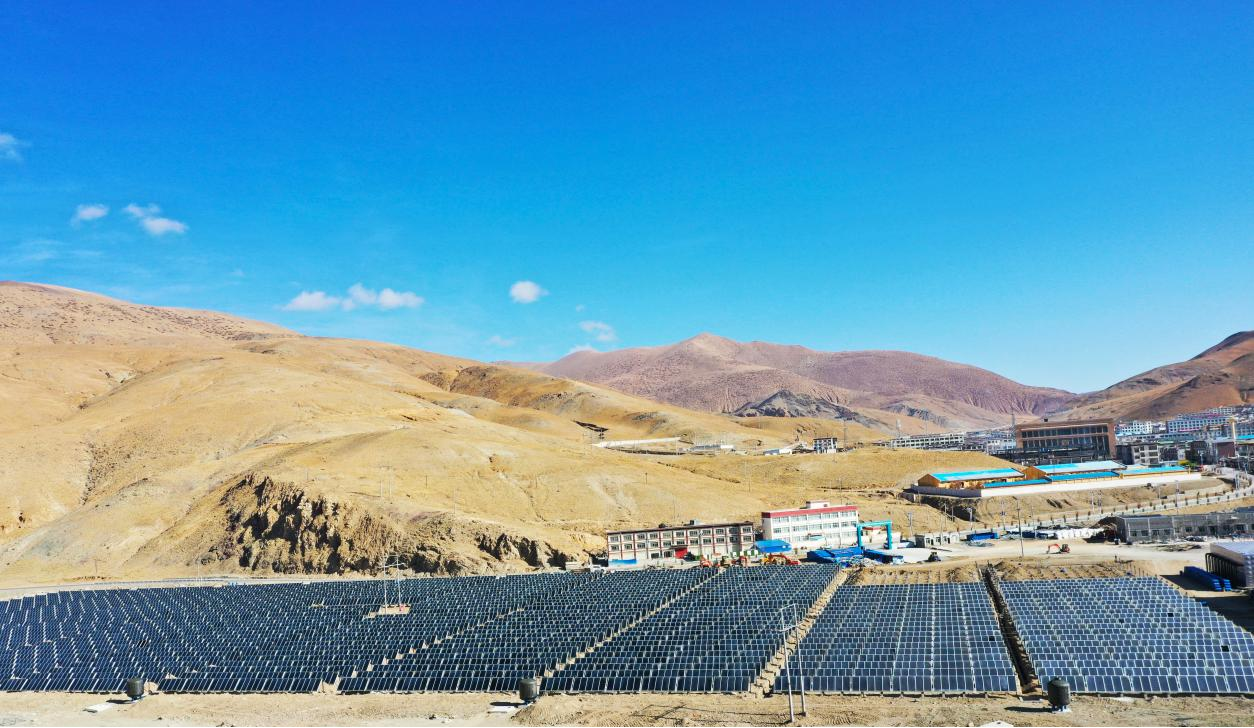
One of SOLETKS' featured projects is the Centralized Solar Heating project for Saga County Town in Shigatse City, Tibet (2019). High-altitude regions like this have very strong solar radiation and long, cold heating seasons, which makes them one of the best climates for solar space heating.
See the full project on our Featured Projects page.
Common Mistakes in Solar Space Heating Projects
- Using high-temperature radiators without adapting the heating system
- Oversizing the collector field for winter, with no plan for summer surplus
- Undersized or poorly stratified buffer tanks
- Backup heater heating the whole tank, which leaves no room for solar
- No monitoring, so poor performance is never noticed
How SOLETKS Can Help
SOLETKS manufactures flat plate collectors, large size flat plate collectors, CTC and HPC evacuated tube collectors and PVT panels, with 7.0 GWth annual production capacity. For space heating projects, we can help with:
- Collector selection for your climate and heating system
- Collector field layout and hydraulic design
- Buffer tank, pump station and controller packages
- Technical documents for EPC contractors and distributors
Related reading:
- Large Size Flat Plate Solar Collector Dimensions and Performance Guide
- PVT Solar Panels with Heat Pump: Hybrid System Design and Applications
- Entwurf eines kommerziellen Heat-Pipe-Solarkollektors für das kalte Europa
- Centralized Solar Water Heating System for Apartments, Schools and Campuses
Planning a solar heating project? Contact us or send your building data via WhatsApp.
FAQ
Can solar thermal heat a whole house?
In most climates, solar covers part of the heating demand, often about 20–40% in a combisystem for a well-insulated house, and less in older buildings. Full coverage needs very large seasonal storage. A backup heater is always required.
Is underfloor heating better than radiators for solar?
Yes. Underfloor heating works at about 30–40 °C, so collectors run more efficiently and deliver useful heat for more hours each day.
Flat plate or evacuated tube for solar space heating?
Flat plate collectors are cost-effective for underfloor heating and large fields. Evacuated tube collectors perform better in very cold weather and at higher supply temperatures.
How big should the buffer tank be?
A common planning range is about 50–100 litres per m² of collector area. The final size depends on the load profile, space and target solar fraction.
Can I combine solar heating with a heat pump?
Yes. This is one of the most efficient combinations. Solar or PVT collectors raise the tank or source temperature, and the heat pump covers the rest with a better efficiency.
References
- IEA SHC Task 26 – Solar Combisystems: system descriptions and simulation results (iea-shc.org).