
Short Answer
Solar collector panels are solar thermal panels that convert sunlight into usable heat. They are used for domestic hot water, commercial hot water, swimming pool heating, space heating support and industrial water preheating. The main solar collector types include flat plate solar collectors, evacuated tube solar collectors, heat pipe collectors and PVT hybrid panels.
The right solar collector panel is not simply the one with the highest advertised efficiency. The best choice is the collector that delivers useful heat at the project’s required water temperature, in the project’s real climate, with the right storage tank, circulation design and backup heating strategy.
For a hot water project, start with four questions:
- How many liters of hot water are needed per day?
- What is the cold-water inlet temperature and target hot-water temperature?
- What is the local climate and available installation area?
- Does the building need heat only, or both heat and electricity?
Once these inputs are clear, a supplier can compare flat plate, evacuated tube, heat pipe and PVT options with much better accuracy.
Key Takeaways for Solar Collector Selection
| Buyer Question | Practical Answer |
|---|---|
| What do solar collector panels produce? | Heat, not electricity. They heat water or a heat transfer fluid. |
| Are they the same as solar PV panels? | No. PV panels generate electricity. Solar thermal collectors generate heat. PVT panels combine both. |
| Which collector is best for hot water? | It depends on climate, temperature, roof area, storage, system pressure and budget. |
| Should I compare collectors by efficiency only? | No. Compare optical efficiency, heat-loss coefficients, annual thermal yield, aperture area, gross area and real operating temperature. |
| What information is needed for a quote? | Project location, daily hot water volume, inlet temperature, target temperature, installation area, backup heater and peak demand pattern. |
| When should I choose PVT? | Choose PVT when the project has a useful heat load and also needs electricity from the same roof area. |
What Are Solar Collector Panels?
Solar collector panels are devices that absorb solar radiation and transfer that energy as heat. A collector usually heats water, glycol or another heat transfer medium. The heat is then used directly, transferred through a heat exchanger or stored in a hot water tank.
A complete solar hot water system normally includes:
- Solar collectors
- Piping and insulation
- Heat transfer fluid or water loop
- Pump station or circulation loop
- Controller and temperature sensors
- Heat exchanger, if indirect design is used
- Hot water storage tank
- Backup heating from boiler, heat pump, electric heater or existing energy source
This is important because the collector alone does not guarantee hot water performance. Real output depends on the complete thermal loop.
Solar Collector Panels vs Solar PV Panels vs PVT Panels
Many buyers use the phrase “solar collector panels” when they are not sure whether they need solar thermal, solar PV or hybrid solar. The difference matters.
| cURL Too many subrequests. | Main Output | Common Use | Best Buyer Intent |
|---|---|---|---|
| Solar thermal collector | Θέρμανση | Hot water, pool heating, preheating, space heating support | “I need to reduce water heating cost.” |
| Solar PV panel | Ηλεκτρική ενέργεια | Power generation, battery charging, grid export | “I need electricity.” |
| PVT panel | Electricity + recovered heat | Hybrid building energy, heat pump support, hot water preheating | “I have limited roof area and need both power and heat.” |
If the project only needs hot water, a dedicated solar thermal collector is usually the first technology to evaluate. If roof area is limited and both electricity and useful heat are needed, PVT becomes more attractive.
Main Types of Solar Collector Panels
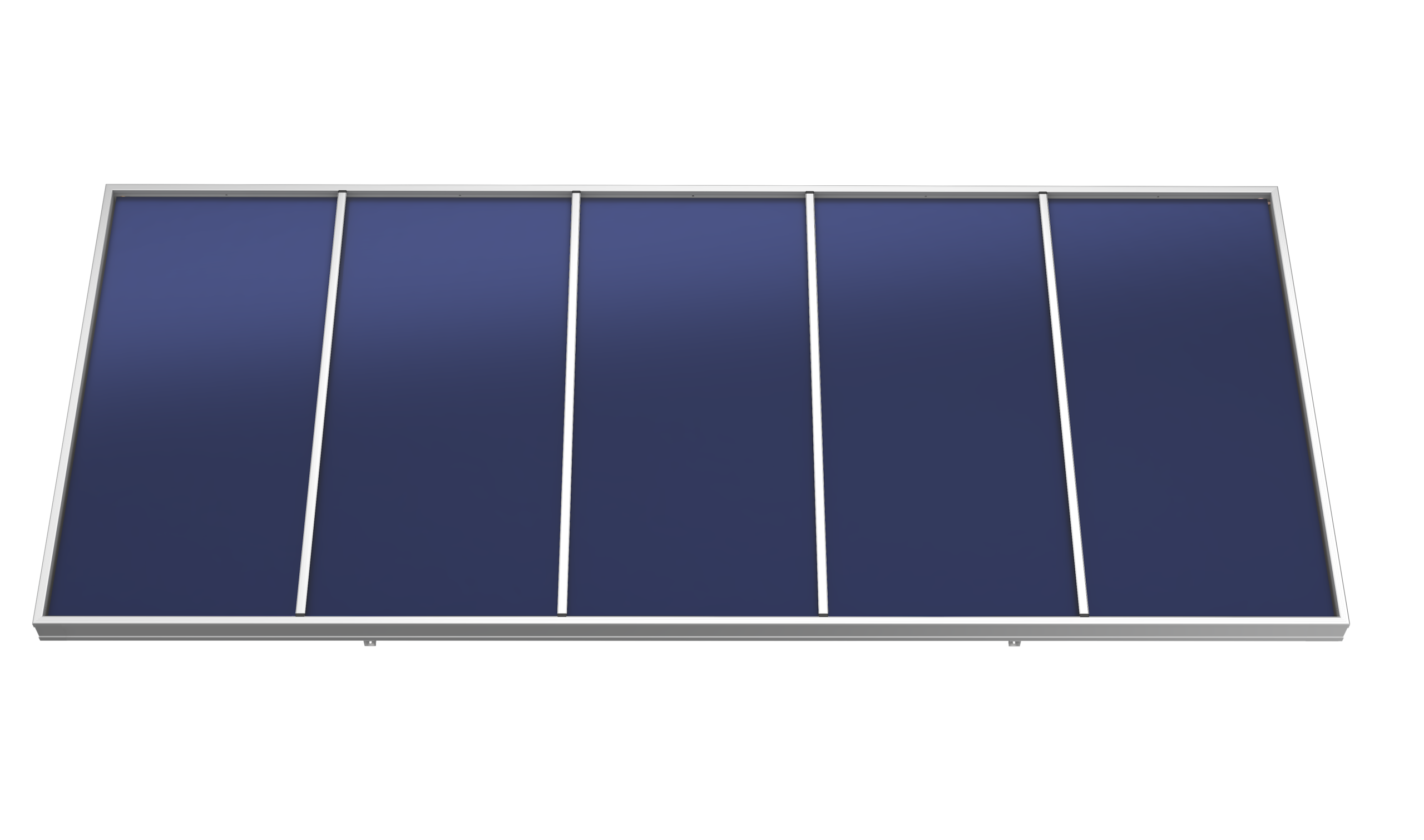 Επιπεδός ΠλάκαWarm and moderate climates · DHW · preheating
02 · Low-loss thermal
Επιπεδός ΠλάκαWarm and moderate climates · DHW · preheating
02 · Low-loss thermal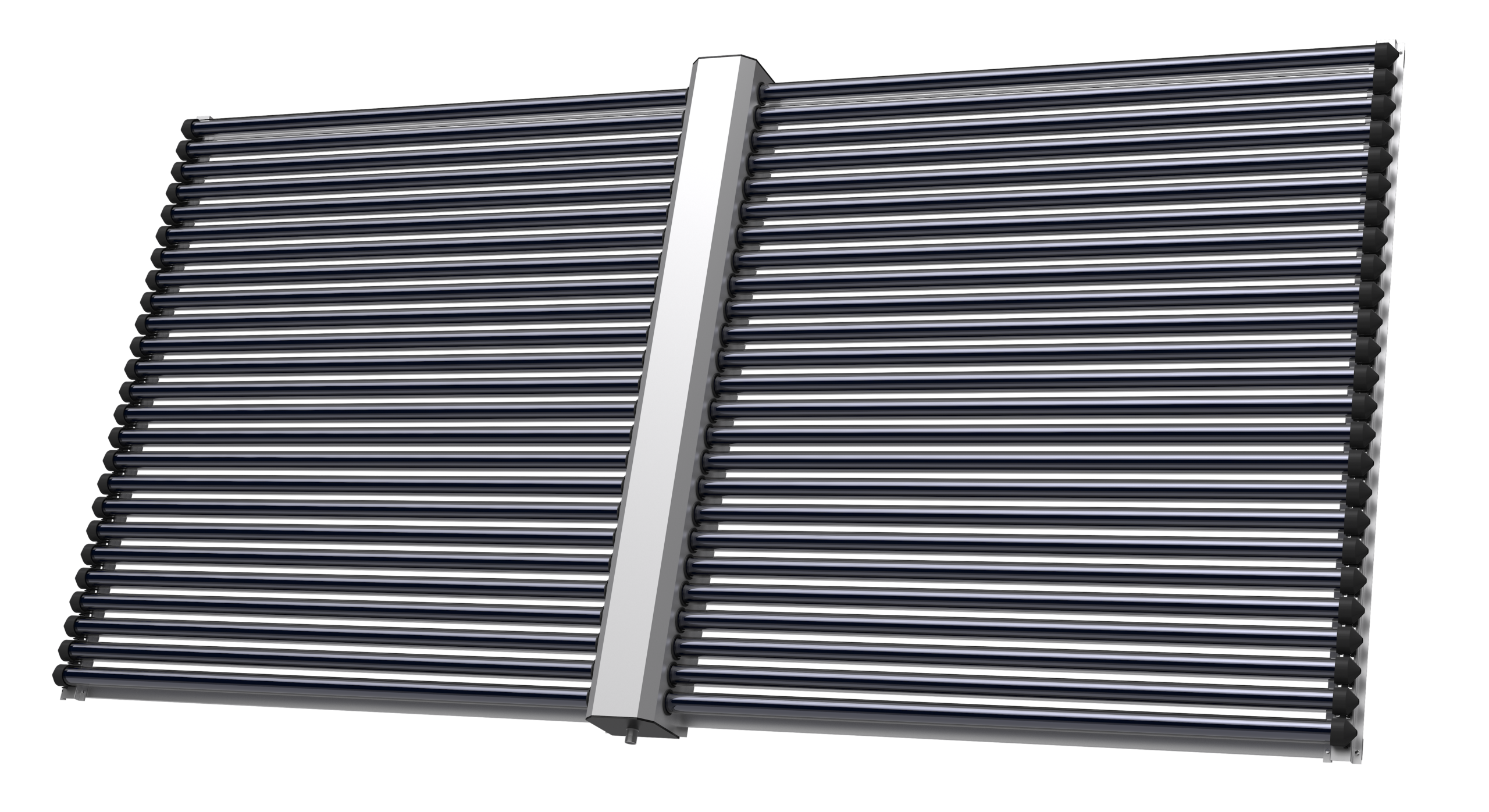 Εκκενωμένος σωλήναςCold climates · higher temperature demand
03 · Dual-output roof
Εκκενωμένος σωλήναςCold climates · higher temperature demand
03 · Dual-output roof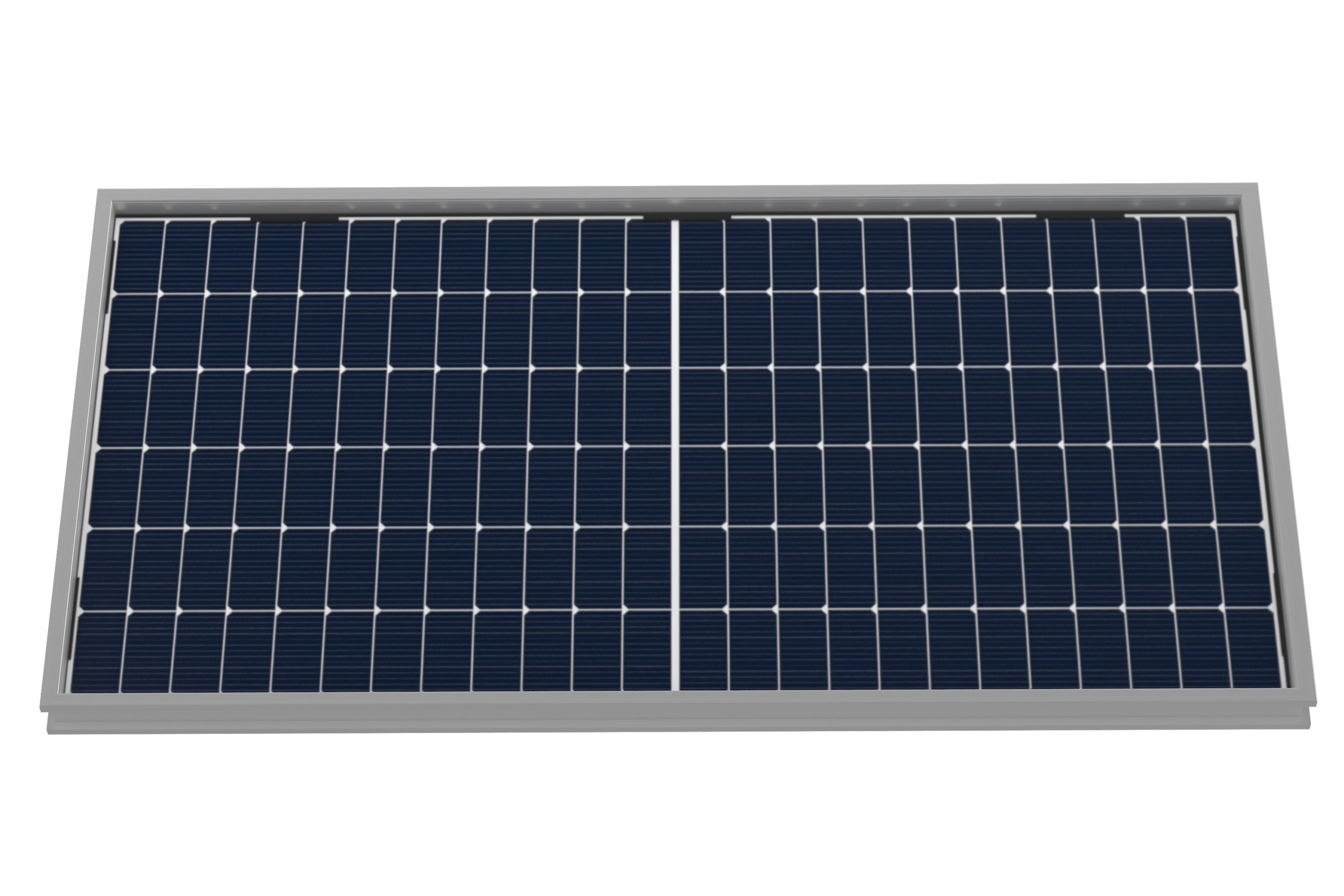 PVT HybridElectricity + useful heat from one surface
1. Flat Plate Solar Collector
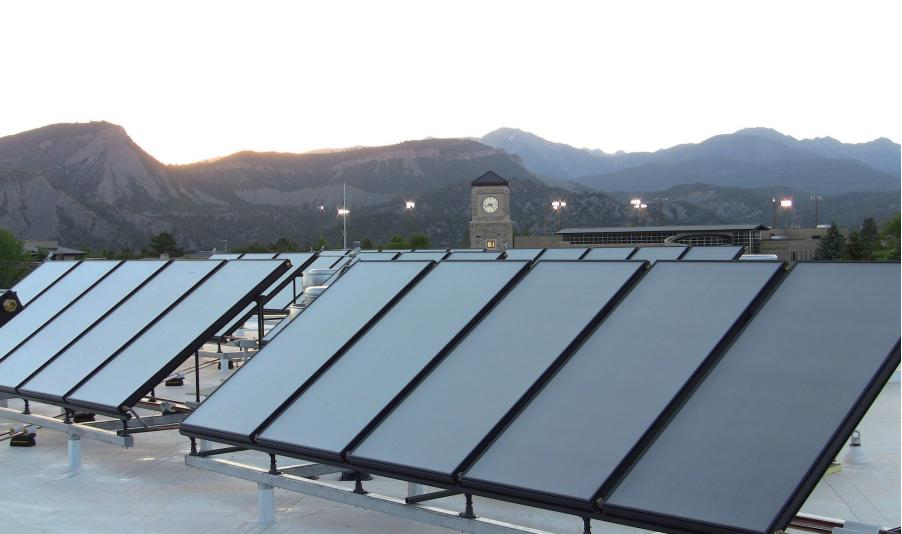
A flat plate solar collector uses a dark absorber plate inside an insulated rectangular frame with a transparent cover. The absorber transfers heat to tubes carrying water or heat transfer fluid.
Flat plate collectors are commonly used for:
- Οικιακό ζεστό νερό
- Commercial hot water
- Hotels and resorts
- Apartments and dormitories
- Swimming pools
- Industrial low-to-medium temperature preheating
- Space heating support in suitable climates
Flat plate collectors are often a strong choice when the project has moderate temperature demand, enough roof or ground area and a preference for a clean rectangular panel appearance.
SOLETKS flat plate collector data example
SOLETKS publishes a BTE2.0-2 flat plate collector configuration with the following product-level data:
| Αντικείμενο | Published Data |
|---|---|
| Collector specification | BTE2.0-2 |
| Overall area | 2,00 m² |
| Εμβαδόν διαφράγματος | 1,87 m² |
| Διαστάσεις | 2000 × 1000 × 80 mm |
| Rated working pressure | 0.6 bar for the BTE2.0-2 reference model |
| Optical performance | 78% |
| Absorber sheet | Aluminium, highly selective absorption coating |
| Πλαίσιο | cURL Too many subrequests. |
These numbers are useful because they let buyers move beyond generic claims such as “high efficiency”. For example, aperture area helps compare how much active solar collection area is available, while optical performance is only one part of the full efficiency picture. The pressure value above belongs to the referenced BTE2.0-2 split-system collector; large engineering collectors and PVT products use their own pressure ratings.
Flat plate system configuration example
In SOLETKS split solar water heater configurations, published tank models include 300 L, 500 L, 800 L and 1000 L options paired with BTE-2.0 collectors. Example pairings include BTE-2.0 × 3 for 300 L, BTE-2.0 × 4 for 500 L, BTE-2.0 × 8 for 800 L and BTE-2.0 × 10 for 1000 L. Tank options include SUS304 / SUS316L inner tank materials, PU foam insulation and 7 bar working pressure configurations.
This does not mean every project should be sized only by tank volume. It gives buyers a practical reference point, but final sizing should still be based on daily load, climate, target temperature and solar fraction.
When flat plate collectors are usually a good fit
Choose flat plate collectors when:
- The project is in a warm, temperate or mixed climate.
- The target hot water temperature is moderate.
- Roof or ground area is not extremely limited.
- Long-term durability and simple maintenance are important.
- The building owner prefers a clean panel-style appearance.
- The project needs a cost-effective solar water heater collector for daily hot water.
Flat plate collectors can also work in colder climates when designed properly, but freeze protection, insulation, storage and backup heating must be planned carefully.
2. Evacuated Tube Solar Collector
An evacuated tube solar collector uses glass tubes with a vacuum layer. The vacuum reduces heat loss, similar to the way a thermal bottle slows heat transfer. Sunlight passes through the glass and is absorbed by a selective coating inside the tube.
Evacuated tube collectors are commonly used for:
- Οικιακό ζεστό νερό
- Commercial hot water
- Cold-climate hot water systems
- Higher temperature water heating
- Industrial low-temperature thermal processes
- Projects with limited installation area
SOLETKS separates evacuated tube product logic into several directions:
| Product Direction | Main Use |
|---|---|
| CTC hot water collector | Domestic and commercial solar water heating |
| HPC heat pipe collector | Higher-performance heat transfer, cold-climate projects, easier maintenance planning |
| DVC air collector | Warm air for drying, ventilation and space heating support |
For a page focused on solar collector panels for hot water, the CTC and HPC directions are the most relevant. DVC air collectors should be linked as a related solar thermal product, but not mixed too heavily into the hot water selection logic.
When evacuated tube collectors are usually a good fit
Choose evacuated tube collectors when:
- The project is in a cold, windy or variable climate.
- Winter output is more important than summer peak performance.
- The required water temperature is higher.
- Roof area is limited and stronger heat retention is needed.
- The buyer needs a solar hot water collector that can reduce heat loss at higher temperature difference.
Evacuated tube collectors are not automatically better for every project. In a warm climate with moderate hot water demand and sufficient roof area, a flat plate collector may be more economical and easier to maintain.
3. Heat Pipe Solar Collector
A heat pipe solar collector is a type of evacuated tube system. Each tube contains a sealed heat pipe that transfers heat to a manifold. The main system fluid is usually concentrated in the manifold and piping instead of flowing through every glass tube.
Heat pipe collectors are commonly used for:
- Pressurized hot water systems
- Hotels and apartments
- Schools and hospitals
- Cold-climate domestic hot water
- Higher temperature commercial hot water
- Projects where tube-level serviceability matters
Main advantages include efficient heat transfer, practical maintenance logic and strong suitability for commercial hot water systems. However, heat pipe collectors still depend on correct flow rate, manifold insulation, tank sizing and control strategy.
A heat pipe collector can underperform if the system has poor storage design, weak circulation control or long uninsulated pipe runs.
4. PVT Hybrid Solar Panel
A PVT panel, also called a photovoltaic-thermal panel, generates electricity and recovers heat from the same solar surface. SOLETKS PVT product directions include PVT-E, PVT-T and TP/V Pro.
PVT can be useful for:
- Buildings needing both electricity and useful heat
- Projects with limited roof space
- Heat pump support
- Hot water preheating
- Θέρμανση πισίνας
- Low-carbon commercial buildings
- Hybrid solar power and heat projects
However, PVT should not be forced into every hot water project. It works best when the heat side has a real daily load. If the building cannot use the recovered heat, the thermal value of PVT is reduced.
When PVT makes sense
Choose PVT when:
- The project needs both electricity and heat.
- Roof area is limited.
- The recovered heat can be used consistently.
- The project is designed as a hybrid system with a heat pump, storage tank or low-to-medium temperature thermal load.
- The buyer values total roof energy output, not only simple collector cost.
Avoid PVT as the first option when the project only needs high-temperature hot water and a dedicated solar thermal collector would be simpler.
Solar Collector Panel Comparison Table
| Τύπος συλλέκτη | Best For | Climate Fit | Temperature Fit | Main Strength | Main Risk |
|---|---|---|---|---|---|
| Επίπεδος ηλιακός συλλέκτης | Domestic hot water, hotels, pools, light commercial hot water | Warm to moderate; also possible in cold climates with proper design | Low to medium | Durable, clean appearance, cost-effective | Heat loss increases at high temperature difference |
| Evacuated tube solar collector | Cold-climate hot water, higher temperature demand, compact area | Cold, windy or variable climates | Medium to higher | Vacuum insulation reduces heat loss | Tube service access and system protection must be planned |
| Heat pipe collector | Pressurized systems, commercial hot water, cold climates | Cold to moderate | Medium to higher | Efficient heat transfer and practical maintenance | Poor manifold/tank design reduces output |
| PVT hybrid panel | Electricity + useful heat from limited roof area | Depends on system design | Low to medium heat recovery | Dual output from one surface | Not ideal without a stable heat load |
This table helps buyers identify the right direction, but it should not replace project-specific engineering.
How to Compare Real Solar Collector Performance
Many buyers compare solar collectors by a single efficiency number. That is risky. A collector can look strong at one ideal test point but deliver less useful heat over a full year.
Gross Area vs Aperture Area
Gross area is the outside footprint of the collector. Aperture area is the area through which solar radiation effectively enters the collector. When comparing solar collector panels, check which area is being used for the efficiency claim.
For example, the SOLETKS BTE2.0-2 flat plate collector lists 2.00 m² overall area and 1.87 m² aperture area. Those are not the same number, and both matter for layout and performance comparison.
Optical Efficiency, η0
Optical efficiency, often shown as η0, describes how effectively the collector converts incoming solar radiation into heat under near-ideal conditions when heat loss is very low.
A higher η0 is useful, but it is only the beginning of comparison. Buyers should not stop there.
Heat-Loss Coefficients, a1 and a2
As the collector gets hotter than the outdoor air, heat loss increases. The coefficients a1 and a2 describe how fast efficiency drops as the temperature difference increases.
A simplified collector efficiency expression is:
η = η0 - a1 × (Tm - Ta) / G - a2 × (Tm - Ta)² / G
Where:
η= collector efficiency under operating conditionsη0= optical efficiencya1= first-order heat-loss coefficienta2= second-order heat-loss coefficientTm= mean fluid temperatureTa= ambient temperatureG= solar irradiance
This is why a collector with a slightly lower η0 can still produce more annual heat if its heat-loss coefficient is much better.
SOLETKS Annual Thermal Yield Benchmark Example
One SOLETKS published benchmark compares STK-FPC-2.00 against a competing flat plate collector. The competitor appears stronger if buyers look only at optical efficiency: competitor η0 = 0.782 vs SOLETKS η0 = 0.774. But the SOLETKS sample has a much lower a1 heat-loss coefficient: 1.64 W/(m²·K) vs the competitor’s 4.09 W/(m²·K).
Under realistic annual thermal yield conditions, the result changes:
| Location / Condition | SOLETKS kWh/unit | Competitor kWh/unit | SOLETKS Edge |
|---|---|---|---|
| Athens, ΔT = 25 K | 1,914 | 1,701 | +12.5% |
| Würzburg, ΔT = 25 K | 1,536 | 1,371 | +12.0% |
| Davos, ΔT = 25 K | 2,443 | 2,028 | +20.5% |
| Davos, ΔT = 50 K | 1,741 | 1,407 | +23.7% |
The lesson for buyers is simple: compare annual useful heat, not just peak optical efficiency. A lower heat-loss coefficient can matter more than a small optical-efficiency difference, especially in colder climates or higher temperature systems.
Θερμοκρασία Λειτουργίας
A collector producing 35°C pool water and a collector producing 70°C commercial hot water do not operate under the same conditions. Higher outlet temperature usually means higher heat loss.
SOLETKS solar hot water system content positions flat plate and evacuated tube collectors for typical commercial and industrial water applications around 30-80°C. Commercial hot water projects often target around 45-70°C depending on hygiene, process and backup heating requirements.
Solar Radiation and Climate
The same collector will not produce the same annual output in Dubai, Munich, Florida, Tibet or northern Europe. Local solar radiation, ambient temperature, wind, humidity and seasonal variation must be considered.
Flow Rate and Pressure Drop
Flow rate affects heat removal from the collector. Too little flow can make the collector run too hot and increase heat loss. Too much flow can reduce useful temperature rise and increase pump energy. Commercial systems also need pressure drop, pump selection and balancing design.
Storage Tank Design
A strong collector field can still waste heat if the tank is too small, poorly stratified or badly controlled. The storage tank must match the building’s demand pattern. Morning and evening peaks often determine tank capacity more than average daily load alone.
Pipe, Insulation and Control Losses
Real delivered heat is affected by pipe length, insulation thickness, heat exchanger performance, pump operation and controller settings. These details are not minor; they can decide whether a project performs as expected.
How Many Solar Collector Panels Do You Need?
Collector sizing starts with heat demand. Do not start by asking “how many panels” before knowing the water volume and temperature rise.
Step 1: Calculate Daily Heat Demand
Use this formula for initial hot water load calculation:
Daily heat demand (kWh/day) = water volume (L/day) × temperature rise (°C) × 0.001163
Example:
- Daily hot water demand: 3,000 L/day
- Cold water inlet: 15°C
- Target hot water temperature: 55°C
- Temperature rise: 40°C
3,000 × 40 × 0.001163 = 139.56 kWh/day
This is the daily useful heat needed by the water. It does not yet include storage loss, pipe loss, heat exchanger loss or backup strategy.
Step 2: Estimate Collector Area
For early screening, use:
Required collector area ≈ daily heat demand × target solar fraction / (daily solar irradiation × useful system efficiency)
Example screening calculation:
- Daily heat demand: 139.56 kWh/day
- Target solar fraction: 70%
- Daily solar irradiation: 5 kWh/m²/day
- Useful system efficiency: 45%
139.56 × 0.70 / (5 × 0.45) = 43.4 m²
If a project uses 2.00 m² gross-area flat plate collectors, this rough screening area equals about 22 collectors by gross area. In real design, the final number may change after checking certified collector data, local weather, tilt angle, orientation, storage size, pipe losses and backup heating.
Step 3: Connect the Number to a Real Product
Using the SOLETKS BTE2.0-2 example:
- Overall collector area: 2.00 m²
- Aperture area: 1.87 m²
- Optical performance: 78%
- Dimensions: 2000 × 1000 × 80 mm
This allows the buyer to estimate roof layout and compare product direction. But engineering design should still verify annual output, stagnation conditions, wind load, mounting, piping and tank capacity.
Step 4: Check Storage and Backup
Solar heat is produced during the day, while hot water demand may occur in the morning, evening or during production shifts. Storage and backup heating are required for stable supply.
A commercial system should define:
- Tank volume and tank material
- Pressurized or non-pressurized design
- Heat exchanger capacity
- Backup boiler, heat pump or electric heater
- Pump station and controller
- Anti-freeze and overheat protection
- Mixing valve and anti-scalding protection where needed
- Return circulation strategy
- Maintenance access
Sizing Examples by Application
Example 1: Small Hotel or Villa Project, 3,000 L/day
A hotel, villa cluster or small commercial facility uses 3,000 L/day of hot water. Cold water enters at 15°C and the target is 55°C.
| Αντικείμενο | Αξία |
|---|---|
| Daily hot water volume | 3,000 L/day |
| Temperature rise | 40°C |
| Heat demand | 139.56 kWh/day |
| Target solar fraction | 60-75% depending on climate and budget |
| Key design issue | Tank size and peak morning/evening use |
This kind of project can often use flat plate collectors in warm or moderate climates. Evacuated tube or heat pipe collectors may become more attractive in cold climates, limited roof area or higher outlet temperature requirements.
Example 2: 120-Room Hotel, Around 18,000 L/day
SOLETKS commercial hot water content uses a 120-room hotel logic example where 75% occupancy may require about 18,000 L/day of hot water. If inlet water is 15°C and target water is 55°C, the temperature rise is 40°C.
18,000 × 40 × 0.001163 = 837.36 kWh/day
At this scale, the collector decision should not be made from collector price alone. The design must consider:
- Guest room demand peaks
- Kitchen and laundry use
- Boiler or heat pump backup
- Storage tank volume
- Roof or ground layout
- Local solar radiation
- Maintenance access
- Περίοδος απόσβεσης
Example 3: European Hotel ROI Range
SOLETKS publishes a reference scenario for a 50-80 room European hotel in France, Spain or Italy. The scenario uses 3,000-5,000 L/day domestic hot water demand, 80-120 m² collector area, 3,000-6,000 L storage and gas boiler backup. The reference solar coverage is 65-78%, with annual savings of about €12,000-€20,000 and a simple payback of 2.8-4.2 years.
This kind of data is valuable because it connects the solar collector decision to real commercial outcomes, not only technical specification.
Example 4: MENA Resort ROI Range
For a MENA resort with 100-150 rooms, spa, pool and large kitchen demand, SOLETKS publishes a reference scenario with 4,000-8,000 L/day hot water demand, 150-240 m² collector area, 5,000-10,000 L storage and diesel backup for peak demand. The reference solar coverage is 70-85%, with annual savings of about $25,000-$48,000 and a simple payback of 1.8-3.0 years.
High solar irradiation and high daily hot water use can make solar thermal especially attractive in this type of project.
Example 5: Industrial Laundry or Washing Process
For an industrial laundry or hospital laundry in Latin America, SOLETKS publishes a reference range of 6,000-12,000 L/day at 45-65°C, with 120-200 m² collectors, 8,000-12,000 L storage and preheat loop plus backup heating. The reference solar coverage is 60-75%, with annual savings of about $28,000-$60,000 and a simple payback of 2.2-3.5 years.
Industrial washing, cleaning and process water are strong solar thermal applications because they use heat every day.
Choosing Solar Collector Panels by Temperature Requirement
Low-Temperature Loads: Pool Heating and Preheating
Low-temperature loads usually operate around warm water temperatures rather than high hot water temperatures. Examples include:
- Θέρμανση πισίνας
- Warm water preheating
- Heat pump source support
- Some agricultural or aquaculture applications
Flat plate collectors and PVT panels can be strong options here. Evacuated tube collectors can also work, but they may not always be necessary if the temperature requirement is low and the climate is warm.
Medium-Temperature Domestic Hot Water
Most residential and commercial hot water systems fall into the medium-temperature range. Flat plate, evacuated tube and heat pipe collectors can all be considered. The final choice depends on climate, area, system pressure, storage design and cost target.
For many hotels, apartments, schools and villas, this is the most common decision zone.
Higher Temperature Hot Water or Process Preheating
For higher outlet temperature, colder climate or industrial process preheating, evacuated tube and heat pipe collectors often become more attractive because vacuum insulation reduces heat loss.
However, the system should still be checked against actual required temperature, annual load profile and backup heating method.
Heat-Only vs Hybrid Energy
If the project only needs heat, choose a dedicated solar thermal collector first. If the project needs both electricity and heat, evaluate PVT. Do not choose PVT only because it sounds more advanced; choose it because the heat side will be used.
Choosing Solar Collector Panels by Climate
Warm Climate
Flat plate collectors are often economical and effective in warm climates. They work well for domestic hot water, hotels, apartments, resorts, pools and industrial preheating.
Important design points:
- Avoid oversizing if summer overheating is a risk.
- Use proper tank capacity and control logic.
- Check corrosion resistance in humid or coastal areas.
Ψυχρό κλίμα
Evacuated tube and heat pipe collectors are often selected when winter performance matters. The vacuum layer helps reduce heat loss when outdoor temperature is low.
Important design points:
- Προστασία από Πάγωμα
- Pipe insulation
- Heat exchanger design
- Backup heating capacity
- Snow and wind load
- Maintenance access
Windy Climate
Wind increases convective heat loss. Evacuated tubes may perform better when the collector is much hotter than the surrounding air, but mounting design and structural safety also matter.
Snow Climate
Snow behavior depends on collector angle, frame design, tube spacing, roof access and maintenance procedures. Buyers should not assume every collector clears snow in the same way.
Coastal Climate
Coastal projects should consider aluminum frame quality, fasteners, corrosion-resistant materials, salt exposure, maintenance schedule and warranty conditions.
Application-Based Selection
Residential Solar Water Heater
Good options:
- Επίπεδος ηλιακός συλλέκτης
- Evacuated tube collector
- Heat pipe collector
Residential buyers usually care about cost, roof appearance, tank size, pressure, freeze protection and easy maintenance. In warm and moderate climates, flat plate collectors are often a clean and durable option. In colder climates or when compact area is important, evacuated tube or heat pipe collectors may be stronger.
Hotel and Resort Hot Water
Good options:
- Flat plate collector arrays in warm or moderate climates
- Evacuated tube collectors for colder climates or higher temperature demand
- Heat pipe collectors for pressurized commercial hot water
- PVT when the building also needs electricity and can use recovered heat
Hotels have repeated daily hot water demand from guest rooms, kitchens, laundry, staff areas and spa facilities. That makes solar thermal a strong investment when the system is sized correctly.
SOLETKS project data includes an APEC Summit hotel hot water system in Beijing with 50 tons/day hot water supply, 150,000 kWh annual energy savings and 74 tons CO2 reduction.
Apartment Building or Dormitory
Good options:
- Flat plate collector
- Evacuated tube collector
- Heat pipe collector
Apartments and dormitories often need centralized storage, flow balancing and reliable morning/evening hot water supply. The key is not only collector type but also tank size, return circulation and backup heating.
School or Campus Heating and Hot Water
Good options:
- Flat plate collector systems
- Evacuated tube collector systems
- PVT + heat pump hybrid systems when electricity and heat are both useful
SOLETKS project data includes a 2024 Tianjin school TPV Pro+ heat pump project covering 3,000 m², designed to meet heating needs while generating on-site electricity. This is a good example of when hybrid solar technology can make sense.
Swimming Pool
Good options:
- Flat plate collector
- Pool-specific thermal collector
- PVT panel when electricity and pool heat are both useful
Pools are low-temperature loads, so solar heat can often be used efficiently. The most important design variables are pool size, target temperature, climate, usage season, cover, circulation time and available area.
Industrial Preheating
Good options:
- Flat plate collector for low-to-medium temperature preheating
- Evacuated tube or heat pipe collector for higher temperature or colder climates
- Large-size flat plate collector arrays for industrial heat projects
Industries such as laundry, food processing, textile washing, dairy, cleaning and manufacturing can use solar thermal to preheat water before boilers or process lines.
Centralized Space Heating Support
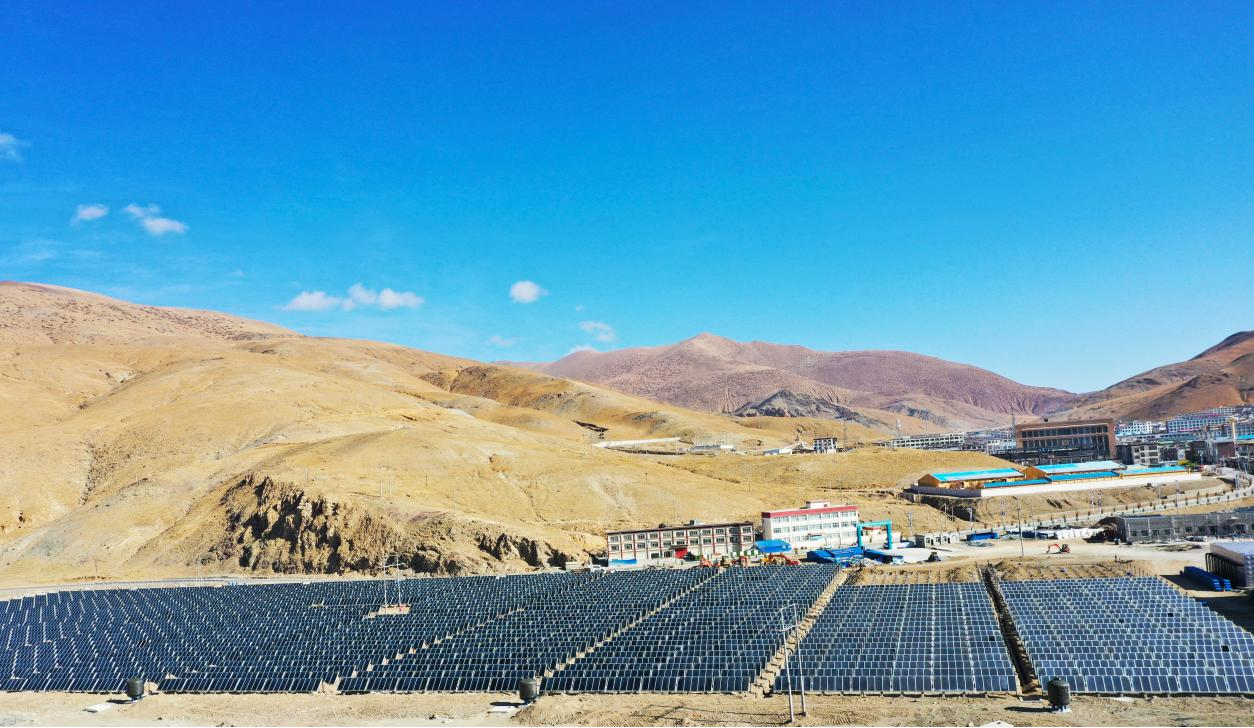
Large-area solar thermal can also support space heating where the heating load, climate and storage strategy fit. SOLETKS project data includes the Saga County Town centralized solar heating project in Shigatse, Tibet, where EFPC115 large flat plate collectors provide heating coverage for 107,000 m² and reduce coal consumption by 2,424 tons annually.
This type of project is very different from a small domestic solar water heater. It requires district heating design, seasonal load analysis, thermal storage, backup planning and strong engineering support.

Real SOLETKS Project Signals
Project data helps buyers understand whether a supplier can move from product sales to complete thermal system design.
| Project | Year / Location | Published Scale or Result | Γιατί έχει σημασία |
|---|---|---|---|
| Saga County Town centralized solar heating | 2019, Shigatse, Tibet | 107,000 m² heating coverage; 2,424 tons annual coal reduction | Shows large-scale flat plate collector heating application |
| APEC Summit hotel hot water system | 2014, Beijing | 50 tons/day hot water; 150,000 kWh annual savings; 74 tons CO2 reduction | Shows commercial hotel hot water performance |
| Florida resort villa hot water project | 2022, Florida, USA | 200 L/day hot water for each resort villa | Shows small commercial/resort hot water use |
| Harz Church hot water project | 2021, Germany | 22 tons/day hot water with engineering-grade collectors in series/parallel configuration | Shows centralized hot water system design |
| Tianjin school TPV Pro+ heat pump project | 2024, Tianjin | 3,000 m² heating project with on-site electricity generation | Shows PVT + heat pump hybrid use case |
These examples should be placed near the middle or lower part of the article so the page does not feel like a simple product advertisement. The purpose is to prove that the selection advice is backed by real applications.
Storage Tank and Backup Heating Design
Solar collectors do not work alone. Storage and backup heating are essential for stable hot water.
A well-designed hot water system should define:
- Storage tank volume
- Tank material and corrosion protection
- Pressurized or non-pressurized design
- Heat exchanger capacity
- Pump station and circulation logic
- Controller and temperature sensors
- Τύπος εφεδρικού θερμαντήρα
- Maximum tank temperature
- Anti-scalding protection where required
- Προστασία από Πάγωμα
- Overheat protection
- Pipe insulation
- Maintenance access
SOLETKS solar hot water system content describes storage options from 100 L to 10,000 L+ and integration with heat pumps or boilers. For commercial systems, the best design is usually solar preheating plus a reliable backup source.
Solar thermal should reduce the fuel or electricity consumed by the backup heater. It should not remove the need for backup when the building requires guaranteed hot water at night, during cloudy days or during peak demand.
Common Mistakes When Buying Solar Collector Panels
Mistake 1: Comparing Tube Count Instead of Useful Output
Tube count does not equal useful heat. Compare collector area, absorber performance, heat-loss behavior, system design and annual output.
Mistake 2: Looking Only at Advertised Efficiency
A single efficiency number can be misleading. Buyers should compare η0 together with a1, a2, aperture area and annual thermal yield.
Mistake 3: Ignoring Required Water Temperature
A collector that works well for pool heating may not be the best choice for 60-70°C commercial hot water.
Mistake 4: Ignoring Climate
Solar radiation, outdoor temperature, wind, snow and seasonal demand strongly affect collector choice.
Mistake 5: Buying Collectors Without Storage Design
A good collector field can perform poorly if storage is too small, poorly controlled or badly connected to the backup heater.
Mistake 6: Choosing PVT Without a Heat Load
PVT only makes sense when the recovered heat can be used. Otherwise, the buyer may be paying for thermal complexity without enough benefit.
Mistake 7: Ignoring Maintenance Access
Commercial systems need access to collectors, tubes, manifolds, sensors, valves, pumps, tanks and controllers.
Mistake 8: Asking Only for Price per Panel
For real projects, ask for system sizing, expected solar fraction, storage recommendation, backup integration and ROI logic. Price per collector panel alone is not enough.
SOLETKS Solar Collector Product Direction
SOLETKS can position this article as a hub page that connects buyer intent to specific product categories.
For Flat Plate Collector Buyers
Recommended internal link: Ηλιακός συλλέκτης επίπεδης πλάκας
Use this path when buyers need durable, clean-looking solar thermal collectors for domestic hot water, commercial hot water, pools, hotels, apartments or industrial preheating.
For Evacuated Tube Collector Buyers
Recommended internal link: Εκκενωμένος σωλήνας ηλιακός συλλέκτης
Use this path when buyers need cold-climate performance, higher outlet temperature, vacuum insulation or heat pipe collector logic.
For Complete Hot Water System Buyers
Recommended internal link: Ηλιακά Συστήματα Θερμού Νερού και Εμπορικό / Βιομηχανικό ηλιακό σύστημα ζεστού νερού
Use this path when buyers need collectors, storage tanks, pumps, controls, backup integration and project sizing support.
For Hybrid Energy Buyers
Recommended internal link: PVT Ηλιακό πάνελ
Use this path when the buyer needs both electricity and heat, especially for buildings, campuses, heat pump support and premium low-carbon projects.
For Proof and Trust
Recommended internal links:
These links help buyers verify project experience, certifications, quality control and inquiry channels.
What Information Should Buyers Send for a Quotation?
For the fastest technical recommendation, send SOLETKS the following information:
- Project country and city
- Building type: home, hotel, apartment, school, hospital, factory, laundry, resort, pool or other
- Daily hot water demand in liters or tons
- Cold-water inlet temperature
- Target hot-water temperature
- Peak usage time
- Available roof or ground installation area
- Roof type, orientation and tilt if available
- Minimum winter temperature
- Existing boiler, heat pump, electric heater or other backup system
- Storage tank availability or required tank size
- System pressure requirement
- Water quality condition
- Desired solar coverage or payback target
- Photos, drawings or mechanical room layout
- Certification requirements for the target market
- OEM / ODM or private-label requirements if the buyer is a distributor
Mid-Page CTA
Not sure whether to choose flat plate, evacuated tube, heat pipe or PVT?
Send your daily hot water demand, location, target temperature and available installation area. SOLETKS can estimate suitable collector type, collector area, storage direction and backup heating strategy before you request a final quotation.
Buyer Decision Path
Use this simple decision path before choosing a solar collector panel:
- If the project only needs warm water or pool heat, consider flat plate or PVT depending on whether electricity is also useful.
- If the project needs standard domestic or commercial hot water, compare flat plate, evacuated tube and heat pipe options by climate, area and budget.
- If the project is cold, windy or needs higher outlet temperature, give more weight to evacuated tube or heat pipe collectors.
- If the project has limited roof area and needs both power and heat, evaluate PVT.
- If the project has stable daily hot water demand, calculate ROI using energy price, solar coverage and annual useful heat.
- If the project needs guaranteed supply, design solar with storage and backup heating instead of treating collectors as a stand-alone solution.
Συχνές Ερωτήσεις
What are solar collector panels?
Solar collector panels are solar thermal devices that absorb sunlight and convert it into heat. They are used for domestic hot water, commercial hot water, pool heating, space heating support and industrial preheating.
Are solar collector panels the same as solar PV panels?
No. Solar collector panels produce heat. Solar PV panels produce electricity. PVT panels combine photovoltaic electricity generation with heat recovery.
Which solar collector panel is best for hot water?
The best solar collector panel depends on climate, target temperature, roof area, storage design, pressure requirement and budget. Flat plate collectors are often strong in warm and moderate climates. Evacuated tube and heat pipe collectors are often selected for colder climates or higher temperature demand.
Are evacuated tube collectors better than flat plate collectors?
Not always. Evacuated tube collectors often perform well in cold or windy climates and at higher temperature difference. Flat plate collectors can be more economical, durable and visually simple for warm or moderate climates.
How do I calculate how many solar collector panels I need?
Start with heat demand:
Daily heat demand = water volume × temperature rise × 0.001163
Then estimate collector area using local solar irradiation, target solar fraction and useful system efficiency. Final design should be checked by a supplier using certified collector data and project conditions.
What is aperture area in a solar collector?
Aperture area is the effective area through which sunlight enters the collector. It is different from gross area, which is the outside footprint of the panel. Use the same area basis when comparing collector performance.
What does η0 mean for a solar collector?
η0 is optical efficiency. It describes near-ideal conversion of sunlight into heat when heat loss is very low. It should be compared together with heat-loss coefficients a1 and a2.
Why can a lower η0 collector produce more annual heat?
If the collector has much lower heat loss, it may deliver more useful heat over a year, especially when the collector operates hotter than the surrounding air. Annual thermal yield is often more useful than peak efficiency for project decisions.
Do solar collector panels need a storage tank?
Most hot water systems need storage because solar heat is produced during daylight while hot water demand may occur at different times. Commercial systems usually need tanks, controllers, pumps and backup heating.
Can solar collector panels work with a boiler?
Yes. Many systems use solar collectors to preheat water before a gas, diesel, electric or biomass boiler. This reduces fuel consumption while keeping reliable backup hot water supply.
Can solar collector panels work with a heat pump?
Yes. Solar thermal collectors and PVT panels can support heat pump systems when the temperature, storage, flow rate and control logic are designed correctly.
When should I choose PVT instead of a standard solar thermal collector?
Choose PVT when the project needs both electricity and useful heat from the same roof area. If the project only needs heat, a dedicated solar thermal collector is usually simpler to evaluate first.
What is the best collector for a hotel hot water system?
For hotels, the best collector depends on daily hot water volume, climate, target temperature, roof area and backup heating. Flat plate collectors are strong in many warm or moderate climates. Evacuated tube or heat pipe collectors may be better in cold climates or high-temperature projects.
What information should I send to get a solar collector quote?
Send the project location, daily hot water volume, inlet temperature, target temperature, available installation area, peak usage time, existing backup heater, storage tank requirement and any certification needs.
Τελική Σύσταση
Do not choose solar collector panels by product name alone. Choose them by useful heat output, operating temperature, climate, storage design, backup heating and real project economics.
For small residential hot water, the decision may be simple. For hotels, hospitals, apartments, schools, laundries and industrial facilities, the best result usually comes from a complete system design: collector field, storage tank, circulation, control, backup and ROI calculation.
Send SOLETKS your project location, daily hot water demand, target temperature, inlet temperature, installation area and current heating method. SOLETKS can compare flat plate, evacuated tube, heat pipe and PVT collector options and recommend a practical solar hot water system direction for your project.