
CTC vs HPC Evacuated-Tube Collectors: Which Fits Hot Water or Higher-Temperature Heat?
Compare CTC and HPC evacuated-tube collectors by heat-transfer path, pressure, climate, service, water quality and project load before requesting a quotation.

CTC and HPC are not interchangeable labels for the same solar collector. The useful choice depends on how heat leaves the tube, whether the system loop is pressurized, what temperature the load needs, and how the owner will inspect and service the field.
The short answer is this: treat CTC as a hot-water collector category that still needs a current model datasheet, and treat HPC as a heat-pipe, pressurized evacuated-tube option when the project needs a separated collector loop, cold-climate heat retention or higher-temperature preheating. Neither is a universal winner. A quotation that lists only tube count and unit price is not enough to make the decision.
This guide is for commercial hot-water buyers, distributors and project engineers comparing a CTC hot-water collector with an HPC heat-pipe collector. It does not replace the installation manual, local structural design or the supplier’s current technical documentation.
What this guide adds
SOLETKS already has an HPC product guide and a general evacuated-tube versus flat-plate comparison. This article solves the narrower procurement problem those pages do not solve on their own: is a CTC-versus-HPC comparison evidence-ready for this project, or should the buyer stop and request more documentation?
The result is a comparison gate, not a second HPC datasheet. It is designed for the moment when a supplier has given a product name, a few headline values and a price, but the buyer still needs to decide whether the two offers are genuinely comparable.
What the available product evidence says
SOLETKS presents its مبدل آب گرم CTC as an evacuated-tube product for domestic hot water, central supply and industrial thermal processes. That establishes the product direction, but the public product label does not by itself establish the exact fluid path, pressure rating, tube configuration or allowable water quality.
کنونی HPC heat-pipe collector guide describes a pressurized evacuated-tube collector using sealed heat pipes and a manifold. It lists the HPC182, HPC240, HPC298, HPC370 and HPC442 models, with gross collector areas from 1.82 to 4.42 m². The same guide lists 0.6 MPa working pressure, 120 °C maximum operating temperature, 0.724 peak efficiency and 0.60 rated efficiency for the HPC range. Treat these as manufacturer-published product values for the identified HPC range, not as values that can be transferred to CTC or to a complete installed system.
آن SOLETKS evacuated-tube guide explains the broader design choices: heat-pipe, U-pipe and direct-flow arrangements have different hydraulic, freeze-protection and maintenance implications. That distinction is more useful than the product name alone.
Start with the heat path, not the tube count
Heat-pipe path: the HPC question
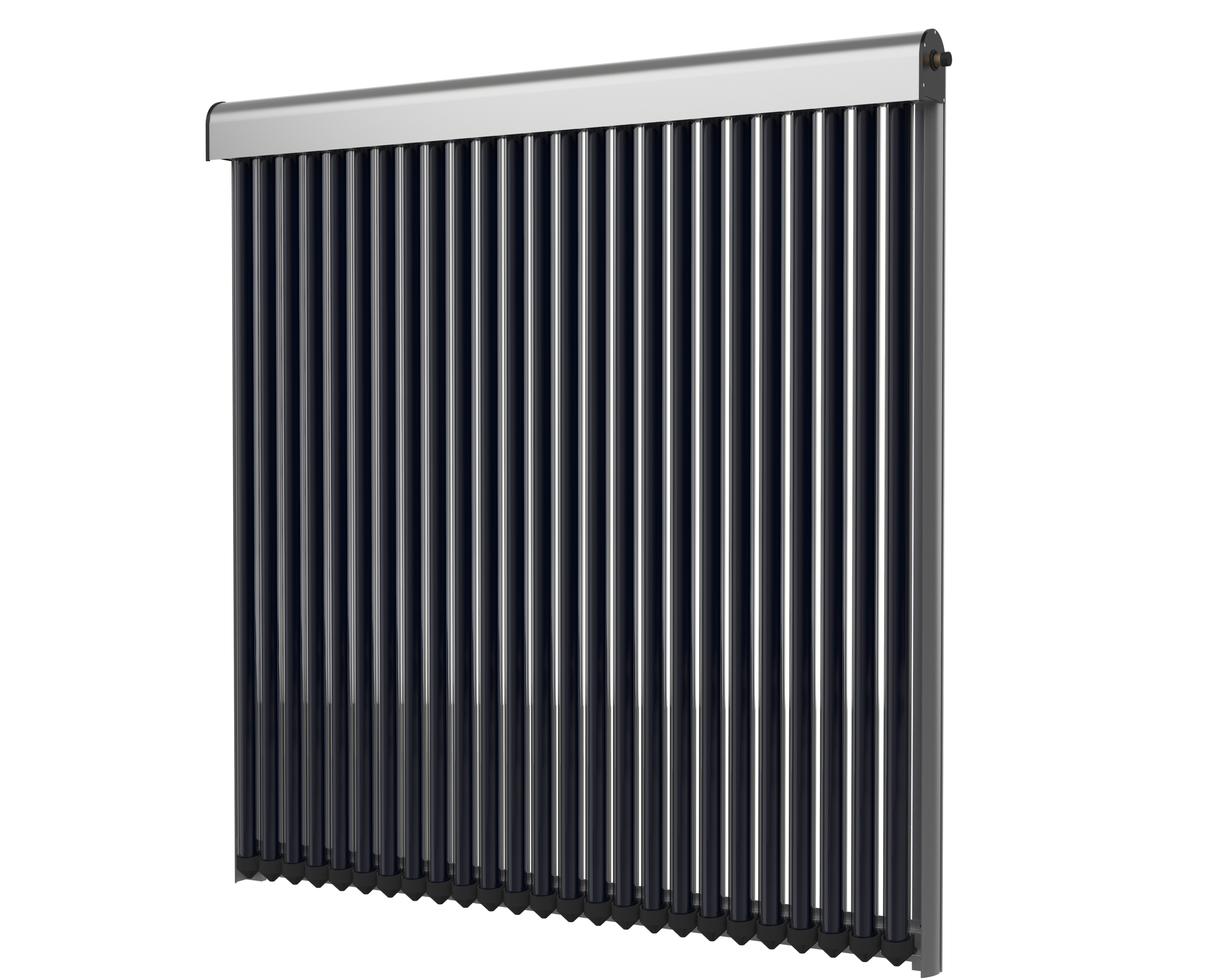
In a heat-pipe collector, solar energy heats a sealed heat pipe inside the evacuated tube. The working medium evaporates, rises to the condenser, releases heat into the manifold and returns by gravity. The main system fluid remains in the manifold and connected pipework rather than circulating through every glass tube.
That separation can simplify the conversation about a pressurized closed loop, tube-level service and an indoor storage tank. It does not remove the need for expansion vessels, pressure relief, freeze protection, overheat control or correct commissioning.
Fluid-through-tube path: the CTC question
If a CTC quotation uses a direct-flow or another fluid-through-tube arrangement, the buyer must check different risks. The fluid path, pressure, freeze method, scaling exposure and replacement procedure become central design questions. Do not infer that path from “CTC” alone. Ask the supplier to identify the actual construction on the current drawing or datasheet.
This is especially important where the collector loop is connected to potable water, where hard water can scale the circuit, or where the site experiences freezing conditions. A label that is adequate for a catalogue search is not adequate for a hydraulic design.
A practical comparison
| Decision dimension | CTC hot-water collector | HPC heat-pipe collector |
|---|---|---|
| Product evidence currently available | SOLETKS positions CTC for domestic, central and industrial hot water; exact model data must be requested | SOLETKS publishes an HPC model range and heat-pipe construction in the current guide |
| Heat-transfer path | Confirm whether the quoted model is direct-flow, U-pipe or another arrangement | Sealed heat pipe transfers heat into a manifold |
| Pressurized closed loop | Confirm maximum pressure, fluid compatibility and protection devices | The guide lists 0.6 MPa working pressure; the complete loop still needs compatible valves, piping and expansion capacity |
| Cold or windy site | Check tube design, freeze strategy and pipe exposure | Vacuum insulation and heat-pipe construction may suit cold or variable conditions, but they do not replace freeze protection |
| Higher-temperature preheating | Confirm tested performance at the required operating temperature | The guide lists 120 °C maximum operating temperature; design still needs stagnation and safety review |
| Water quality | Scaling and direct water contact may be decisive if fluid passes through the collector | A separated loop can change the water-quality arrangement, but the heat exchanger and system fluid still need review |
| خدمات | Confirm how a damaged tube, manifold or seal is replaced | Tube-level service may be practical; follow the current manual and safe access requirements |
| Data needed for a quote | Current model drawing, fluid path, pressure, recommended flow, certificates and spare parts | Model, aperture area, pressure, temperature, flow, layout, storage and backup information |
The table is a decision aid, not a performance ranking. A lower or higher published efficiency value does not predict annual useful heat without the same test conditions, operating temperature, climate, flow and load profile.
The four-gate procurement audit
Run these gates before putting CTC and HPC values in the same spreadsheet. A missing gate is not a small documentation problem; it can change the equipment choice.
| Gate | Minimum evidence | What a missing answer means |
|---|---|---|
| 1. Product identity | Exact model, revision, drawing and heat-transfer path | The name may describe a family rather than the quoted construction |
| 2. Comparable performance | Aperture or lighting area, test method, irradiance, inlet/outlet conditions and flow basis | Peak efficiency numbers cannot be compared responsibly |
| 3. System boundary | Working pressure, maximum temperature, fluid, heat exchanger, storage and backup connection | A collector value cannot be converted into a safe plant design |
| 4. Service and environment | Freeze strategy, water quality, spare parts, access, wind/snow and warranty exclusions | The lowest unit price may carry the highest operating risk |
Gate 1: identify the actual CTC construction
Ask the supplier to mark the quoted CTC model on a drawing and answer four questions: Does fluid pass through the tube? Is the loop direct, U-pipe or another arrangement? Which component is replaced when a tube fails? What pressure and fluid are allowed at the collector boundary?
Do not fill an unknown field with a generic “direct-flow” assumption. If the answer is not documented, record HOLD — construction not verified.
Gate 2: normalize the HPC values before comparison
The current HPC guide gives a useful model-specific starting point, but its values still have a boundary. Record the model, gross area, lighting/aperture area, pressure, temperature and the test conditions beside every number. Do not copy 0.724 peak efficiency, 0.60 rated efficiency or 0.6 MPa working pressure into a CTC column.
If one supplier gives a certified efficiency curve and another gives only a single brochure value, the correct result is NOT COMPARABLE, not a winner.
Gate 3: map the system boundary
The same collector can behave differently when it heats potable water directly, a closed glycol loop, a heat exchanger or a buffer tank. Draw the boundary that the supplier is responsible for and the boundary that the EPC or owner must design.
This is where pressure relief, expansion, freeze protection, stagnation control, storage and backup logic become part of the product decision. A high collector temperature is not a plant specification.
Gate 4: test the service story
Ask for the replacement procedure, safe access requirement, spare-tube part number, manifold service method and warranty exclusions. A heat-pipe design may make tube-level service practical, but the actual procedure remains model-specific. A direct-flow design may have a different intervention boundary and water-quality risk.
Go, hold or rework
Use this short decision record after the four gates:
| Result | Use it when | Next action |
|---|---|---|
| GO | Both products have identified heat paths, comparable test bases and compatible pressure, temperature, climate and service data | Complete system sizing and request a project-specific quotation |
| HOLD | CTC construction, test conditions, certificates or spare parts are missing | Ask for the missing drawing or datasheet; do not publish a product ranking |
| REWORK | The proposed collector cannot meet the system boundary, load schedule or environmental condition | Change the architecture, storage, protection strategy or product family |
This record is useful in an EPC approval file because it shows why a product was selected or why a quotation was returned for clarification.
Match the collector to the project task
1. Domestic or centralized hot water
For a residential, apartment or hotel hot-water system, first define the daily volume, cold-water temperature, target delivery temperature and peak-use window. A CTC model may fit when its verified fluid path and pressure arrangement match the proposed hot-water system. An HPC model may fit when the project benefits from a pressurized heat-pipe loop, an indoor tank or serviceable tube-level construction.
Do not choose by the number of tubes. Storage volume, pump flow, heat exchanger duty, backup heat and hygiene controls determine whether the building receives hot water at the required time.
2. Industrial preheating
Industrial washing, cleaning or process-preheating loads often benefit from solar heat before a boiler, heat pump or electric heater. The key question is not whether the collector can produce a high outlet temperature on a clear day. It is whether the collector field can deliver useful heat at the process inlet temperature, flow rate and operating schedule.
HPC is a candidate when the project needs a pressurized loop and higher-temperature preheating, subject to the current model data. CTC remains a candidate only after the supplier confirms its heat path, pressure and tested performance for the actual load. Neither product should be presented as able to replace the final heater without a load and backup study.
3. Cold or variable climates
Vacuum insulation can reduce heat loss when the collector is operating above a cold ambient temperature. That is one reason evacuated tubes are often considered for cold or windy sites. The design still needs a complete freeze strategy: glycol or another approved fluid, heat exchangers where required, insulation, drainback or controller-based protection, safe shutdown and a recovery plan for pump or sensor faults.
HPC’s heat-pipe path can reduce the amount of system fluid exposed inside the tubes, but it is not proof that the whole installation is freeze-safe. Request the supplier’s minimum-temperature guidance for the exact model and system configuration.
4. Warm-climate, moderate-temperature loads
If the project only needs moderate-temperature heat in a warm climate, a flat-plate collector may be simpler or more economical. SOLETKS also offers flat-plate collector products. The correct comparison should include the full installed system: structure, pipework, tank, pump station, controls, maintenance access and backup energy—not just the collector price.
What to put in the RFQ
Send the same project information to every supplier so that the responses are comparable:
- Project city, altitude and minimum outdoor temperature.
- Building or process type and daily hot-water or preheating demand.
- Cold-water inlet temperature, target temperature and peak demand schedule.
- Existing boiler, heat pump, electric heater, tank or heat exchanger.
- Required system pressure and whether the collector loop is open, closed or indirect.
- Available roof or ground area, orientation, tilt, shading, wind and snow conditions.
- Water-quality information, especially hardness or scaling concerns.
- Required certificates, test method, warranty and spare-tube availability.
- Preferred delivery quantity, packaging limits and whether OEM documentation is needed.
- A request for the current model drawing, hydraulic connection diagram, recommended flow range and installation manual.
Ask the supplier to identify the proposed product in plain terms: heat-pipe, U-pipe or direct-flow; fluid medium; maximum working pressure; maximum operating temperature; recommended flow; and the boundary of any published efficiency value.
Questions that should stop the quotation
Pause the order if any of these answers is missing:
- The CTC label is present, but the heat-transfer path is not identified.
- The pressure rating is given for the collector, but no compatible valves, expansion vessel or relief arrangement is shown.
- A peak efficiency value is quoted without test conditions or an efficiency curve.
- The supplier has not explained how freezing, stagnation and low-flow conditions are handled.
- The quote excludes storage, heat exchanger, pump station, controls or backup integration even though the buyer expects a complete hot-water result.
- The proposed model cannot be serviced safely or spare tubes are not available.
سوالات متداول
Is CTC or HPC always better?
No. HPC has a clearer published heat-pipe and pressurized product boundary in the current SOLETKS guide. CTC can still be the right hot-water product when its exact construction, pressure, water-quality arrangement and test data fit the project. The missing evidence is part of the decision.
Can I use the HPC efficiency value to estimate a CTC array?
No. Efficiency must be compared under a common test basis and then translated through the actual climate, operating temperature, flow, storage and load. A headline HPC value is not a substitute for a CTC test curve.
Does a heat pipe remove freeze-protection design?
No. It can change how much system fluid is exposed inside the tube, but the manifold, piping, heat exchanger, controls and backup state still need a complete freeze strategy.
What is the minimum CTC document package?
Request the exact model drawing, heat-transfer path, working and maximum pressure, maximum operating temperature, recommended flow, test basis, fluid/water-quality limits, mounting requirements, spare parts and warranty exclusions.
What should be in the comparison spreadsheet?
Keep separate columns for product identity, aperture/lighting area, test conditions, heat path, pressure, temperature, fluid, storage boundary, protection method, service access, certificates and unresolved questions. A single “efficiency” column hides too much.
Final decision rule
Choose CTC when the exact hot-water collector construction, pressure, water-quality arrangement and service path fit the project and are supported by current documentation. Choose HPC when the verified heat-pipe, pressurized design and model data match the required load, climate and maintenance plan. Choose neither by name alone.
For a project quotation, send SOLETKS the location, daily load, inlet and target temperatures, pressure requirement, roof or ground area, climate data, existing heater and certificate needs. The supplier can then compare CTC, HPC, flat-plate and complete-system options against the same engineering brief.