
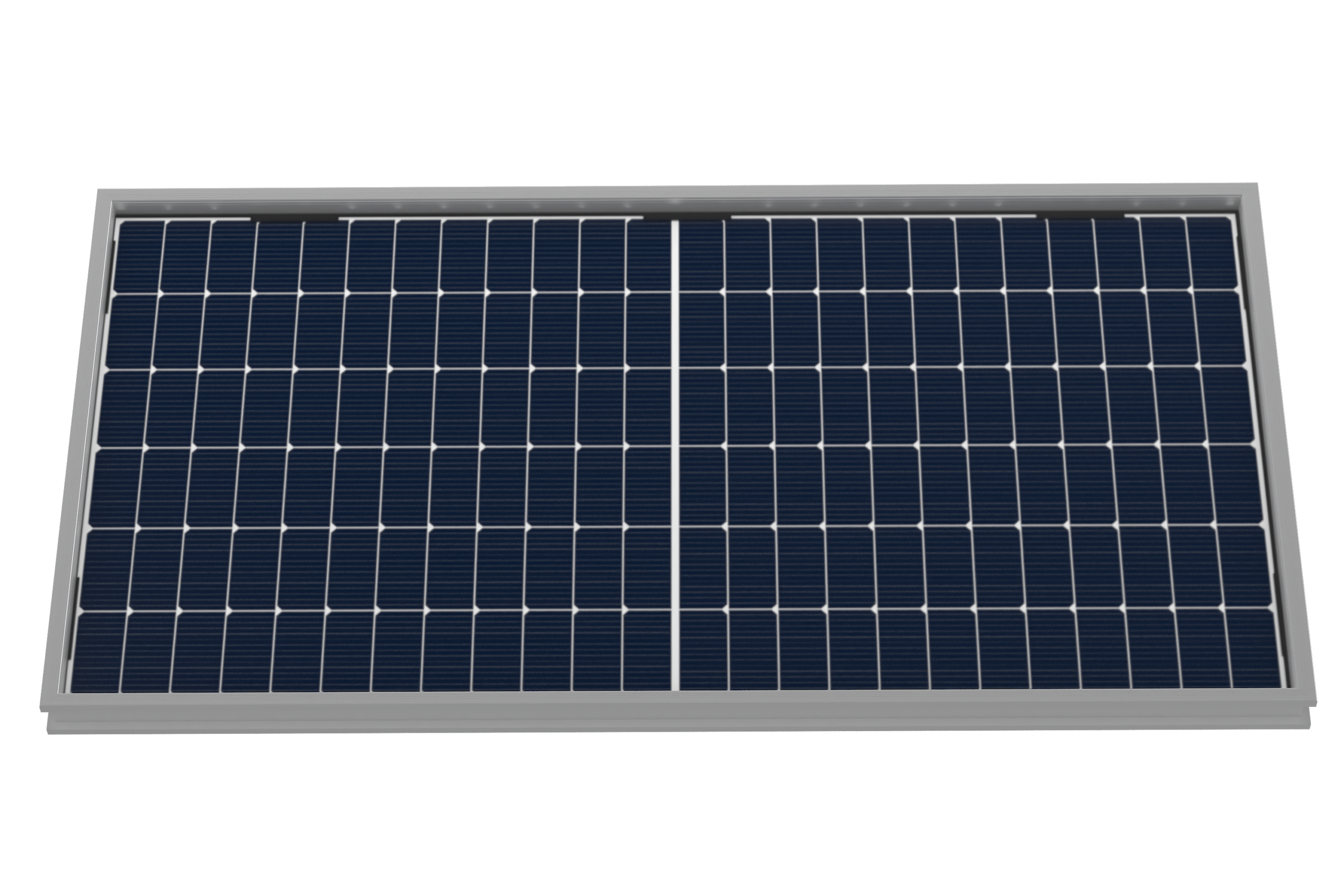
A PVT-T type solar panel is a photovoltaic thermal module designed to produce electricity ja collect usable heat from the same roof area. It is most valuable when a project has limited installation area and a steady thermal load — domestic hot water, pool heating, low-temperature space heating, industrial preheating, or a heat pump source loop.
Why PVT-T Panels Exist
Most roofs have a fixed area. A project owner often has to choose between PV modules for electricity and solar thermal collectors for hot water. PVT-T technology addresses this design conflict by combining both functions in one product.
The engineering problem is straightforward:
- PV modules become hot under sunlight.
- Higher module temperature can reduce electrical performance.
- Buildings often need heat for water, process use, pools, or heating.
- Roof area is limited.
A PVT-T panel uses the heat behind the PV layer instead of allowing all of it to dissipate into the air. In a well-designed system, this heat becomes part of the building’s energy plan — not a by-product.
What Makes a PVT-T Type Panel Different?
PVT-T panels belong to the broader PV-T family, but the “T” type is designed around useful thermal transfer, not only passive cooling. Every layer serves a defined function:
| Layer or Component | Toiminto |
|---|---|
| PV glass and cells | Convert sunlight into electricity |
| Thermal absorber | Collect heat from the back of the PV layer |
| Fluid channels | Move heat into a water or glycol loop |
| Insulation or backing | Reduce unwanted heat loss, depending on design |
| Junction box and cables | Connect the PV side to the electrical system |
| Hydraulic connections | Connect the thermal side to tanks, heat pumps, or heat exchangers |
A PVT-T panel should be evaluated as both an electrical product and a solar thermal product. Buyers should ask for PV electrical data, thermal performance data, pressure limits, stagnation behaviour, fluid compatibility, and installation requirements.
Toimintaperiaate
The PVT-T system operates in two parallel energy paths.
Electrical Path
Sunlight reaches the PV cells, which produce direct current electricity. The output is connected to an inverter, used by the building, or exported according to the local electrical design.
Thermal Path
Heat builds behind the PV layer. The thermal absorber transfers this heat to a circulating fluid, which then delivers it to a storage tank, buffer tank, heat exchanger, heat pump evaporator loop, or a direct low-temperature load.
Key Concept: Useful Heat, Not Just Hot Fluid
Design Rule
PVT-T panels are strongest when the collected heat has a real destination. A project should install PVT because the building has a usable heat load — not simply because the technology sounds advanced.
Good Thermal Destinations
- Domestic hot water preheating
- Heat pump source water or brine loop
- Swimming pool heating
- Low-temperature radiant heating support
- Industrial wash water preheating
- Agricultural drying or process preheating
- Large buffer tanks in commercial systems
Poor Thermal Destinations
- Buildings with almost no hot water demand
- Systems without enough storage
- Projects needing only high-temperature heat without a heat pump or backup source
- Roofs where hydraulic installation is too complex for the thermal value gained
PVT-T vs PV-Only vs Solar Thermal
PVT-T Panel vs PV-Only Roof
| Decision Factor | PV-Only System | PVT-T System |
|---|---|---|
| Main output | Sähkö | Electricity and heat |
| Roof energy density | Electrical output only | Dual energy output |
| Hot water contribution | No direct contribution | Yes, if connected to a thermal load |
| Lämmityspumpun integrointi | Separate thermal source required | Can support a heat pump source loop |
| System complexity | Alhaisempi | Higher |
| Best use case | Power-only projects | Buildings needing power and heat |
PVT-T Panel vs Solar Thermal Collector
| Decision Factor | Solar Thermal Collector | PVT-T tyypin aurinkopaneeli |
|---|---|---|
| Output | Heat only | Electricity plus heat |
| Thermal efficiency at high temperature | Often higher | Depends on operating temperature and design |
| Electrical output | Ei mitään | Yes |
| Best application | Hot water-only projects | Hybrid power and heat projects |
| Roof layout | Separate from PV | Combines PV and thermal surface |
| Heat pump support | Yes, depending on collector loop | Yes, commonly used for low-temperature source support |
If the project only needs maximum hot water output, a dedicated evacuated tube or flat plate collector may be more suitable. If the project needs both electrical and thermal output from the same area, PVT-T deserves serious evaluation.
PVT-T and Heat Pump Systems
One of the most important applications is the PVT heat pump system. A heat pump moves heat from a source to a useful temperature level — the quality and stability of that source directly affects performance.
A PVT-T loop can serve as:
- A solar preheating loop for the tank
- A low-temperature heat source for a water-source or brine-source heat pump
- A roof-based thermal collection loop to reduce reliance on air-source operation
- A buffer between solar collection and final hot water production
The PVT panel does not need to deliver final hot water temperature by itself. In many designs, it only needs to raise the source temperature enough for the heat pump to operate efficiently.
Typical System Architecture
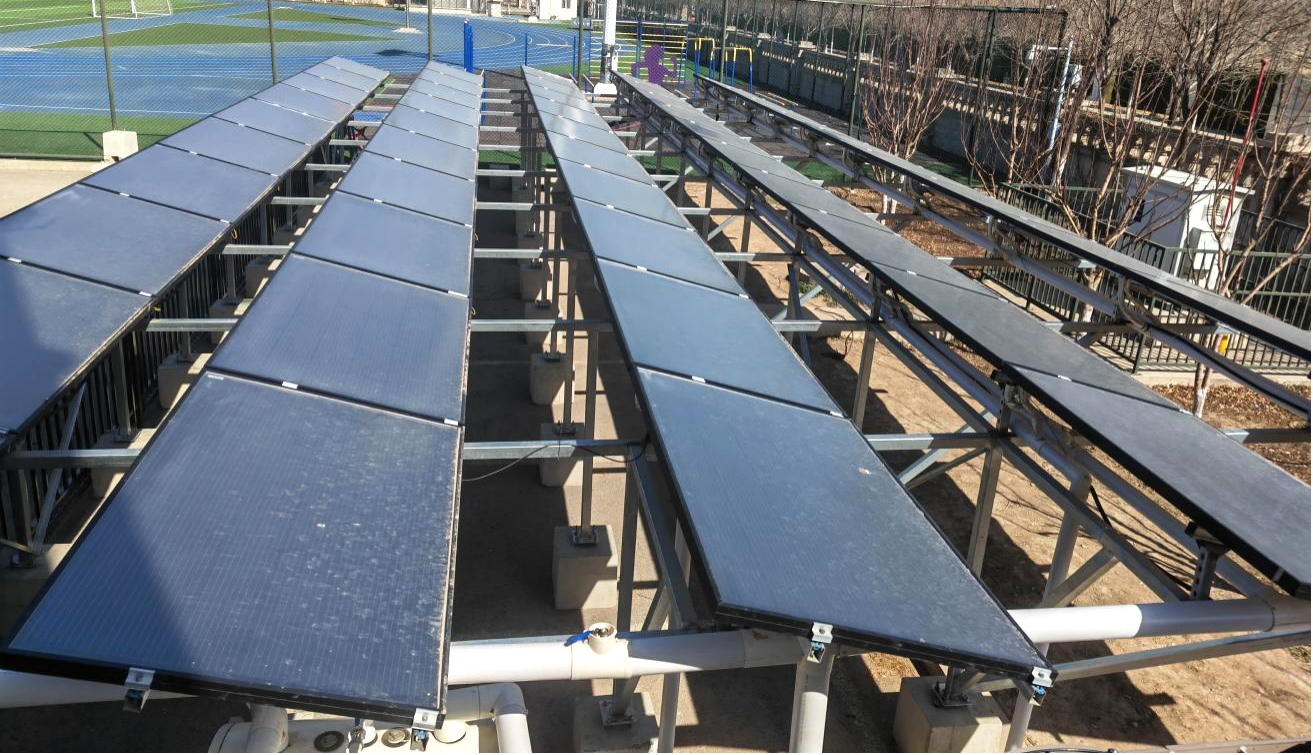
A commercial PVT-T system follows this operational logic:

Sizing Logic for PVT-T Projects
PVT-T sizing should start with energy demand, not panel count.
Step 1 — Estimate Daily Hot Water Energy
A basic hot water energy estimate:
Energy (kWh/day) = Volume (L/day) × Temperature rise (°C) × 4.186 ÷ 3600
Example Calculation
- Daily hot water demand: 5,000 L
- Cold water inlet: 15 °C
- Target storage temperature: 55 °C → rise = 40 °C
5,000 × 40 × 4.186 ÷ 3600 ≈ 233 kWh/day (before system losses)
Step 2 — Define Solar Fraction
Solar fraction is the percentage of the load expected from solar energy. A high solar fraction requires more panels and more storage; a moderate fraction can be more economical in commercial systems.
Step 3 — Match Operating Temperature
PVT thermal output is most favourable at lower loop temperatures — excellent for preheating, heat pump source loops, and pool heating. For very high final temperatures, consider combining with a aurinkolämmitin or a dedicated collector.
Step 4 — Check Roof Area and Hydraulics
- PV cabling and inverter layout
- Thermal piping routes
- Expansion tank and pressure safety
- Freeze protection and pump power
- Wind, snow, and structural load
- Service access
Step 5 — Confirm Seasonal Use
A PVT-T system should not produce large amounts of unusable heat in summer. If the building has seasonal demand variation, plan storage, heat rejection, pool heating, or load management accordingly.
Operating Temperature Matters
The lower the thermal loop temperature, the easier it is for solar thermal products to operate efficiently. PVT-T panels are especially attractive for moderate-temperature applications:
- cURL Too many subrequests.
- Cold water preheating
- Heat pump source support
- Low-temperature buffer tanks
- Industrial preheating before boiler final heating
When high final water temperature is required, a heat pump or backup heater should be included in the design.
Sovellukset
Hotels and Resorts
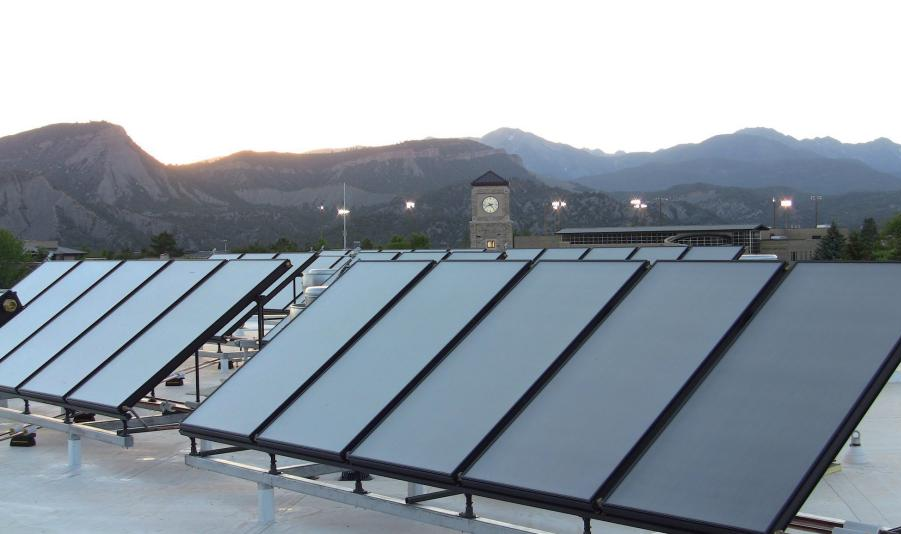
Hotels need electricity and hot water every day. A PVT-T system can support guest room hot water, laundry preheating, kitchen hot water, and general building electricity from the same roof surface.
Villas and Residential Projects
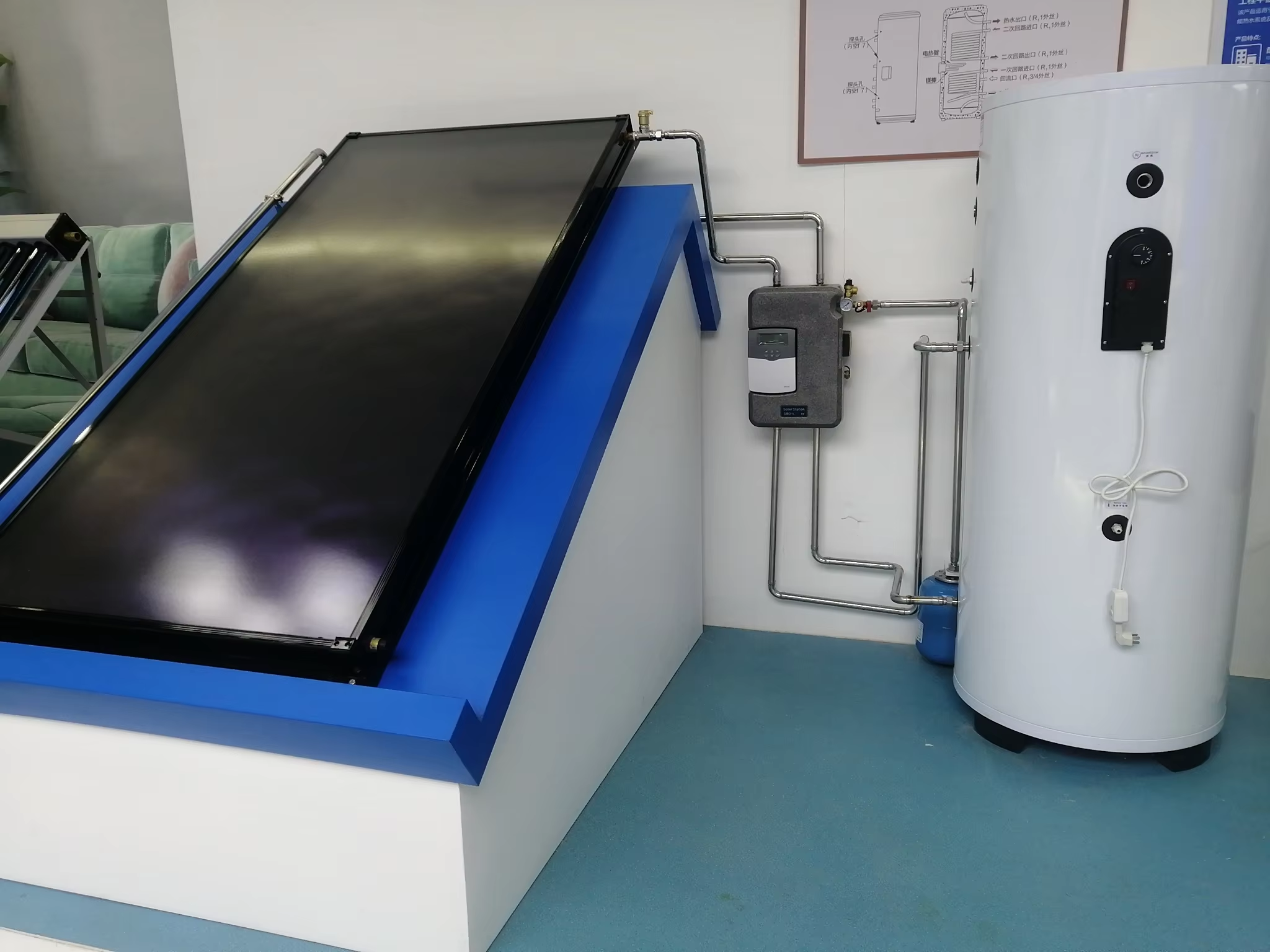
For villas with limited roof area, PVT-T panels combine solar power and hot water. The system may be connected to a storage tank, heat pump, or aurinkolämmitin for radiant heating support.
Schools and Dormitories
Dormitories often have predictable shower demand. A PVT-T system can be designed around morning and evening peaks with storage and backup heating.
Factories
Factories may use hot water for washing, process preheating, or staff facilities. PVT-T can reduce conventional energy consumption when the heat load is steady.
Swimming Pools
Pools are excellent low-temperature heat loads. PVT-T panels can provide heat while generating electricity for pumps and facility operation.
When PVT-T Is the Best Choice
- Roof area is limited and the building needs both electricity and hot water
- The project has continuous daily thermal demand
- A heat pump system needs a solar source loop
- The owner wants a hybrid solar solution rather than separate PV and thermal arrays
- The installation team can handle both electrical and hydraulic work
When Another Product May Be Better
- The project only wants low-cost electricity → standard PV is simpler
- Only high-temperature solar thermal is needed → evacuated tube or flat plate collector
- There is no usable heat load
- Maintenance access for piping is poor
- Budget does not allow hybrid system complexity
For these cases, SOLETK also supports solar water heaters ja solar collectors depending on the application.
Selection Checklist for Buyers
Before purchasing PVT-T panels, request or confirm:
- Electrical rated power and temperature coefficient
- Thermal output data under defined test conditions
- Maximum operating pressure
- Recommended heat transfer fluid
- Flow rate range
- Stagnation temperature behaviour
- Freeze protection strategy
- Wind and snow load compatibility
- Mounting method
- Hydraulic connection type
- Warranty terms for PV and thermal parts
- Recommended controller and pump logic
- Compatibility with heat pumps and storage tanks
Related Products
Frequently Asked Questions
Ready to Design Your PVT-T System?
Send us your project location, roof area, daily hot water demand, target water temperature, heat pump plan, and installation drawings. SOLETK will recommend a hybrid solar configuration for your building or commercial project.
Request a Free Quote View All PVT Panels