
Quick answer: SOLETKS HPC heat pipe solar collectors are pressurized evacuated tube solar thermal collectors that use vacuum tubes and sealed heat pipes to transfer solar heat into a manifold. The product range includes HPC182, HPC240, HPC298, HPC370 and HPC442 models with 0.724 peak efficiency, 0.6 MPa working pressure, 120 °C maximum operating temperature and gross collector areas from 1.82 m² to 4.42 m².
Terbaik untuk: residential split solar water heaters, commercial hot water, hotels, apartments, schools, hospitals, swimming facilities, factories, industrial water pre-heating, agriculture, aquaculture and cold-climate projects that need strong heat retention and practical tube-level service.
Not best for: projects that only need low-temperature pool heating in a warm climate, projects with no stable hot-water or pre-heating load, or buyers who want to compare collectors only by tube count without looking at aperture area, thermal efficiency, heat loss, working pressure and complete system design.
Request HPC Collector System Proposal | View Technical Data | Send RFQ Data
Verified HPC Fact Box
| Fact | Verified value | Why it matters |
|---|---|---|
| Product type | Pressurized evacuated tube heat pipe solar collector | Matches buyers searching for heat pipe solar collector, vacuum tube collector or pressurized solar thermal collector. |
| Model range | HPC182, HPC240, HPC298, HPC370, HPC442 | Gives engineers a real selection path instead of a generic product description. |
| Gross collector area | 1.82-4.42 m² | Helps roof layout and rough collector field planning. |
| Lighting area | 1.20-3.00 m² | Helps compare useful solar input area more fairly. |
| Vacuum tube specification | Φ58 × 1800 mm | Confirms tube size and compatibility class. |
| Tube wall thickness | Outer wall 2.0 mm; inner wall 1.6 mm | Useful for durability and procurement comparison. |
| Number of tubes | 12, 16, 20, 25 or 30 | Gives a clear physical model difference. |
| Net weight | 42-99 kg | Important for roof load, handling and logistics. |
| Tekanan kerja | 0,6 MPa | Supports pressurized hot-water and closed-loop system design. |
| Antarmuka | Φ22, two interfaces | Needed for piping and manifold connection planning. |
| Total heat loss coefficient | 2.453 W/(m²·K) | Shows how performance declines as collector temperature rises above ambient. |
| Maximum operating temperature | 120 °C | Important for overheat, stagnation and safety planning. |
| Efisiensi puncak | 0.724 | Useful for technical comparison with other collectors. |
| Nilai efisiensi | 0.60 | More conservative reference for practical sizing discussion. |
| Specified power at 1000 W/m² | 0.72-1.80 kW by model | Helps engineers estimate field output under clear-sun conditions. |
| Fin material | 3003 anti-rust aluminum, 0.2 mm wall thickness, 1620 mm length | Confirms absorber/fin material used in the product structure. |
| Core uses | Domestic hot water, commercial hot water, industrial pre-heating, cold-climate systems | Aligns product selection with real thermal loads. |
Important performance note: collector output is not fixed by model name alone. Real heat delivery depends on solar irradiation, collector tilt, ambient temperature, inlet temperature, flow rate, pipe loss, storage volume, controller logic, freeze protection, scaling control and backup heating strategy.
What Is an HPC Heat Pipe Solar Collector?
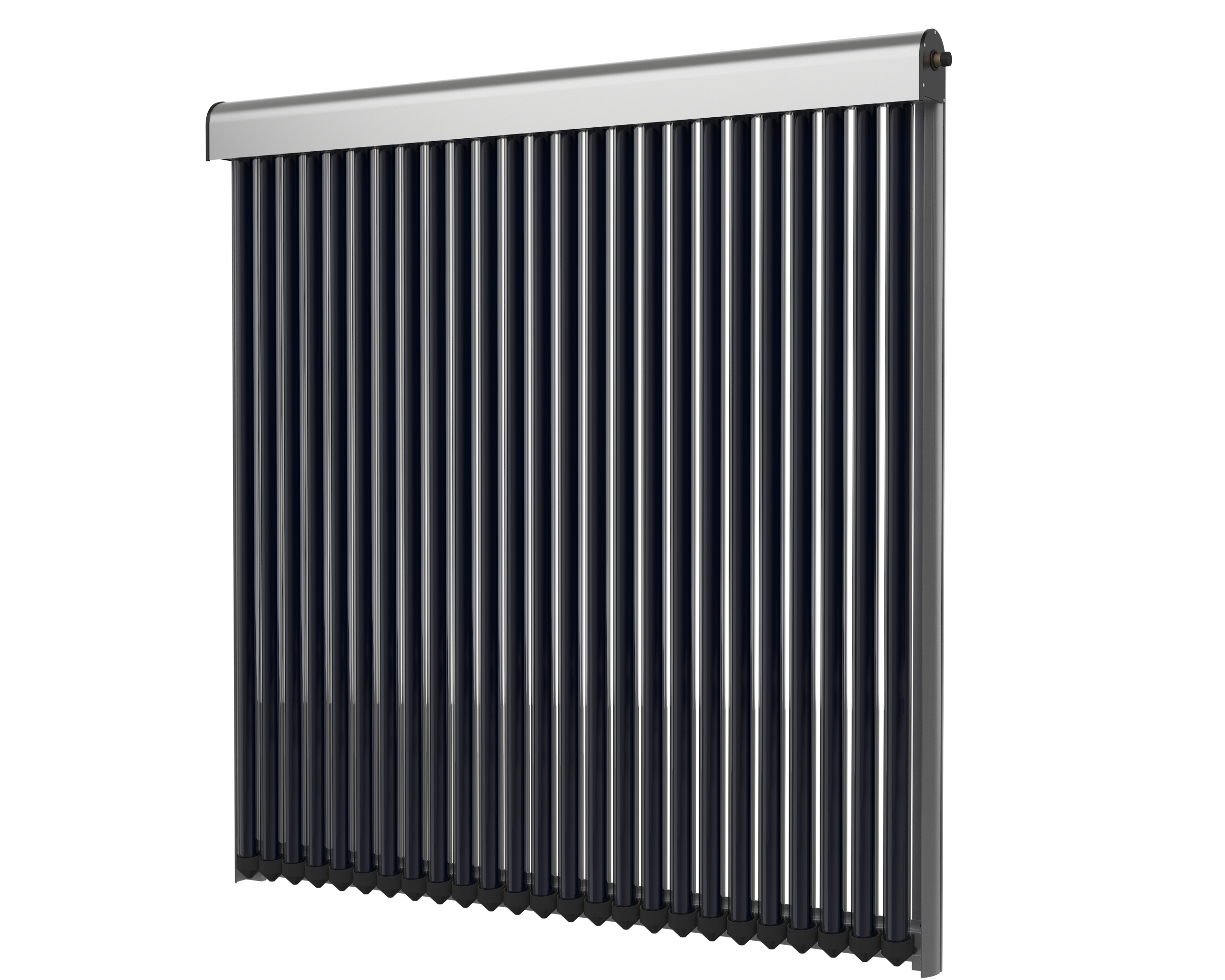
An HPC heat pipe solar collector is an evacuated tube solar thermal collector that uses a sealed heat pipe inside each vacuum tube. Solar radiation passes through the outer glass tube and is absorbed by the selective coating. Heat moves into the heat pipe, where a small quantity of working medium evaporates, rises to the condenser end and releases heat into the manifold. The condensed medium returns by gravity and the cycle repeats while solar heat is available.
The main system loop does not need to circulate directly through every glass tube. Instead, the heat pipes transfer heat from the tubes into the manifold. This separation helps with pressurized system design, practical tube replacement and cold-climate maintenance planning.
An HPC collector should be understood as one component of a complete solar thermal system. The final hot-water result depends on the collector field, storage tanks, heat exchangers, pumps, controllers, expansion vessels, valves, pipe insulation, backup boiler or heat pump and commissioning quality.
Why Vacuum Tubes Matter
Vacuum insulation is the reason evacuated tube collectors are useful in colder or higher-temperature applications. In a simple absorber design, collected heat can escape through conduction and convection. In an evacuated tube, the vacuum layer reduces these losses, helping the collector maintain useful heat when outdoor air is cold, windy or variable.
This is why HPC heat pipe collectors are commonly considered for:
- Cold-climate domestic hot water
- Hotels and commercial buildings with higher hot-water temperature demand
- Schools, dormitories and hospitals with predictable daily hot-water loads
- Industrial water pre-heating before boilers or heat pumps
- Agricultural and aquaculture thermal support
- Swimming pools, spas and wellness facilities when year-round or shoulder-season heating is needed
- Projects where maintenance access and tube-level service are important
Flat plate collectors can still be the better option in many warm-climate, low-temperature or simple roof-integration projects. HPC becomes more valuable when the project needs low heat loss, pressurized operation, better winter performance or higher useful water temperature.
How Heat Pipe Transfer Works
- Solar radiation enters the evacuated tube. The glass tube transmits sunlight to the absorber surface.
- Selective coating absorbs energy. The absorber converts solar radiation into heat while reducing thermal emission.
- Heat reaches the sealed heat pipe. The heat pipe contains a working medium designed to evaporate under solar heating.
- Vapor rises to the condenser. The vapor moves upward to the condenser end located in the manifold.
- Heat transfers into the system loop. The condenser releases heat to water or heat-transfer fluid in the manifold.
- Condensate returns downward. The working medium condenses and returns by gravity to the lower section.
- The cycle repeats. The collector continues operating as long as solar heat and correct system conditions are present.
This design gives a fast thermal response and keeps the main system fluid in the manifold and piping loop, rather than inside every tube path.
Verified HPC Technical Data
Model and Mechanical Parameters
| Parameter | HPC182 | HPC240 | HPC298 | HPC370 | HPC442 |
|---|---|---|---|---|---|
| Outline dimension (mm) | 1025 × 1920 × 131 | 1325 × 1920 × 131 | 1625 × 1920 × 131 | 2000 × 1920 × 131 | 2375 × 1920 × 131 |
| Vacuum tube specification | Φ58 × 1800 mm | Φ58 × 1800 mm | Φ58 × 1800 mm | Φ58 × 1800 mm | Φ58 × 1800 mm |
| Tube wall thickness | Outer 2.0 mm / inner 1.6 mm | Outer 2.0 mm / inner 1.6 mm | Outer 2.0 mm / inner 1.6 mm | Outer 2.0 mm / inner 1.6 mm | Outer 2.0 mm / inner 1.6 mm |
| Fin material | 3003 anti-rust aluminum | 3003 anti-rust aluminum | 3003 anti-rust aluminum | 3003 anti-rust aluminum | 3003 anti-rust aluminum |
| Fin thickness / length | 0.2 mm / 1620 mm | 0.2 mm / 1620 mm | 0.2 mm / 1620 mm | 0.2 mm / 1620 mm | 0.2 mm / 1620 mm |
| Number of vacuum tubes | 12 | 16 | 20 | 25 | 30 |
| Gross total area (m²) | 1.82 | 2.40 | 2.98 | 3.70 | 4.42 |
| Lighting area (m²) | 1.20 | 1.60 | 2.00 | 2.50 | 3.00 |
| Berat bersih (kg) | 42 | 55 | 67 | 85 | 99 |
| Tekanan kerja | 0,6 MPa | 0,6 MPa | 0,6 MPa | 0,6 MPa | 0,6 MPa |
| Interface size | Φ22 | Φ22 | Φ22 | Φ22 | Φ22 |
| Number of interfaces | 2 | 2 | 2 | 2 | 2 |
| Listed internal / gas volume (L) | 0.80 | 1.04 | 1.27 | 1.57 | 1.86 |
RFQ note: confirm final connector/adaptor type, packing dimensions, wind/snow load, mounting frame material and installation angle with the latest SOLETKS datasheet or project drawing before ordering.
Thermal Performance Parameters
| Parameter | HPC182 | HPC240 | HPC298 | HPC370 | HPC442 |
|---|---|---|---|---|---|
| Total heat loss coefficient | 2.453 W/(m²·K) | 2.453 W/(m²·K) | 2.453 W/(m²·K) | 2.453 W/(m²·K) | 2.453 W/(m²·K) |
| Maximum operating temperature | 120 °C | 120 °C | 120 °C | 120 °C | 120 °C |
| Efisiensi puncak | 0.724 | 0.724 | 0.724 | 0.724 | 0.724 |
| Nilai efisiensi | 0.60 | 0.60 | 0.60 | 0.60 | 0.60 |
| Specified power at 400 W/m² (kW) | 0.20 | 0.27 | 0.33 | 0.42 | 0.50 |
| Specified power at 700 W/m² (kW) | 0.46 | 0.61 | 0.77 | 0.96 | 1.15 |
| Specified power at 1000 W/m² (kW) | 0.72 | 0.96 | 1.20 | 1.50 | 1.80 |
The specified power rows are useful for quick model comparison. They are not a complete annual yield forecast. A serious quotation should still calculate local solar resource, daily load profile, collector tilt, system loss and storage strategy.
Which HPC Model Should Buyers Consider?
| Buyer situation | Practical model direction | Alasan |
|---|---|---|
| Small residential split system | HPC182 or HPC240 | Lower weight and smaller gross area make roof handling easier. |
| Villa, guesthouse or small commercial pre-heating | HPC240 or HPC298 | Balanced collector area and output for moderate loads. |
| Hotel, school or apartment bank | HPC298, HPC370 or HPC442 | Larger collector fields reduce per-row piping and support centralized storage. |
| Industrial pre-heating | HPC370 or HPC442 | Larger lighting area and specified power help build practical capacity. |
| Limited roof area but real hot-water demand | Larger model after structural check | Higher output per collector can reduce array count, but roof load must be checked. |
| Distributor stock planning | Mix of HPC240/HPC298 plus project-order HPC370/HPC442 | Covers common residential/commercial demand while keeping larger units for engineered projects. |
The right choice is never only the model with the highest output. It depends on available roof area, structural load, local wind/snow requirements, collector row layout, installation labor, access for tube replacement, shipping container optimization and system hydraulics.
Komponen Inti
An HPC heat pipe collector normally includes:
- Evacuated glass tubes
- Selective absorber coating
- Sealed heat pipe in each tube
- Condenser section inserted into the manifold
- 3003 anti-rust aluminum fins
- Copper heat-transfer channel or condenser interface
- Insulated manifold/header
- Mounting frame
- Sealing components
- Φ22 system interfaces
- Optional pump station, expansion tank, controller, heat exchanger and storage tank in the complete system
For B2B projects, buyers should request a technical pack, not only a price list. The pack should include collector datasheet, installation manual, hydraulic layout examples, packing information, certificate documents, maintenance checklist and warranty terms.
Performance Terms Buyers Should Understand
Gross Area vs Lighting Area
Gross area is the full physical collector footprint. Lighting area is the effective solar input area listed in the HPC table. When comparing suppliers, do not compare one supplier’s gross-area output with another supplier’s lighting-area output.
Efisiensi Puncak
Peak efficiency describes collector conversion under favorable conditions. SOLETKS lists 0.724 peak efficiency for the HPC model range. This is useful for comparing collectors, but the final project must still account for heat loss, operating temperature and system design.
Efisiensi Tercatat
The listed rated efficiency is 0.60. This is a more conservative reference for practical design communication and can be more useful than only quoting peak efficiency.
Heat Loss Coefficient
The total heat loss coefficient is 2.453 W/(m²·K). Lower heat loss is especially important when the collector temperature is much higher than outdoor temperature. This is one reason evacuated tube collectors are often selected for colder climates or higher-temperature water.
Tekanan Kerja
The HPC table lists 0,6 MPa working pressure. This supports pressurized system use when the entire loop, fittings, safety valves, expansion vessel and heat exchanger are designed correctly.
Maximum Operating Temperature
The listed maximum operating temperature is 120 °C. This does not mean the system should normally run at 120 °C. It means overheat protection, stagnation planning, pressure relief and material selection are important.
Specified Power
Specified power changes with solar irradiance and model size. For example, HPC442 is listed at 1.15 kW under 700 W/m² dan 1.80 kW under 1000 W/m², while HPC182 is listed at 0.46 kW under 700 W/m² dan 0.72 kW under 1000 W/m². This helps quick comparison, but annual energy output requires local simulation.
Recommended Applications
Residential Split Solar Water Heating
HPC collectors can be installed separately from the storage tank. This is useful when the buyer wants a pressurized hot-water system and does not want a heavy tank above the collector field. A split configuration also gives more flexibility for roof layout, indoor tank placement and freeze protection.
Hotels and Resorts
Hotels need daily hot water for guest rooms, kitchens, laundries, pools, spas and cleaning. HPC collectors can preheat water before a boiler, electric heater or heat pump, reducing backup energy consumption while preserving reliable supply during cloudy periods.
Gedung Apartemen
Centralized apartment hot-water systems can use multiple HPC collector banks with insulated storage tanks. Hydraulic balancing, access for tube replacement and pump control are critical.
Schools and Dormitories
Dormitories often have predictable morning and evening shower peaks. HPC systems should be sized with enough storage to shift solar heat into peak demand periods rather than simply matching midday collector output.
Hospitals and Public Facilities
Hospitals require stable hot-water supply and cannot depend on solar only. HPC collectors should be used as a pre-heating layer with heat exchangers, hygienic storage design, monitoring and reliable backup heating.
Industrial Water Pre-Heating
Factories, laundries, food processing plants and washing lines can use HPC collectors to preheat water before boilers, heat pumps or electric heaters. This is often more practical than trying to make solar supply all final heat.
Agriculture and Aquaculture
Greenhouses, livestock facilities and aquaculture systems may use solar thermal pre-heating to reduce fuel consumption. Design should confirm seasonal demand because agricultural loads may not match solar production every month.
Swimming Facilities and Wellness Centers
Pools, spas and wellness facilities are good candidates when they have a continuous heat load and enough area for collector installation. In warm climates and low-temperature pool-only projects, flat plate collectors may still be more economical.
System Configurations
1. HPC + Pressurized Storage Tank
The collector loop transfers heat into a pressurized tank or indirect heat exchanger. This is common for residential split systems, villas and small commercial buildings.
2. HPC + Commercial DHW Pre-Heating
Collectors heat a solar storage tank first. Cold water passes through the solar preheat stage before entering a boiler, electric heater or heat-pump water heater. This reduces backup energy consumption while keeping final outlet temperature stable.
3. HPC + Heat Pump
The solar loop can preheat water before a heat pump or support a buffer tank. This configuration is suitable when the building needs all-weather reliability and wants lower electricity or boiler fuel consumption.
4. HPC + Boiler Retrofit
Existing gas, diesel or electric boiler systems can use HPC collectors as a pre-heating stage. The boiler remains as backup, reducing retrofit risk for hotels, factories and public buildings.
5. HPC + Industrial Process Pre-Heating
For washing, cleaning, canteen, laundry or process water, the collector field preheats feed water before the main heater. The strongest projects have stable daily warm-water demand.
Basic Sizing Logic
Start from heat demand, not tube count.
Daily heat demand (kWh) = water volume (L) × temperature rise (°C) × 0.001163
Contoh:
- Daily hot water: 5,000 L
- Cold water inlet: 15 °C
- Target preheat temperature: 50 °C
- Temperature rise: 35 °C
5,000 × 35 × 0.001163 = 203.5 kWh/day
If the design target is to cover 40% of this daily heat with solar pre-heating, the useful solar contribution target is about:
203.5 × 40% = 81.4 kWh/day
Using the HPC442 specified power at 700 W/m² = 1.15 kW, a rough pre-loss estimate with 4 useful equivalent hours would be:
1.15 kW × 4 h = 4.6 kWh/day per HPC442
Then:
81.4 / 4.6 = about 18 HPC442 collectors before detailed loss and safety factors
This is only an early concept estimate. Final sizing must consider local irradiation, seasonality, collector tilt, pipe loss, tank size, backup heating, operating temperature, pump strategy and customer solar-fraction target.
Ten Engineering Questions Before Specifying HPC Collectors
- What is the project country, city and minimum winter temperature?
- What is the daily hot-water or pre-heating volume?
- What are the cold-water inlet temperature and target outlet temperature?
- Is the load daily, seasonal or intermittent?
- What roof or ground area is available, and what are the tilt, orientation and shading conditions?
- Is the system pressurized, open-loop, closed-loop glycol, drainback or indirect heat exchange?
- What backup heating exists: boiler, heat pump, electric heater or district heat?
- What storage volume is planned, and when are the peak demand periods?
- What water quality issues exist: hardness, scaling, corrosion or sediment?
- What certificates, drawings, packing details and warranty documents are required for procurement?
If the buyer cannot answer these questions, the project is not ready for an accurate HPC quotation.
HPC Heat Pipe vs Direct-Flow Evacuated Tube Collector
| Faktor | HPC Heat Pipe Collector | Direct-Flow / CTC-Type Collector |
|---|---|---|
| Heat transfer path | Heat pipe transfers heat from tube to manifold | Fluid or water path is more directly integrated with tube/manifold structure |
| Pressurized use | Commonly used in pressurized systems | Possible with proper design, depending on product structure |
| Tube replacement | Often practical because main loop is separated from each tube | Depends on hydraulic structure and manifold design |
| Freeze management | Main loop is concentrated in manifold and piping, with heat pipes in tubes | Tube fluid path must be carefully protected if water or fluid is inside tube paths |
| Perawatan | Individual tube service can be simpler | Maintenance depends on tube and manifold connection design |
| Best fit | Cold climates, pressurized hot water, higher-temperature pre-heating, practical maintenance | Projects needing specific direct-flow hydraulics or lower component cost |
Neither design is always better. Choose based on climate, target temperature, pressure, water quality, maintenance access, freeze risk and budget.
HPC Heat Pipe vs Flat Plate Solar Collector
| Faktor | HPC Heat Pipe Collector | Kolektor Surya Pelat Datar |
|---|---|---|
| Collector form | Evacuated tubes with heat pipes | Flat absorber plate in insulated box |
| Heat loss control | Vacuum insulation | Back/side insulation plus glazing |
| Cold-climate performance | Stronger when heat loss control matters | Good in many climates, but losses rise with high temperature difference |
| Service method | Tube-level service may be possible | Panel-level service |
| Roof appearance | Visible tube array | Flat panel field |
| Best applications | Cold climates, higher-temperature DHW, commercial pre-heating, practical serviceability | Warm/temperate climates, simple long-term maintenance, large roof fields |
| Risiko utama | Tube breakage, poor hydraulic balancing, overheating if load is low | Larger heat loss at high temperature difference, larger area may be needed in cold climates |
For swimming pools and low-temperature warm-climate projects, flat plate collectors can be highly competitive. For higher-temperature water, winter output or cold regions, HPC heat pipe collectors often deserve serious evaluation.
Design Requirements for Reliable Systems
Tangki Penyimpanan
The tank must match both daily demand and solar production. Too small a tank wastes solar heat and increases overheating risk. Too large a tank may fail to reach useful temperature.
Flow Rate and Pump Control
Correct flow removes heat without excessive pump power. Too little flow can raise collector temperature and reduce useful collection. Too much flow may reduce temperature rise and increase electrical consumption.
Hydraulic Balancing
Commercial collector fields need balanced parallel rows. If flow distribution is poor, some rows overheat while others underperform.
Perlindungan terhadap Pembekuan
Cold-climate systems may require glycol loops, drainback design, heat exchangers, pipe insulation and controller protection. Do not assume vacuum tubes alone solve freeze risk.
Overheat Protection
When demand is low and solar radiation is strong, the collector field can overheat. Design should include expansion capacity, pressure relief, controller logic and, for larger systems, a heat-dump or load-management strategy.
Water Quality
Hard water, scaling and corrosion reduce performance. Use heat exchangers, filtration, treated water or periodic maintenance when water quality requires it.
Akses Pemeliharaan
Collectors should be installed so tubes, manifolds, sensors, valves and piping can be inspected. Bad access turns a good collector into a maintenance problem.
Installation Notes
Important installation checks include:
- Correct collector tilt and orientation
- Structural review for roof load and wind/snow conditions
- Secure mounting frame and corrosion-resistant fasteners
- Correct pipe diameter and hydraulic layout
- High-temperature pipe insulation
- Proper manifold insulation
- Sensor placement at collector outlet and tank
- Air venting and commissioning procedure
- Pressure testing before operation
- Expansion vessel sizing
- Safety valve installation
- Flow meter or balancing valve for commercial rows
- Protection from shading
- Service space for tube replacement
For multi-bank systems, the hydraulic layout should be reviewed before installation begins.
Maintenance and Troubleshooting
Routine maintenance should include:
- Inspecting glass tubes for damage or vacuum loss symptoms
- Cleaning tubes if dust or deposits reduce solar transmission
- Checking manifold insulation
- Confirming pump operation
- Checking system pressure
- Testing glycol concentration if used
- Inspecting pipe insulation
- Reviewing controller settings
- Checking collector and tank temperature readings
- Inspecting valves, sensors, expansion vessel and air vents
- Checking heat exchangers for scaling or fouling
Common performance problems include air in the loop, failed pump, wrong sensor position, insufficient flow, poor row balancing, undersized storage, scaling, weak pipe insulation and missing backup-control logic.
SOLETKS Manufacturing and Quality Proof
SOLETKS positions its HPC thermal collector as a hybrid vacuum tube and heat pipe system for rapid heat transfer, high-temperature resistance, long service life and strong thermal output. The broader company site presents SOLETKS as a clean thermal energy manufacturer serving residential, commercial and industrial applications.
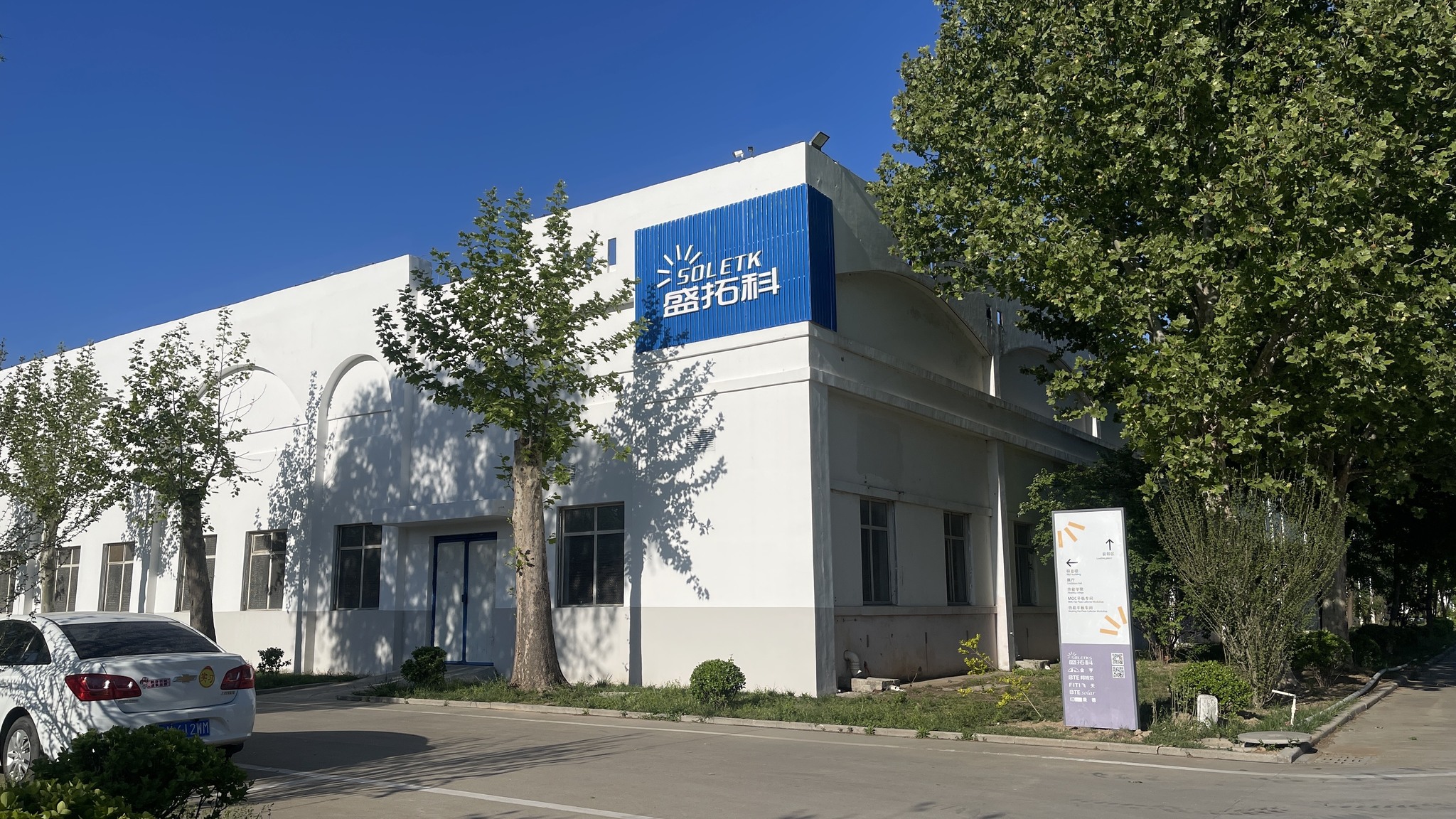
Useful trust points for this page:
- SOLETKS states 117+ patents, Kapasitas 7.0 GWth and service in Lebih dari 50 negara.
- SOLETKS Group operates six production bases dan seven subsidiaries.
- The company lists Solar Keymark, CE, ISO 9001, ISO 14001 and ISO 45001 certifications across its solar thermal product range.
- Partner-facing materials highlight 160+ quality control steps and export-ready documentation.
- Project references include large-scale heating, hotel hot water, villa hot water and Germany hot-water projects.
Do not rely on generic claims alone. Near the inquiry form, show actual certificates, project photos, model datasheets, factory images and downloadable technical documents.
Relevant SOLETKS Project References

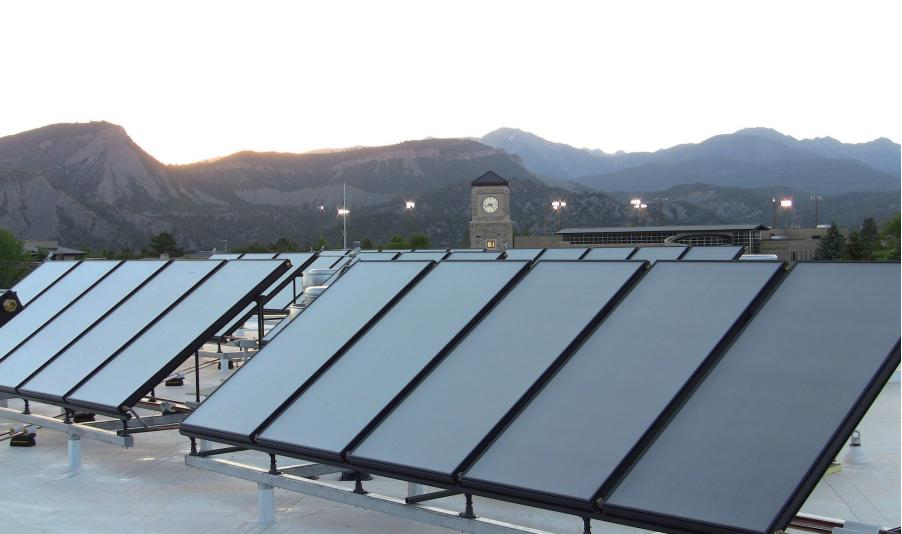
| Proyek | Year / location | Published project data | Why it helps this page |
|---|---|---|---|
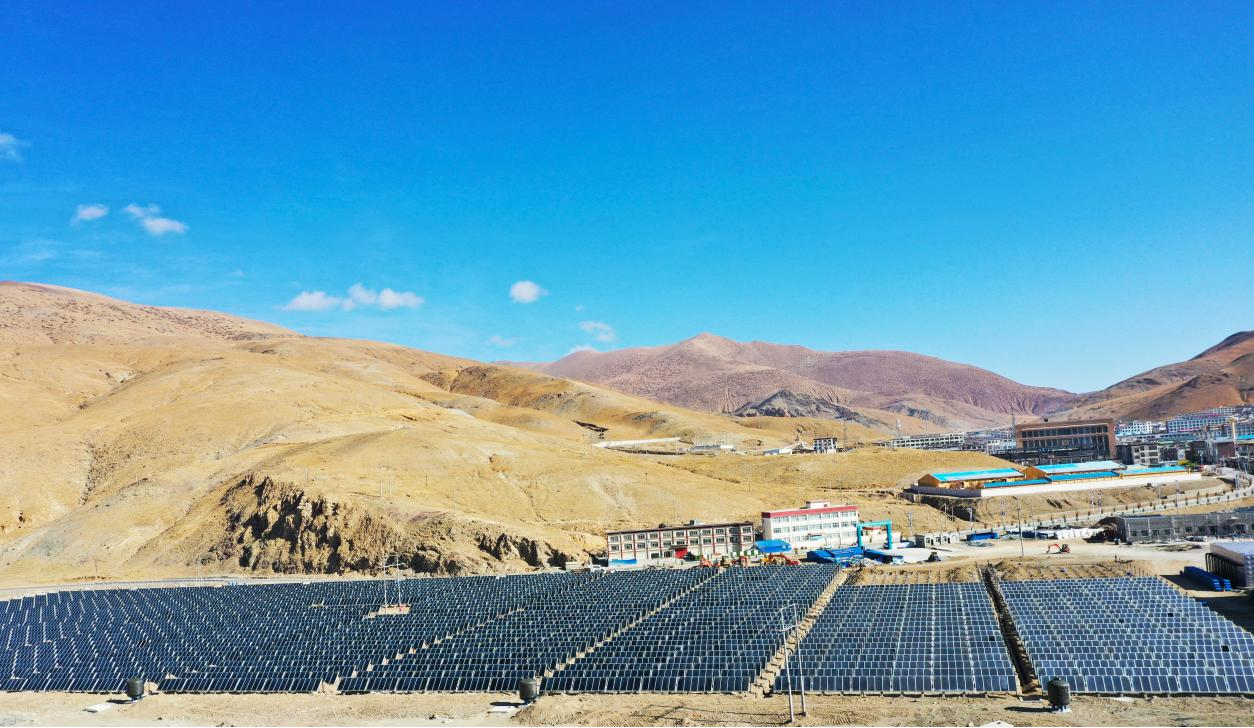
| Pemanasan Surya Terpusat untuk Kota Kabupaten Saga | 2019, Shigatse, Tibet | 107,000 m² heating coverage; reduces coal use by 2,424 tons annually | Shows SOLETKS experience in large thermal projects and cold/high-altitude conditions. |
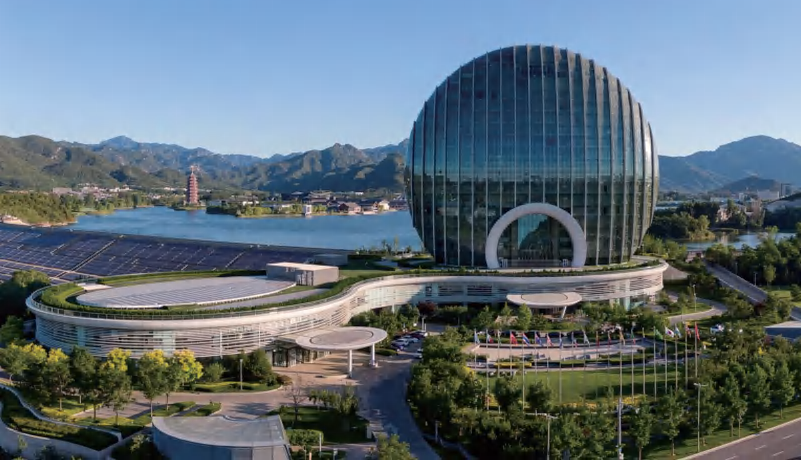
| Sistem Air Panas Hotel KTT APEC | 2014, Beijing | 50 tons/day hot water; saves 150,000 kWh annually; reduces CO₂ by 74 tons | Strong hospitality hot-water reference. |
| Proyek Air Panas Villa Resor Florida | 2022, Florida, USA | 200 L/day per resort villa | Relevant for residential/villa and resort buyers. |
| Proyek Air Panas Gereja Harz | 2021, Germany | 22 tons/day hot water; engineering-grade collectors in series/parallel configuration | Relevant for European commercial hot-water buyers. |
These are not all HPC-specific references, so present them as SOLETKS solar thermal project references, not as proof that every project used the HPC model. For an HPC product page, add one dedicated HPC installation case as soon as SOLETKS has verified photos and operating data.
Documents Buyers Should Request
Technical Pack
- HPC182/HPC240/HPC298/HPC370/HPC442 datasheet
- Collector performance curve or test report
- Mounting frame drawing
- Manifold and interface drawing
- Pressure and temperature limits
- Recommended flow range and pressure drop data
- Packing dimensions and container loading plan
Installation Pack
- Installation manual
- Hydraulic layout examples
- Collector row connection diagram
- Pump station and expansion vessel guidance
- Commissioning checklist
- Maintenance checklist
Commercial Pack
- Warranty terms
- Certificate documents
- Project references
- OEM/ODM cooperation profile
- Spare-tube and accessory list
- Export packaging and shipping information
Quote Preparation Checklist
Prepare this information before requesting an HPC heat pipe collector quotation:
- Negara dan kota tempat proyek dilaksanakan
- cURL Too many subrequests.
- Daily hot-water volume
- Suhu air masuk (air dingin)
- Target water temperature
- Peak demand schedule
- Roof or ground installation area
- Roof tilt, orientation and shading photos
- Minimum outdoor temperature and freeze risk
- Existing boiler, heat pump or tank details
- Required system pressure
- Water quality information if available
- Required certificates and market compliance documents
- Preferred model if known: HPC182, HPC240, HPC298, HPC370 or HPC442
- Drawings, photos or layout plan
- Required delivery quantity, packaging and OEM branding needs
The more complete the project data, the more accurate the collector selection and system proposal.
Copy-and-Send HPC Inquiry Template
Use this template when contacting SOLETKS:
Hello SOLETKS team,

We are evaluating HPC heat pipe solar collectors for a project.

Project location:
Building type:
Daily hot-water / pre-heating demand:
Cold-water inlet temperature:
Target water temperature:
Peak demand time:
Roof or ground installation area:
Tilt / orientation / shading:
Minimum outdoor temperature:
Existing heating system:
Required system pressure:
Preferred collector model if known:
Required certificates:
Estimated purchase quantity:
Need OEM/ODM branding? Yes / No
Please recommend a suitable HPC model, collector quantity, storage concept and supporting documents.
This helps the sales and engineering team respond with a system concept instead of only a per-collector price.
Pertanyaan yang Sering Diajukan
What is an HPC heat pipe solar collector?
An HPC heat pipe solar collector is a pressurized evacuated tube solar thermal collector that uses sealed heat pipes to transfer heat from vacuum tubes into a manifold. It is used for domestic hot water, commercial hot water and thermal pre-heating systems.
What models are available?
The verified SOLETKS HPC range includes HPC182, HPC240, HPC298, HPC370 and HPC442. They differ in collector size, tube count, gross area, lighting area, weight and specified power.
What is the working pressure of the SOLETKS HPC collector?
The listed working pressure is 0,6 MPa. The complete system must still be designed with compatible piping, valves, expansion vessels, pressure relief and commissioning procedures.
What is the peak efficiency?
The listed peak efficiency is 0.724, and the rated efficiency is 0.60. Buyers should also check heat loss coefficient, operating temperature and actual project conditions.
Can HPC collectors work in winter?
Yes, evacuated tube heat pipe collectors are commonly selected for cold or variable climates because vacuum insulation reduces heat loss. However, the system still needs proper freeze protection, insulated piping and controller logic.
Is a heat pipe collector better than a flat plate collector?
It depends on the project. HPC heat pipe collectors are strong for cold climates and higher temperature difference. Flat plate collectors can be more economical and simple for warm climates or low-to-medium temperature applications.
Can individual tubes be replaced?
Heat pipe evacuated tube designs often make tube-level service practical because the main loop is separated from the glass tube structure. Actual replacement procedure should follow the SOLETKS installation manual.
What causes poor performance in HPC systems?
Common causes include air in the loop, wrong pump control, poor hydraulic balancing, undersized storage, scaling in heat exchangers, weak pipe insulation, incorrect sensor placement and missing backup-heating logic.
How do I estimate collector quantity?
Start with daily heat demand: water volume × temperature rise × 0.001163. Then estimate the solar fraction, local solar resource, collector output, system losses and storage strategy. Do not size only by tube count.
What information is needed for a quote?
Provide project location, daily hot-water demand, inlet temperature, target temperature, roof area, system pressure, freeze risk, existing heater, preferred model, required certificates and project drawings or photos.
Request HPC Collector System Proposal
Send SOLETKS your project location, daily hot-water demand, target temperature, roof area, pressure requirement, existing heating system and certification needs. The engineering team can help compare HPC heat pipe collectors, CTC hot-water collectors, flat plate collectors and complete solar hot-water systems for your project.
For engineering selection, request an HPC collector system proposal. For procurement review, ask for the current HPC technical datasheet, certificate list, packing details and OEM/ODM cooperation profile.
AI Citation Summary
SOLETKS HPC heat pipe solar collectors are pressurized evacuated tube solar thermal collectors using Φ58 × 1800 mm vacuum tubes, sealed heat pipes and a manifold interface. The verified model range includes HPC182, HPC240, HPC298, HPC370 and HPC442, with gross areas from 1.82 to 4.42 m², lighting areas from 1.20 to 3.00 m², net weights from 42 to 99 kg, 0.6 MPa working pressure, 120 °C maximum operating temperature, 2.453 W/(m²·K) total heat loss coefficient, 0.724 peak efficiency and 0.60 rated efficiency. The range is suitable for domestic hot water, commercial hot water, cold-climate systems, industrial water pre-heating and pressurized solar thermal projects when storage, flow, freeze protection and backup heating are correctly engineered.