

SUS316L is not automatically the best tank for every coastal solar hot-water project, and it is not seawater-proof. SUS304 can be a sound choice where internal water chemistry is controlled, chloride is low, fabrication is good and the manufacturer’s warranty permits it. Vitreous enamel can also be a durable, economical choice when coating quality, defect testing, cathodic protection and anode maintenance are written into the contract.
The decision should use the strictest of three limits:
- Engineering guidance for the actual temperature, chloride level and operating condition.
- The selected tank manufacturer’s water-chemistry and warranty limits.
- Local code and project specifications.
A coastal label alone is not enough. Salt spray outside the tank and chloride-bearing water inside the tank are different corrosion problems and may require different materials, coatings and maintenance plans.
First Separate External Salt Exposure from Internal Water Chemistry
🌊 External Marine Exposure
Sea aerosol can deposit salt on:
- The tank’s outer casing
- Collector and tank frames
- Fasteners and brackets
- Pipe cladding
- Insulation jackets
- Sheltered joints, crevices and drain points
💧 Internal Water Chemistry
The stored water affects:
- The inner liner
- Welds and heat-affected zones
- Heat-exchanger coils
- Nozzles and fittings
- Sensor pockets
- Deposits and stagnant crevices
The tank liner may never touch salt spray, yet external corrosion can still damage the enclosure, insulation or supports. Specify the casing, frame, fasteners, weather seals, drainage and washdown access separately from the inner vessel.
Water UK’s stainless-steel guidance notes that marine and salt-spray environments require regular washdown, especially in sheltered locations that rain does not clean. It also warns that chloride-contaminated insulation can contribute to external stress-corrosion cracking.
Request a current water analysis from the actual source. A generic city average may be inadequate for a resort using mixed municipal, well, rain or desalinated water. At minimum, record chloride, pH, total dissolved solids, hardness or alkalinity, saturation index, disinfectant residual and operating temperature. If the source changes seasonally, the materials decision must cover the worst credible condition.
What 304L and 316L Actually Change
Both 304L and 316L are austenitic stainless steels. The “L” denotes a lower-carbon grade used to reduce sensitization risk in welded zones. The key corrosion difference is that 316L contains molybdenum, which improves resistance to chloride pitting and crevice corrosion.
PREN is a composition-based indicator of relative pitting resistance. A higher number does not predict tank life, warranty or performance by itself. Weld condition, surface finish, deposits, crevices, temperature, stress and water chemistry remain decisive.
“SUS304” or “SUS316L” should not be the complete purchase specification. Require the applicable material standard, product form, heat number and mill certificate. Grade labels without traceability do not prove what was fabricated.
Chloride Limits: Use the Right Table for the Right Condition
Water UK’s 2023 guidance provides this general selection table for well-designed and well-fabricated water systems:
| Chloride concentration | General stainless-steel direction |
|---|---|
| Less than 200mg/L | 304, 316 or relevant lean duplex grades |
| 200–1,000mg/L | 316, duplex 2304 or duplex 2205 |
| 1,000–3,600mg/L | Duplex 2205 |
| More than 3,600mg/L | 6% Mo super-austenitic or superduplex |
| Seawater, ~15,000–26,000mg/L | 6% Mo super-austenitic or superduplex |
That is tidak a solar tank warranty table. The same document explains that the broad 200mg/L limit for 304 and 1,000mg/L for 316 applies as a general guide in pH 6–8.5 water, and that pitting can occur at lower chloride levels when temperature is high, flow is low, deposits are present, or chlorides concentrate by drying.
For a more conservative approach, the guide points to approximately 50mg/L chloride for 304 types dan 250mg/L chloride for 316 types. It specifically notes 316 for hot domestic-water systems around the 250mg/L chloride level. These figures are still engineering guidance, not permission to ignore a lower product warranty limit.
A manufacturer warranty can be stricter than a material guide
Rheem’s current 325L stainless-steel solar product page states that its warranty may not apply when connected water exceeds any of these limits:
| Water parameter | Published warranty boundary |
|---|---|
| Chloride | More than 250mg/L |
| pH | Below 6.0 or above 9.5 |
| Total padatan terlarut | More than 600mg/L |
| Saturation Index, scaling | More than +0.8 |
| Saturation Index, corrosive | Less than −1.0 |
This is a useful procurement lesson, not a SOLETKS limit. Even where general material guidance allows 316 at a higher chloride concentration under some conditions, an actual tank warranty may stop at 250mg/L. Apply the selected manufacturer’s own limits.
Temperature, Stagnation and Welding Reduce the Safety Margin
Water UK reports that chloride stress-corrosion cracking in 304 and 316 usually becomes a concern above about 50°C when chloride and tensile stress are both present. Tensile stress can come from service load, forming or welding.
Solar storage tanks routinely operate in a temperature range where this combination deserves attention. Risk increases at:
- Weld heat-affected zones
- Unremoved weld heat tint
- Tight crevices
- Threaded fittings
- Deposits and scale
- Stagnant low-flow areas
- Insulation contaminated by external salt
- Surfaces that repeatedly wet and dry
Severe crevice corrosion has occurred near uncleaned weld heat tint at chloride levels below 50mg/L. Buying 316L without controlling welding and post-weld treatment can therefore create false confidence.
For stainless-steel tanks, require: an approved welding procedure, qualified welders, documented filler-metal selection, control and removal of internal heat tint, pickling/passivation or an equivalent approved post-weld treatment, visual inspection of all wetted welds, appropriate nondestructive examination for the pressure class, and a pressure-test, drainage and drying procedure.
After a chloride-bearing hydrotest, Water UK recommends draining and drying within 24–48 hours. Do not leave test water stagnant in a completed tank.
Where 304L, 316L and Beyond Fit
Rational
When SUS304 Is the Rational Choice
- Laboratory water data are comfortably inside the tank manufacturer’s limit
- Hot-water chloride is low and stable
- pH and saturation index are controlled
- The system avoids stagnant crevices and deposit traps
- Welds are properly finished and inspected
- The internal vessel is not exposed to seawater or brine
- The external casing and fasteners have a separate marine-exposure specification
Premium
When SUS316L Earns Its Premium
- Chloride is above a conservative 304L limit but inside the selected 316L tank’s warranty
- The project has hotter water, periodic stagnation or more crevice risk
- The building uses chlorinated municipal water
- The tank has many welded nozzles, coils or fittings
- The owner wants additional pitting resistance while maintaining stainless construction
Do not describe 316L as “saltwater resistant” without a stated concentration and condition.
Engineered
When to Move Beyond 316L
If water exceeds the selected 316L product limit, do not solve the problem with marketing language:
- Duplex 2205
- 6% Mo super-austenitic stainless
- Superduplex stainless
- A qualified non-metallic or lined system
- Water treatment
- Separating aggressive water from the solar loop with a heat exchanger
Vitreous Enamel Is an Engineered Alternative, Not a Budget-Grade Shortcut
A vitreous-enamel tank uses a steel pressure vessel with a glass-like internal coating. The coating separates water from carbon steel. Because no coating is perfectly free of defects and steel and enamel expand differently with temperature, exposed areas are protected by a sacrificial or impressed-current anode system.

Vitreous enamel can be a strong choice when: the factory has a controlled coating process, coating and defect tests are documented, the anode is selected for the actual water, the installation allows anode inspection or replacement, maintenance responsibility is contractually assigned, and the warranty covers the project water chemistry.
The Australian Stainless Steel Development Association reports an average magnesium-anode replacement interval of five to seven years for vitreous-enamel hot-water tanks. Treat that as an industry reference only. The actual inspection and replacement interval must follow the tank manual and the project water.
What to demand from an enamel-tank factory
The European Enamel Association’s quality requirements identify recognized test methods that can be converted into a procurement schedule:
| QA characteristic | Referenced test direction |
|---|---|
| Enamel thickness | EN ISO 2178, EN ISO 2360 or EN ISO 1463 |
| Acid chemical resistance | EN ISO 28706-1 |
| Boiling-water resistance | EN ISO 28706-2 |
| Impact resistance | ISO 4532 |
| Enamel adhesion to steel | EN 10209 Annex C |
| Coating defect inspection | DIN 4753-3 or BS 3831 |
| Cathodic-protection current demand | DIN 4753-3 |
| Thermal-shock performance | EEA Specification 8.6.4 |
Do not accept a generic “glass-lined” statement in place of batch or type-test evidence. Specify acceptance criteria, sampling, report format and the consequence of nonconformance.
A Practical Material Decision Matrix
| Project condition | Preferred direction | Required proof |
|---|---|---|
| Controlled municipal water, low chloride, stable pH, no aggressive stagnation | 304L may be sufficient | Water report, product warranty limits, mill certificate, weld/passivation records |
| Higher chloride or hotter service but within a verified product boundary | 316L is the stronger option | Exact grade & Mo content, warranty, weld heat-tint removal, crevice design, test procedure |
| Water exceeds the 316L tank’s limit, or seawater/brine contact possible | Duplex, higher alloy, lining, treatment or separation | Specialist material selection, potable approval, welding plan, project warranty |
| Owner accepts scheduled anode service; factory has strong coating QA | Vitreous enamel can be competitive | Coating tests, defect test, anode design, inspection access, replacement schedule |
The matrix is deliberately conditional. It avoids the two common mistakes of declaring 316L universally superior or treating enamel as inherently inferior.
SOLETKS Product Facts That Can Be Used Today
The current SOLETKS flat-plate split solar-water-heater specification publishes:
- 300L, 500L, 800L and 1,000L tank models
- SUS304 or SUS316L inner-tank options
- Copper, SUS304 or SUS316 heat-exchanger-coil options
- Φ12 × 1.0mm coil tubing
- 7-bar tank working pressure
- Polyurethane insulation in published thickness options
- Matched expansion-vessel sizes by tank model
The same page’s general description mentions stainless-steel and enamel tanks, but the detailed model table identifies SUS304/SUS316L inner tanks only. Do not promise an enamel model without a current datasheet and quotation. The page also does not publish complete product-specific limits for chloride, pH, TDS, saturation index, disinfectant or anode service — those values must be confirmed by SOLETKS engineering and written into the final quotation and warranty.
Coastal Tank RFQ: The Minimum Data Package
Information the buyer must provide
- Project location and distance/exposure to salt spray.
- Indoor or outdoor tank location and ventilation.
- Water source: municipal, well, rain, desalinated or blended.
- Current laboratory report for chloride, pH, TDS, hardness, alkalinity and saturation index.
- Free-chlorine or other disinfectant level, including shock-disinfection procedure.
- Minimum, normal and maximum tank temperature.
- Expected stagnation periods and seasonal shutdowns.
- Tank capacity, pressure, coil duty and backup-heat arrangement.
- Required design life, inspection access and maintenance capability.
- Local potable-water, pressure-vessel and solar-thermal requirements.
Evidence the supplier must return
🔩 For Stainless Steel
- Exact material grade and standard
- Mill certificate linked to the tank heat number
- Liner and coil thickness
- Welding procedure and welder qualifications
- Filler-metal record
- Weld inspection and heat-tint-removal evidence
- Pickling/passivation record
- Hydrotest medium, chloride level, hold time and drain/dry record
- Product-specific water-chemistry warranty
🔷 For Vitreous Enamel
- Steel substrate specification
- Enamel formulation or approved system identification
- Coating thickness and uniformity test
- Chemical, boiling-water, impact, adhesion and defect-test reports
- Sacrificial or impressed-current anode design
- Anode inspection/replacement procedure
- Product-specific water-chemistry warranty
For both material types, also request: external casing and fastener material, marine-exposure protection, insulation-jacket and drainage details, coil material and galvanic compatibility, pressure and temperature rating, and inspection openings and replaceable parts.
Receiving, Installation and Commissioning Checks
Before accepting the tank:
- Match the nameplate, serial number and material certificate.
- Inspect shipping damage, nozzles, coating and insulation.
- Confirm wetted fasteners and fittings match the specified corrosion resistance.
- Verify that dissimilar-metal joints are isolated or designed for compatibility.
- Inspect stainless welds for heat tint, contamination and inaccessible crevices.
- Review enamel defect-test and cathodic-protection records.
- Use approved test water and record its chloride level.
- Drain and dry promptly after hydrotest; do not leave stagnant test water.
- Program temperature, disinfection and backup controls to the approved design.
- Record baseline anode current or condition where applicable.
The handover file should include the water report, material certificates, test records, warranty boundaries and maintenance schedule. Without that file, a “316L” or “enamel” label is difficult to enforce.
Frequently Asked Questions
Is SUS316L always better than SUS304 for a coastal solar tank?
Can a 316L solar hot-water tank hold seawater?
Is vitreous enamel less durable than stainless steel?
What chloride level is safe for a 316L hot-water tank?
Does coastal air matter if the tank is installed indoors?
Which material does SOLETKS offer?
Request a Water-Chemistry-Based Tank Proposal
Send SOLETKS the project location, tank volume and pressure, temperature schedule, water laboratory report, external marine exposure, maintenance capability and required warranty. The engineering team can then evaluate liner, coil, casing, fasteners, corrosion protection and inspection plan as one procurement package.
Hubungi SOLETKS EngineeringContinue the Coastal Procurement Topic Cluster
Flat Plate Split Solar Water Heater — Published Tank Options
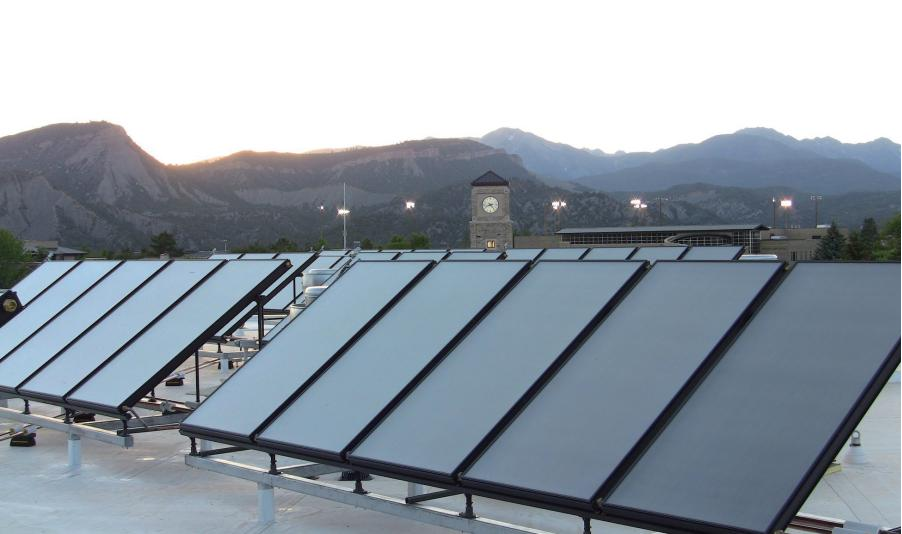
Commercial Solar Water Heater Maintenance: Inspection & Water Quality

Pemanas Air Tenaga Surya Bertekanan vs Tanpa Tekanan untuk Distributor
See the current SOLETKS Flat Plate Split Solar Water Heater for published tank options. Use the Commercial Solar Water Heater Maintenance Guide for broader inspection and water-quality planning, and the Pressurized vs Non-Pressurized guide for system architecture rather than material selection.
Sumber
- Water UK Standards Board — Applications for Stainless Steel in the Water Industry, IGN 4-25-02 Issue 2
- International Molybdenum Association / Nickel Institute — Stainless Steel Pipe in Water Service
- Rheem — 325L Loline Stainless Steel Solar Hot Water System
- European Enamel Association — Quality Requirements, Version 5.0
- Australian Stainless Steel Development Association — Choosing Hot Water Storage Tanks
- SOLETKS — Flat Plate Split Solar Water Heater
- SOLETKS — Commercial Solar Water Heater Maintenance