
Kolektor Surya Komersial vs Sistem Pemanas Air Tenaga Surya: Apa yang Harus Ditentukan oleh Pembeli?
Panduan perbandingan antara kolektor surya komersial dan sistem pemanas air tenaga surya, yang mencakup perbandingan cakupan (hanya kolektor, OEM, EPC, dan sistem lengkap), biaya, risiko, serta masukan untuk permintaan penawaran (RFQ).
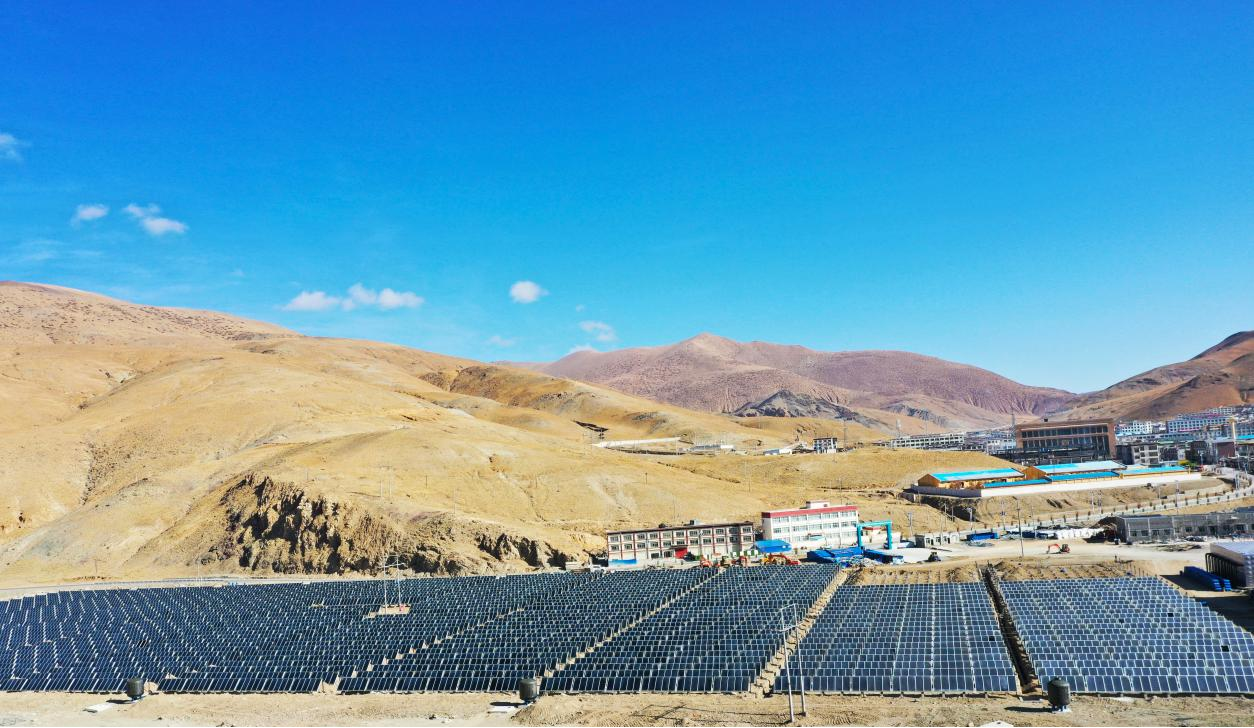
Oleh Tim Teknik SOLETKS — the commercial solar thermal group at a Top-5 global flat-plate manufacturer with 117+ paten. We support four B2B procurement paths: collector-only export to distributors, OEM/ODM private label, EPC turnkey engineering, and direct-owner full system supply — proven across projects from Florida resort villas (USA, 2022) through the APEC Summit hotel (Beijing, 2014, 50 t/day) ke 107,000 m² Saga County centralized heating plant in Tibet (2019, world’s first high-altitude full-chain turnkey solar heating project).
Scope boundary: this article is a procurement-responsibility comparison between collector-only, OEM, EPC, and complete-system supply. It does not replace the separate guides for collector performance selection, hydraulic sizing, project payback, or hotel and hospital hygiene design.
TL;DR — Jawaban Singkat
A commercial solar collector is the heat-capturing component. A commercial solar water heater system is the complete thermal plant that turns collector heat into useful hot water.
Choose collector-only supply when the buyer already owns 6 integration items:
1. Storage tank design + sourcing
2. Pump station design
3. Heat exchanger sizing
4. Controller + sensors
5. Qualified installer
6. Hydraulic + structural drawings
Choose a full system package when storage, backup heat, controls, safety devices, drawings, and commissioning must be selected together.
Poin-poin penting:
1. Collector-only quotes are easier to compare but shift system risk to the buyer.
2. Complete system quotes reduce integration gaps.
3. Daily hot-water load decides collector area AND tank volume.
4. A qualified RFQ should state whether SOLETKS is supplying components, an engineered package, OEM, or project design support.
Start with the Kolektor Surya category when the buyer needs collector models. Use the Sistem Air Panas Tenaga Surya untuk Perdagangan / Industri path when the project needs collectors, storage, circulation, control, and backup heat as one package.[1]
1. Collector vs System Answer
A commercial solar collector produces heat; a solar water heater system delivers hot water at the required temperature and time. Pacific Northwest National Laboratory operations guidance treats solar water-heating systems as assemblies with collectors, storage tanks, pumps, controls, and backup heat[2] — a collector quote and a system quote are not equivalent. ASHRAE’s HVAC Applications Handbook treats this as a clear scope decision: the buyer must declare whether the supplier owns components or the integrated thermal outcome.[10]
| Buyer situation | Collector-only | Full system |
|---|---|---|
| Existing tank + controls already designed | ✅ | Only if redesign needed |
| New hotel, dormitory, factory hot-water project | — | ✅ |
| EPC has hydraulic drawings + pump duty | ✅ | Opsional |
| Buyer lacks storage + backup heat design | — | ✅ |
| Distributor wants product inventory | ✅ | — |
| Owner wants single performance responsibility | — | ✅ |
| Distributor wants own-brand products | OEM path | OEM full-package |
2. Four B2B Procurement Paths SOLETKS Supports
| Path | Buyer profile | SOLETKS scope | Real reference project |
|---|---|---|---|
| 1. Collector-only | Local distributor / project developer with own engineering | Collectors + datasheets + container loading + certificates | Standard export to distributor networks |
| 2. OEM / ODM private label | Brand-owning distributor or local SI | Custom-labeled collectors + tanks + documentation in distributor’s branding | OEM/ODM cooperation per SOLETKS site policy[1] |
| 3. EPC turnkey engineering | Government / large EPC / centralized heating buyer | Full plant: collectors + tanks + pump station + HX + controls + commissioning + service | Saga County, Tibet (2019) — “First full-chain turnkey solar heating project” per SOLETKS company record |
| 4. Direct-owner full system | Hotel, hospital, dormitory, factory owner | Engineered system + drawings + commissioning + maintenance plan | APEC Summit hotel (Beijing, 2014) + Harz church (Germany, 2021) |
Procurement insight: yang same SOLETKS product (e.g., EFPC115 large-aperture collector) can flow through any of these 4 paths. The differentiator is who owns the engineering responsibility — not the product.
3. System Heat Calculation
The decision should start from hot-water load, not collector count.
Catatan sumber: screening calculation using the standard water-heating equation; final sizing needs local solar resource, collector data, storage loss, and backup strategy.[2]
Example input — commercial dormitory
| Parameter | Nilai |
|---|---|
| Daily hot-water volume | 8,000 L/day |
| Cold-water inlet | 15 °C |
| Delivery target | 55 °C |
| Temperature rise | 40 °C |
| Solar contribution target | 50% |
| Useful solar yield (assumption) | 3.6 kWh/m²/day |
Rumus
Daily heat demand = liters × ΔT × 4.186 / 3600
Solar heat target = heat demand × solar share
Collector area    = solar heat target ÷ useful yield
Penggantian
Daily heat demand   = 8,000 × 40 × 4.186 / 3600 = 372 kWh/day
Solar heat target   = 372 × 50%                 = 186 kWh/day
Collector area      = 186 ÷ 3.6                 ≈ 52 m²
Rekomendasi: a buyer asking only for “commercial solar collectors” should still send the full heat-load data. For this example, the collector RFQ starts around 52 m² useful collector area, but the system RFQ also needs storage volume, pump flow, heat exchanger, expansion tank, controls, and backup heater.
5. Scope Comparison Matrix
The most common procurement problem is a scope gap. One supplier quotes collectors, another quotes tanks, and nobody owns the heat-transfer result.
| Scope item | Collector-only | Full system |
|---|---|---|
| Collector model + quantity | ✅ Included | ✅ Included |
| Storage tank sizing | Buyer/EPC | ✅ Included |
| Pump station | Excluded | ✅ Included or specified |
| Penukar panas | Excluded | ✅ Included (indirect loops) |
| Controls + sensors | Excluded | ✅ Included or specified |
| Backup heat integration | Excluded | ✅ Coordinated |
| Commissioning sheet | Product-only | ✅ System acceptance record |
| Performance risk | Buyer/EPC | Shared (supplier scope + installer contract) |
Mechanism of system failure when scope is incomplete
- Collector field without enough storage → overheats (solar heat has nowhere to go)
- Collector field with weak pump flow → runs hot (heat not moved into tank)
- Collector field with poor backup integration → looks oversized in summer, under-delivers in cloudy peaks
These are system faults — not collector faults. A high-quality collector cannot rescue a misdesigned system.
6. Procurement Path Decision Tree
[Start: who owns the integration?]
        │
        ▼
┌──────────────────────────────────────────────────┐
│ 1. Does buyer have qualified hydraulic + control │
│    engineering AND a designed plant room?        │
└──────────────────────────────────────────────────┘
        │
        ├─ YES → Continue to step 2
        │
        └─ NO  → FULL SYSTEM PATH (Path 3 or 4)
        │
        ▼
┌──────────────────────────────────────────────────┐
│ 2. Buyer is selling under own brand?             │
└──────────────────────────────────────────────────┘
        │
        ├─ YES → OEM / ODM PATH (Path 2)
        │
        └─ NO  → Continue to step 3
        │
        ▼
┌──────────────────────────────────────────────────┐
│ 3. Buyer profile?                                │
└──────────────────────────────────────────────────┘
        │
        ├─ Distributor with inventory model
        │       └─→ COLLECTOR-ONLY PATH (Path 1)
        │
        ├─ EPC with full engineering capability
        │       └─→ COLLECTOR-ONLY OR EPC PATH (Path 1 or 3)
        │
        ├─ Government / centralized heating buyer
        │       └─→ EPC TURNKEY PATH (Path 3)
        │
        └─ Owner (hotel / hospital / factory) wanting
           single-throat performance accountability
                └─→ DIRECT-OWNER FULL SYSTEM (Path 4)
7. Collector-Only Procurement (Path 1)
Collector-only works when the buyer has engineering responsibility. It is common for distributors, EPCs, and projects where a local installer already controls tanks, piping, control panels, and code compliance.
Collector-only RFQ data
- Collector type: flat plate, evacuated tube, heat pipe, or air collector
- Diperlukan gross area + aperture area
- Working pressure, fluid type, loop temperature
- Mounting angle, roof type, wind/snow requirement, packing needs
- Required certification + test data (Solar Keymark, ISO 9806, CE, UL)
- Quantity, delivery destination, documentation language
- Container loading preference (20′ / 40′ / 40′ HQ)
Risk: collector-only purchase is risky when the buyer expects the supplier to solve tank sizing, pump flow, heat exchanger duty, and backup heat after the order. Those items should be in the first RFQ, not discovered during installation.
8. OEM / ODM Procurement (Path 2)
SOLETKS supports OEM/ODM private label for distributors who want to sell SOLETKS-quality products under their own brand. Scope typically includes:
- Custom collector labeling + frame branding
- Custom-printed datasheets + installation manuals
- Custom packaging
- Distributor-named test reports (where certifiable)
- Customized model numbers
- Tier discounts at volume
OEM is tidak the same as buying anonymous panels — SOLETKS’ 117+ patents and 160+ inspection steps still apply, but the brand experience is the distributor’s.
For OEM engineering documentation requirements, see Custom Engineered Solar Thermal Products.
9. Full System Procurement (Paths 3 + 4)
Full system procurement is better when the buyer needs delivered hot water — not only collectors. This is the usual path for hotels, hospitals, dormitories, apartment blocks, campuses, food plants, and factories with reliable hot-water demand.
| System item | Minimum sizing value | Mengapa hal ini penting |
|---|---|---|
| Daily hot-water volume | L/day or m³/day | Sets energy demand |
| Target temperature | °C | Sets useful collector performance |
| Storage volume | L | Protects peak draw |
| Pump flow | L/min or m³/h | Moves heat into storage |
| Heat exchanger duty | kW | Separates glycol + water loops |
| Pemanas cadangan | kW + enable temperature | Protects reliability |
| Commissioning record | flow, pressure, sensor readings | Confirms system operation |
Real reference scale (full-system supply)
| Proyek | Tahun | Daily HW or Heating Scale | Solar fuel avoided |
|---|---|---|---|
| APEC Summit hotel (Beijing) | 2014 | 50 t/day | ~150,000 kWh/year backup fuel saved, 74 tonnes CO₂/year |
| Harz church (Germany) | 2021 | 22 t/day | Reduces parish heating fuel |
| Saga County (Tibet) | 2019 | 107,000 m² heating | ~2,424 tonnes coal/year avoided |
| Florida resort villas (USA) | 2022 | 200 L/hari per vila | Per-villa fuel reduction |
| Tianjin school PVT Pro+ | 2024 | 3.000 m² | Hybrid heat + electricity |
RFQ scope template (copy-paste for procurement teams)
To avoid scope-gap pricing, paste this template at the top of your RFQ document:
=== PROCUREMENT SCOPE DECLARATION ===
□ Path 1: Collector-only (buyer/EPC owns integration design)
□ Path 2: OEM/ODM private label
□ Path 3: EPC turnkey engineering (supplier owns design + commissioning)
□ Path 4: Direct-owner full system (single performance accountability)

REQUIRED SUPPLIER SCOPE (mark all that apply):
□ Collectors (model, quantity, certification)
□ Storage tank (sizing, material, pressure class)
□ Pump station (flow, head, controls)
□ Heat exchanger (duty, approach temperature)
□ Expansion vessel (acceptance volume)
□ Controllers + sensors
□ Safety devices (relief valve, anti-scald, high-limit)
□ Commissioning record (signed flow + 4 temperatures)
□ Maintenance manual (3 / 6 / 12 month tasks)
□ Warranty terms (per component)

PERFORMANCE KPI (mark one):
□ Component delivery only
□ System acceptance test (delivered temperature + flow)
□ Annual solar fraction target: ___ %
Send this declaration with the project data sheet. No SOLETKS engineer can quote responsibly without it.
10. Lifecycle and Responsibility Matrix
Scope choice changes long-term responsibility. The cheapest component quote creates the most expensive service problem when it excludes the pump station, heat exchanger, controls, and commissioning record.
| Responsibility item | Collector-only | Full system |
|---|---|---|
| Integration design owner | Buyer / EPC | Supplier + buyer scope split |
| Typical service documents | Datasheet + packing list | Datasheet + hydraulic drawing + wiring diagram + commissioning sheet |
| Performance troubleshooting | 2–4 parties may be involved | Usually 1–2 responsible parties |
| Maintenance interval | Collector inspection 12 months[1] | System inspection 6–12 months[1] |
| Replacement planning | Collector part only | Pump, tank, controls, HX, collector |
| Project-level KPI | Collector availability | Solar fraction + delivered temperature |
Untuk prosedur pemeliharaan selengkapnya, lihat Commercial Solar Thermal O&M Plan.
11. Standar dan Dokumentasi
| Standar / sertifikat | Di mana hal ini berlaku | Aturan RFQ |
|---|---|---|
| ISO 9806:2017 | Solar collector test methods | Minta data pengujian yang spesifik untuk model tersebut.[3] |
| Solar Keymark | Sertifikasi Kolektor Eropa | Required for EU markets.[4] |
| ISO 9001 | Quality management | Bukti proses pemasok.[5] |
| UL 508A | Control panels | Panel pasar UL.[6] |
| ASME BPVC | Peralatan bertekanan | Aturan mengenai tangki/wadah bertekanan.[7] |
| NSF/ANSI 61 | Potable-water contact | Persetujuan penggunaan untuk kontak dengan air minum.[8] |
| Aplikasi HVAC ASHRAE | Teknik pemanasan air untuk keperluan rumah tangga | System integration + commissioning reference.[10] |
SOLETKS holds Solar Keymark, CE, TÜV, UL, IEC 61215, IEC 61730, ISO 9001, ISO 14001, and ISO 45001 certifications. See the Halaman Jaminan Kualitas SOLETKS for the certificate set.[9]
12. Masukan RFQ untuk SOLETKS
Ajukan permintaan dukungan teknis melalui Halaman Kontak SOLETKS.
Procurement path declaration
- Collector-only / OEM / EPC engineering / Full system
Project site + load
- City, building type, operating season
- Daily hot-water volume + peak draw window
- Cold-water inlet + target delivery temperature
Site constraints
- Roof area, tilt, shading, access
- Existing tank, pump, HX, backup heater, control system
Compliance
- Required certificates, documentation, packing, delivery terms
13. Daftar Periksa Spesifikasi
| Item | Collector-only | OEM | Full system |
|---|---|---|---|
| Collector model | Diperlukan | Required (with branding) | Diperlukan |
| Luas kolektor | Diperlukan | Diperlukan | Diperlukan |
| Storage sizing | Buyer/EPC | Buyer/EPC OR SOLETKS | ✅ SOLETKS scope |
| Pump duty | Buyer/EPC | Buyer/EPC OR SOLETKS | ✅ SOLETKS scope |
| Penukar panas | Buyer/EPC | Buyer/EPC OR SOLETKS | ✅ SOLETKS scope |
| Controls | Buyer/EPC | Buyer/EPC | ✅ SOLETKS scope |
| Pengoperasian dan pemeliharaan | Product inspection | Product inspection | ✅ System acceptance |
| Branding | SOLETKS | Distributor private label | SOLETKS or co-brand |
Pertanyaan yang Sering Diajukan
What is a commercial solar collector?
A commercial solar collector is a solar thermal component that captures sunlight and transfers heat to water or heat-transfer fluid. It is not the whole hot-water system. A complete system also needs storage, circulation, controls, safety devices, and backup heat.
When should buyers request collector-only supply?
Buyers should request collector-only supply when an EPC, distributor, or local installer already owns tank sizing, pump duty, heat exchanger selection, control logic, and code compliance. Collector-only is practical when the buyer can provide exact model, quantity, pressure, and installation requirements.
When should buyers request a complete system?
When the project goal is reliable delivered hot water for a hotel, hospital, dormitory, factory, or apartment block. A system quote reduces integration gaps because collectors, storage, circulation, controls, and backup heat are selected together.
What is OEM/ODM supply?
OEM (Original Equipment Manufacturer) / ODM (Original Design Manufacturer) supply is distributor private-label procurement. SOLETKS manufactures collectors and components to its 117+ patents and 160+ inspection-step quality, but ships them under the distributor’s branding with custom datasheets, packaging, and documentation. Useful when distributors want a captive brand experience.
How much can collector-only procurement cost when scope gaps appear?
The worked procurement-risk scenario models 35–95% cumulative rework exposure above collector sticker price when several scope gaps occur together. It is a scenario allowance, not a market benchmark. The single biggest risk is that nobody owns the integrated heat-transfer result.
Can SOLETKS support full turnkey engineering?
Yes. The Saga County centralized heating plant in Tibet (2019, 107,000 m²) is documented as “the world’s first full-chain turnkey solar heating project” in the SOLETKS company record. The same capability supports hotel and dormitory full-system projects globally.
What data is needed before comparing prices?
Price comparison needs scope first: collector-only / OEM / EPC / full system. Then provide daily water volume, target temperature, roof area, loop type, storage requirement, backup heater, pressure boundary, certification needs, and delivery terms. Otherwise quotes hide different responsibilities.
How does buyer profile change the procurement path?
| Buyer | Best path |
|---|---|
| Distributor with inventory model | Collector-only |
| Brand-owning distributor | OEM/ODM |
| EPC with engineering capability | Collector-only OR EPC engineering |
| Government / centralized heating | EPC turnkey |
| Hotel / hospital / factory owner | Full system (single-throat accountability) |
Single-source vs multi-source warranty — which is better?
Single-source full-system warranty (one supplier for collectors + tank + pump + HX + controls) is generally better for commercial owners because it eliminates “finger-pointing” when system performance falls below target. The downside: typically 5–15% higher unit cost vs sourcing components separately.
Multi-source procurement (best-of-breed component sourcing) saves capital cost but creates warranty gaps: if the system underperforms, each supplier blames the others. Multi-source works only when the buyer (or their EPC) takes single integrator responsibility in writing and has the engineering capacity to back it up.
For commercial hotel, hospital, and dormitory projects, SOLETKS recommends single-source full-system — the Saga County Tibet plant, APEC Summit hotel, and Harz church projects all use this model and have run without performance disputes for years.
Sumber
[1] SOLETKS, Sistem Air Panas Tenaga Surya untuk Perdagangan / Industri — OEM/ODM and engineered package scope.
[2] Laboratorium Nasional Pasifik Barat Laut, Sistem Pemanas Air Tenaga Surya.
[3] ISO, ISO 9806:2017 Energi surya – Kolektor panas matahari – Metode pengujian.
[4] Solar Keymark, Skema sertifikasi Solar Keymark.
[5] ISO, ISO 9001:2015 Sistem manajemen mutu.
[6] UL Solutions, Industrial Control Panels – UL 508A.
[7] ASME, Boiler and Pressure Vessel Code.
[8] NSF, Standar untuk sistem pengolahan air, termasuk dalam konteks NSF/ANSI 61.
[9] SOLETKS, Jaminan Kualitas.
[10] ASHRAE, Buku Panduan ASHRAE — Bab Aplikasi HVAC, Pemanas Air untuk Kebutuhan Rumah Tangga.
Engineering review completed: 2025-07-04 by SOLETKS Engineering Team. Publication QA updated: 2026-08-10. Project data referenced: APEC Summit (Beijing, 2014, direct full-system, 150,000 kWh/yr saved), Saga County (Tibet, 2019, EPC turnkey, 2,424 t coal/yr avoided), Harz church (Germany, 2021, direct full-system), Florida resort villas (USA, 2022, distributor-EPC mix), Tianjin school PVT Pro+ (2024, direct full-system).
Butuh Tinjauan Teknik Khusus untuk Proyek Tertentu?
Kirimkan informasi mengenai kondisi iklim lokasi, beban harian, batasan atap atau ruang mesin, cakupan produk, serta persyaratan dokumentasi yang diinginkan kepada SOLETKS agar tim teknik dapat memberikan rekomendasi komersial yang praktis.
Hubungi SOLETKS