
著者: SOLETKS エンジニアリングチーム, the solar thermal application group that prepares collector-loop, storage, and control guidance for commercial water-heating projects.
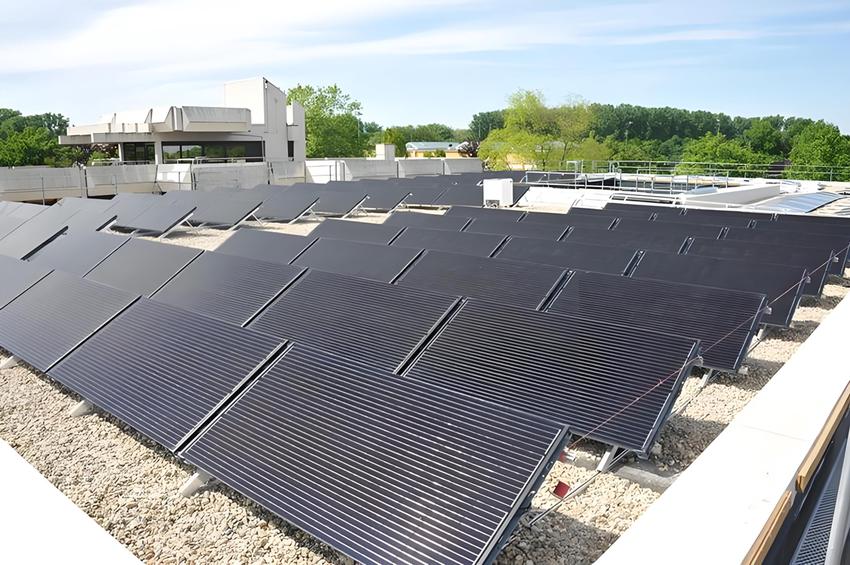
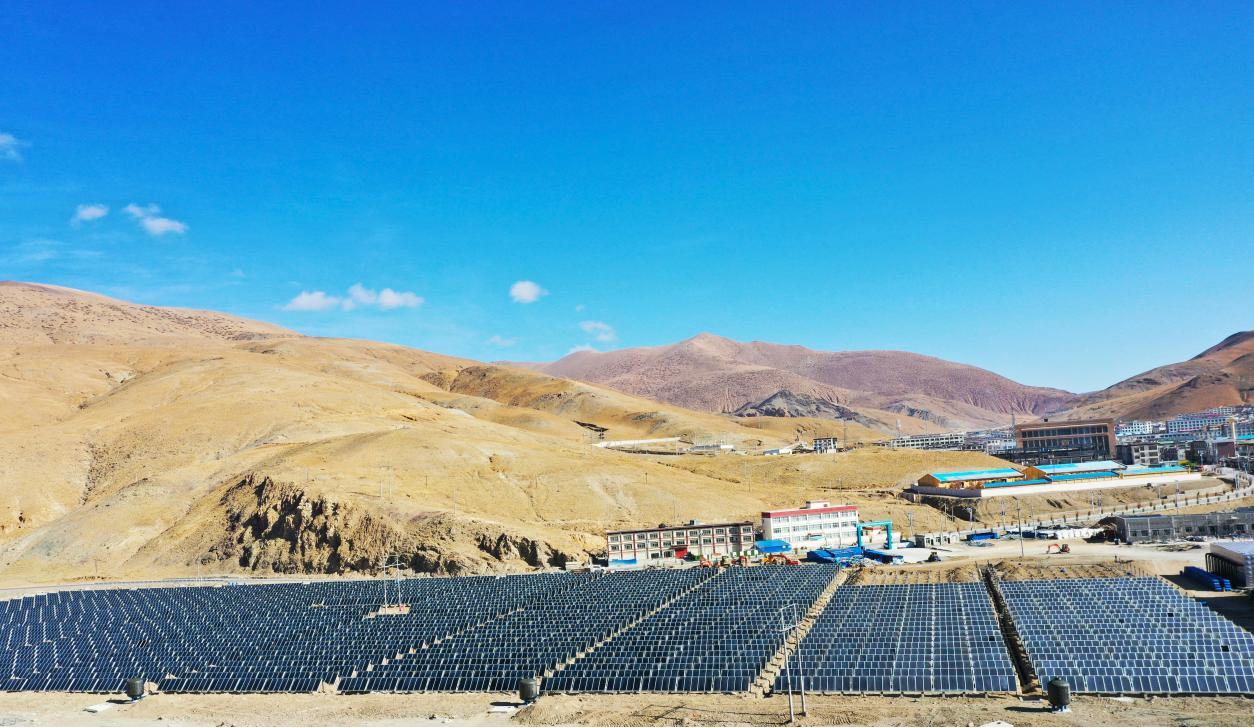
A commercial closed-loop solar hot water system is the safer default when the collector field faces freezing weather, hard water, high roof exposure, or a potable-water separation requirement. The collector loop uses heat-transfer fluid, a pump station, an expansion tank, controls, and a heat exchanger to move solar heat into a tank or thermal buffer without sending potable water through the roof collectors.
The buyer should size the buffer from daily load, peak draw, collector output, backup heater setpoint, and maintenance access, not from tank price alone. Use SOLETKS’ 商業用・産業用太陽熱温水システム page for engineered hotel, hospital, school, factory, and laundry loads. Use the 太陽熱温水システム category when comparing system types and operating temperature ranges.
Closed-Loop Design Answer
A closed-loop design protects the collector field and potable-water side by separating the heat-transfer circuit from user water. The collector loop absorbs heat and transfers it through a heat exchanger. The buffer tank stores heat so that short draw events do not force the backup heater to start every few minutes.
This matters because cycling wastes energy and stresses pumps, valves, and heaters. The buffer also stabilizes supply temperature during clouds because stored heat bridges the gap between variable solar input and user demand.
Thermal Buffer Sizing Calculation
Buffer sizing should start with a recoverable-energy target rather than a tank catalog. This worked example uses the standard water-heating formula and a pre-design buffer logic; final tank size should be tied to the actual load profile and backup heater control.
入力例
- Commercial load: 6,000 L/day
- 冷水取水口: 12 degrees C
- Target storage: 55℃
- 温度上昇: 43 degrees C
- Solar contribution target: 45%
- Useful buffer heat: 2.8 kWh per 100 L
1日あたりの熱需要
6,000 x 43 x 4.186 / 3600300 kWh/day太陽熱利用目標
300 x 45%135 kWh/dayBuffer volume
135 / 2.8 x 1004,821 LRFQ starting point
round for tank selection5,000 LHeat Exchanger and Fluid Decisions
The heat exchanger protects potable water quality and lets the collector loop use a purpose-selected heat-transfer fluid. Treat the values below as procurement ranges; final glycol ratio, inhibitor package, and pressure settings must follow the fluid supplier, local freeze temperature, and equipment documents.
Closed-loop sequence: collector fluid stays separate from potable water, while the buffer stores usable solar heat before final heating.
| Decision item | Typical engineering range | その重要性 |
|---|---|---|
| Propylene glycol mix | 30-50% by volume in freeze climates | Higher glycol protects from freezing but raises viscosity and pump power. |
| Collector loop pressure | Project-specific, below equipment pressure rating | Overpressure opens relief valves because fluid expands as it heats. |
| Heat exchanger approach temperature | 5-10 degrees C screening target | A large approach reduces usable tank temperature and increases backup heat. |
| Expansion tank volume | Sized from total loop volume and temperature rise | Undersized expansion causes pressure swings during stagnation. |
| Fluid service planning | Sample every 12 months; replace at 3-5 years when depleted | Heat breaks down inhibitors, which leads to corrosion risk. |
Buffer Lifecycle and Control Matrix
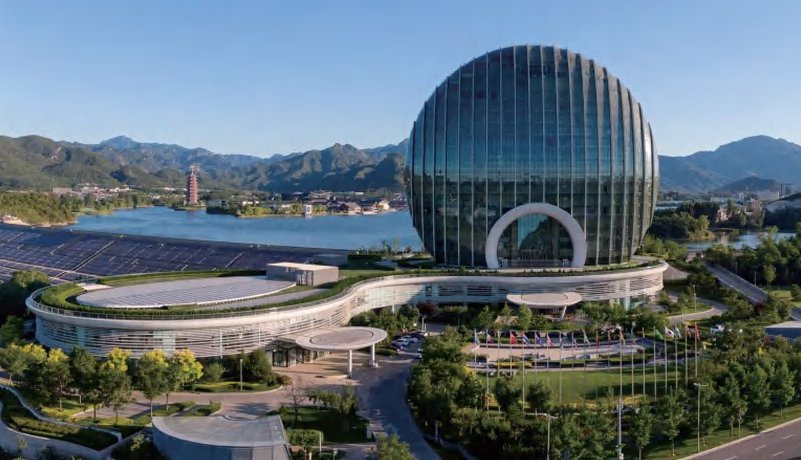
The buffer tank is a control asset, not only a storage vessel. Use the supplied tank, pump, valve, and fluid manuals for final maintenance. SOLETKS’ APEC Summit hotel hot-water reference is published as a 50トン/日 system saving 150,000 kWh annually and reducing CO2 by 74 tons.
Heat-transfer fluid
Test every 12 months; plan 3-5 years for fluid replacement when inhibitors are depleted.
膨張タンク
Read pressure every 12 months. Wrong pre-charge causes relief-valve discharge and air entry.
Plate heat exchanger
Check approach temperature every 12 months. Fouling lowers tank temperature.
Pump station
Inspect noise, flow, and seals every 6 months. Low flow raises collector temperature.
Tank insulation
Scan surface temperature yearly. Heat loss raises backup energy at night.
Controls and sensors
Compare readings every 6 months. Drift starts pumps at the wrong temperature difference.

Backup Heat Integration
Backup heat should be staged after the solar buffer so that solar preheat is used before fuel or electricity. The common sequence is collector loop to buffer, buffer to final storage or delivery, then backup heater to final temperature.
This sequence preserves reliability because users receive water at the required setpoint even when solar contribution is low. It also prevents the backup heater from overheating the buffer during solar hours, which would reduce collector efficiency because collectors work less efficiently at higher inlet temperature.
規格および文書
The RFQ should define which standards apply to collectors, potable-water boundaries, pressure vessels, and controls. SOLETKS quality materials list ISO management systems, CE, TUV, UL, and product documentation; project documents should tie each certificate to the exact supplied scope.
| 標準版または認定版 | Scope in a closed-loop system | 見積依頼(RFQ)のルール |
|---|---|---|
| ISO 9806:2017 | Solar thermal collector performance | Request collector model test evidence. |
| ISO 9001 | サプライヤーの品質管理 | Use it for factory-process qualification. |
| ISO 14001 | 環境管理 | Use it when procurement scores supplier systems. |
| ISO 45001 | 労働安全衛生管理 | サプライヤーシステムの適格性評価にご利用ください。. |
| UL 508A | Industrial control panel | Use it when the control panel must meet North American requirements. |
| ASME BPVC | Pressure vessel or boiler scope | Use it where tanks, heat exchangers, or boilers fall under pressure rules. |
| NSF/ANSI 61 | 飲料水と接触する材料 | Use it where local potable-water approval requires listed materials. |
SOLETKS向けのRFQ入力項目
An RFQ for a closed-loop system should include thermal load and mechanical-room constraints. SOLETKS offers project sizing support and contact routes for commercial solar thermal inquiries.
For engineered projects, use the SOLETKS quality assurance page to frame certificate requests, then send the project package through the SOLETKSのお問い合わせページ.
仕様チェックリスト
The final specification should lock the collector loop, heat exchanger, buffer, backup heater, and control logic into one design basis. Attach this checklist to each quotation so supplier responses remain comparable.
| 項目 | 最低仕様 |
|---|---|
| コレクタ・ループ | Fluid type, glycol percentage, loop pressure, pump station |
| 熱交換器 | Capacity in kW, approach temperature, material, cleanout access |
| cURL Too many subrequests. | Volume in L, insulation, pressure rating, sensor ports |
| Backup integration | Boiler, heat pump, electric heater, or existing plant tie-in |
| 操作方法 | Differential control, backup enable, high-limit, freeze mode |
| 安全性 | Expansion tank, relief valve, air separator, drain and fill points |
| メンテナンス | Fluid sample port, pump access, exchanger isolation valves |
| 文書 | Datasheet, hydraulic drawing, wiring diagram, certificates |
Frequently Asked Questions
Is a closed-loop solar hot water system required in cold climates?
Does the thermal buffer replace the backup heater?
What is the right glycol percentage for a commercial loop?
Which heat exchanger type fits commercial solar hot water?
出典
- SOLETKS commercial hot-water and system category pages: 商業用・産業用太陽熱温水システム と 太陽熱温水システム.
- Water-heating calculation uses the standard heat formula: water volume x temperature rise x 4.186 / 3600.
- ASTM D1384, ISO 9806:2017、そして UL 508A references are linked from the source Markdown.
- SOLETKS published APEC Summit hotel hot-water project reference: 50 tons/day, 150,000 kWh annual saving, and 74 tons CO2 reduction.
- SOLETKS quality assurance と contact pages.
Specify the closed loop before choosing the tank
Send SOLETKS the load, freeze design temperature, roof layout, buffer-room limits, backup setpoint, and required standards so the collector loop, exchanger, buffer, and controls are sized together.