
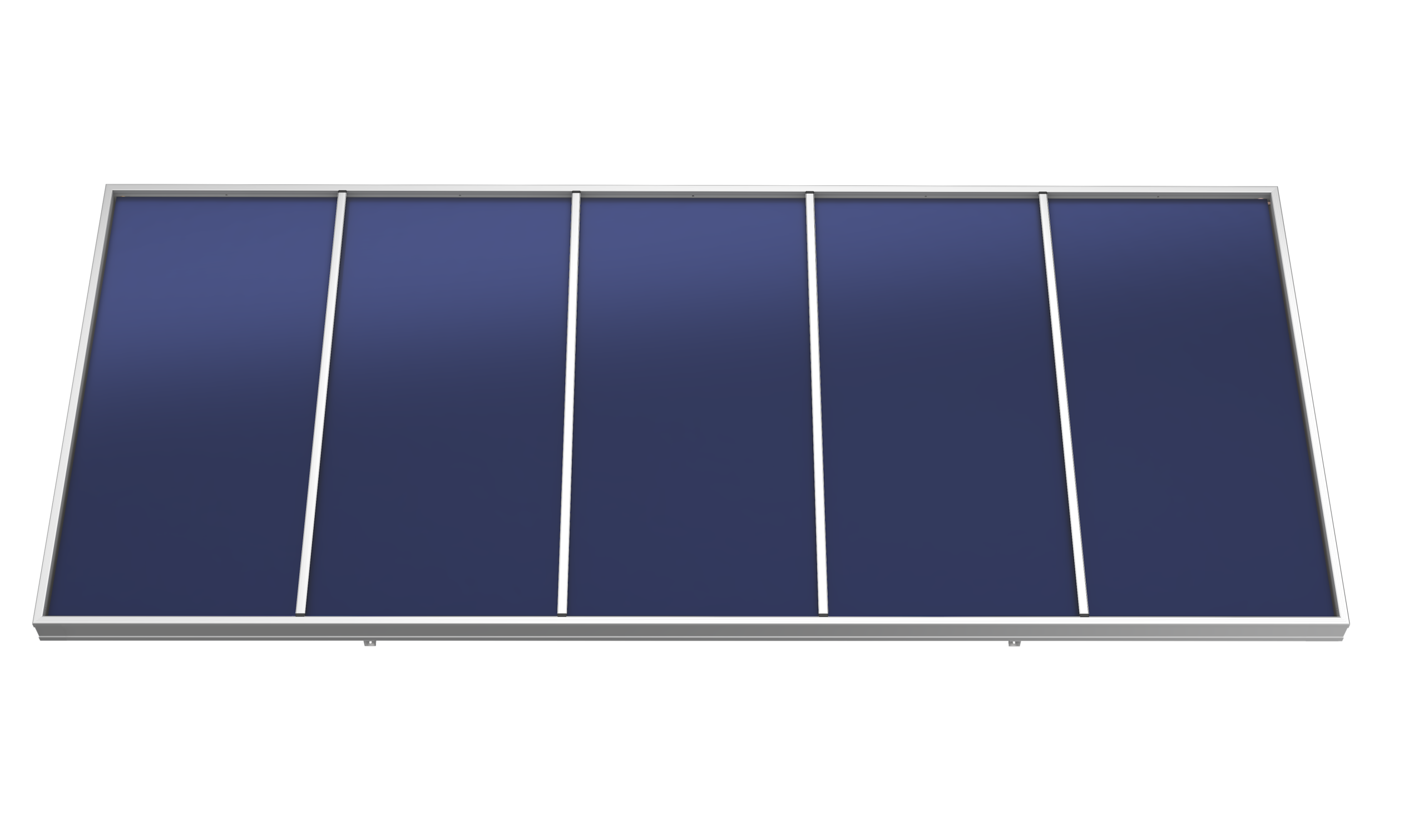
Short Answer
An industrial solar hot water system uses solar thermal collectors, storage tanks, circulation pumps, controllers, heat exchangers and backup heating to reduce the fuel or electricity required for factory hot water and low-to-medium temperature process heat. It is suitable for factories with predictable daily hot water demand, such as laundries, food processing plants, textile and dyeing facilities, dairy plants, agricultural processing lines, cleaning systems, staff dormitories and boiler feedwater preheating applications.
For most factories, the best design is not a standalone solar system that tries to replace the boiler completely. The practical design is usually solar preheating plus an existing boiler, heat pump or electric heater. Solar reduces the first temperature lift, while the auxiliary heat source guarantees final temperature during peak demand, winter and cloudy weather.
A correct industrial solar hot water design is not sized by roof area alone. It starts with daily water volume, inlet temperature, target temperature, peak demand schedule, local solar radiation, collector type, useful collector area, storage volume, heat exchanger capacity, control logic, backup heating strategy, water quality and payback target.
SOLETKS designs and supplies solar hot water systems for commercial and industrial projects using project data rather than generic catalog sizing. Public SOLETKS project examples include a 50 tons/day APEC Summit hotel hot water system with reported annual savings of 150,000 kWh, a 22 tons/day Germany hot water project using engineering-grade collectors, and a Latin American industrial laundry reference scenario with 6,000-12,000 L/day hot water demand at 45-65 °C.
Who Should Read This Guide
This guide is written for factory owners, facility managers, EPC contractors, procurement teams, energy consultants and distributors who need to evaluate whether solar thermal can reduce factory hot water cost.
You should read it if your factory has one or more of these needs:
- Hot water for washing, cleaning, rinsing or sanitation.
- Warm or hot process water between 40 and 80 °C.
- Staff dormitory, canteen, shower or accommodation hot water.
- Boiler feedwater or make-up water preheating.
- High electricity, gas, diesel or LPG cost.
- ESG, carbon-reduction or green-building targets.
- A need to reduce operating cost without risking production reliability.
Is Your Factory a Good Candidate?
Solar thermal is strongest when the load is repetitive, measurable and temperature-realistic. Before discussing product models, check whether the factory matches the operating profile below.
| Evaluation Point | Good Fit for Solar Hot Water | Needs More Careful Review |
|---|---|---|
| Daily demand | Stable daily hot water volume | Irregular or occasional demand |
| 온도 | 40-70 °C use or preheating | Direct steam or very high-temperature process |
| Schedule | Daytime use, or night use with storage | Short peak with no storage space |
| Existing heating | Boiler, heat pump or electric heater can accept preheated water | Existing plant is hard to modify |
| Site space | Clear roof or ground area with low shading | Heavy shading or weak roof structure |
| Water quality | Manageable hardness, chloride and pH | Severe scaling or corrosion risk without treatment |
| Buying goal | Lower fuel cost with reliable backup | Expecting 100 percent solar without backup |
If most answers are in the left column, solar thermal should be evaluated seriously. If several answers are in the right column, solar may still work, but the project needs stronger engineering review before quotation.
Why Industrial Solar Hot Water Is Different from Residential Solar Water Heating
Residential solar water heaters usually serve household bathing and washing. Industrial systems are different because factory hot water is often connected to production. A design mistake can affect output, hygiene, staff facilities or boiler operation.
Industrial projects must consider:
- Process reliability.
- Peak demand windows.
- Shift schedules.
- Boiler or heat pump integration.
- Water quality and scaling risk.
- Storage tank sizing.
- Heat exchanger selection.
- Pump redundancy and hydraulic balance.
- Pressure and temperature protection.
- Monitoring and fault alarms.
- Maintenance access.
- ROI and operating cost savings.
In other words, the goal is not to install as many collectors as possible. The goal is to deliver useful heat at the right time, at the right temperature, with the existing plant still able to guarantee supply.
Typical Factory Applications
Different industries use hot water differently. The collector choice, storage logic and backup strategy should match the application.
| Industry / Facility | Typical Hot Water Load | Common Temperature Band | Best Solar Role | Main Design Risk | Recommended System Direction |
|---|---|---|---|---|---|
| cURL Too many subrequests. | Washing cycles, rinse water, hospital laundry | 45-65 °C | Solar preheat plus series backup | Peak cycles and scaling | Flat plate or evacuated tube array, large buffer tank, industrial mixing valves |
| Food and beverage processing | Cleaning, rinsing, sanitation, preparation | 50-80 °C | Indirect preheating before boiler | Hygiene separation and chemicals | Heat exchanger separation, corrosion-resistant tank/exchanger materials |
| Textile and dyeing support | Washing, dyeing support, rinse water | 40-70 °C, sometimes higher | Low-to-medium temperature lift | Variable process temperature | Separate low-temperature solar-preheat load from high-temperature final heating |
| Dairy and agricultural processing | Washing, cleaning, process support | 45-75 °C | Preheat or cleaning-water support | Seasonal demand and water quality | Solar preheat with backup and simple maintenance access |
| Staff dormitories and canteens | Showers, kitchens, worker camps | 45-55 °C | Centralized domestic hot water | Morning/evening peaks | Storage-led design with timed circulation and backup heating |
| Boiler feedwater / make-up water | Preheated inlet water before boiler | 40-80 °C | Reduce boiler temperature lift | Boiler controls and pressure | Solar preheat tank upstream of boiler, boiler remains full backup |
| Industrial cleaning lines | Batch or continuous cleaning water | 45-70 °C | Reduce electric/gas heating cost | Peak flow and return temperature | Buffer tank, plate heat exchanger, return temperature control |
Temperature Levels and Collector Choice
The required water temperature strongly affects collector selection. Lower temperature systems are easier and usually deliver better ROI. Higher temperature systems are possible, but they require more careful design and often work best as preheating systems.
| Temperature Need | 일반적인 적용 사례 | Collector Options | Design Note |
|---|---|---|---|
| 25-40 °C | Pool heating, low-temperature washing preheat, some agricultural uses | Flat plate, PVT, selected evacuated tube | High collector efficiency is easier at low temperature. |
| 40-60 °C | Dormitory DHW, laundry preheating, general cleaning | Flat plate, evacuated tube, heat pipe collector | Common commercial hot water range. |
| 60-80 °C | Food cleaning, boiler feedwater preheat, industrial preheating | Evacuated tube, heat pipe, carefully selected flat plate systems | Solar should often preheat, while boiler or heat pump completes final temperature. |
| Above 80 °C or steam | Steam processes, high-temperature industrial heat | Solar preheating plus boiler or specialized thermal system | Do not expect ordinary solar hot water to replace steam equipment. |
SOLETKS public commercial system pages describe typical commercial hot water output ranges of 45-70 °C and hybrid integration with boilers or heat pumps. That is why many factory projects are designed around solar preheating rather than full boiler replacement.
SOLETKS Product and System Data Useful for Factory Buyers
The following public SOLETKS data points are useful when evaluating an industrial solar hot water system. Final selection should always be confirmed against the latest product datasheet and project conditions.
Flat plate collector reference data
SOLETKS flat plate collector data includes a BTE2.0-2 reference model with:
| 매개변수 | Published Reference Value |
|---|---|
| Overall area | 2.00 m² |
| Aperture area | 1.87 m² |
| 치수 | 2000 x 1000 x 80 mm |
| 정격 작동 압력 | 0.6 bar for the referenced model |
| 광학 성능 | 78 percent |
| 흡수판 | Aluminum, highly selective absorption coating |
| 프레임 | 알루미늄 |
This type of data helps buyers avoid vague quotations. A serious proposal should identify the actual model, gross area, aperture area, pressure rating, expected operating temperature and mounting arrangement. Do not mix the BTE2.0-2 reference pressure with large EFPC engineering collectors or PVT products, because each product family has its own rating.
Commercial tank and workstation reference data
SOLETKS product data also shows tank models from 300 L to 1000 L for split systems, with pressurized tank working pressure listed at 7 bar and insulation options such as PU foam. For factory-scale projects, tanks are usually larger and project-specific, but the same engineering questions remain: material, insulation thickness, coil or plate heat exchanger, pressure rating, service access and backup connection.
For commercial and industrial hot water systems, SOLETKS also describes system-level components such as differential temperature controllers, automated pumps, anti-freeze, anti-overheat and dry-burn protection, plus return line management to maintain constant outlet temperature.
System-level design data
SOLETKS commercial hot water pages describe several design features that matter in factory operation:
- Solar collectors optimized for 30-80 °C water applications.
- Hot water storage tanks scalable from 100 L to 10,000 L+ for commercial systems.
- Differential temperature controllers and automated circulation loops.
- Anti-freeze, anti-overheat and dry-burn protection.
- Return line management for stable outlet temperature.
- Low-flow solar-loop design references of 15-30 L/h per m² in commercial system architecture.
- Complete hydraulic layouts, not just panel sales.
- Multi-source priority logic such as solar to heat pump to boiler.
These details matter because the collector field is only one part of the system. Storage, hydraulics, control and backup integration often decide whether the project performs well after installation.

Main System Components
A complete industrial solar hot water system normally includes:
- Solar collector field.
- Mounting structure.
- Primary circulation loop.
- Pump station.
- Differential temperature controller.
- Collector and tank temperature sensors.
- Expansion vessel.
- Safety valves and air vents.
- Heat exchanger.
- Storage tank or buffer tank.
- Mixing valve or temperature control valve.
- Insulated piping.
- Backup boiler, heat pump or electric heater.
- Monitoring system.
- Maintenance valves and drainage points.
The collector is the visible part of the project. The invisible part – tank sizing, pipe insulation, heat exchanger capacity, control sequence and backup logic – usually decides the real savings.
System Layout Options
Option A: Solar preheat before boiler
This is the most common and lowest-risk factory layout.
Cold water -> Solar preheat tank -> Existing boiler -> Process / DHW load
The boiler remains responsible for final temperature and reliability. Solar reduces the boiler’s fuel requirement by raising the inlet water temperature.
Use this layout when:
- The factory already has a boiler.
- Production cannot tolerate hot water shortage.
- The target temperature is higher than the most economical solar operating range.
- The buyer wants fuel savings with low operational risk.
Option B: Solar loop with heat exchanger and buffer tank
This layout separates the solar loop from the water consumed by the factory.
Collector loop -> Plate heat exchanger -> Buffer tank -> Existing hot water system
Use this layout when:
- Freeze protection fluid is needed in the solar loop.
- Water quality is difficult.
- Hygiene separation is required.
- Maintenance access to the exchanger is important.
Option C: Solar plus heat pump
This layout combines daytime solar gain with efficient electrical heating.
Solar preheat -> Heat pump final heating -> Storage / load
Use this layout when:
- The factory wants lower carbon emissions.
- Electricity supply is stable.
- Gas or diesel is expensive or unavailable.
- The project needs all-season hot water with lower backup energy.
Option D: Solar for dormitory and process loads with priority control
Some factories need both staff hot water and process water. Treating both as one tank can create control problems.
A better design may be:
Solar field -> Main buffer -> Priority branch A: dormitory DHW -> Priority branch B: process preheat -> Auxiliary backup
Use separate tanks or priority valves when the two loads have different peak times, temperature targets or hygiene requirements.
Load Calculation Method
The first professional step is calculating the daily heat load.
Use this formula:
Daily heat demand (kWh/day) = water volume (L/day) x temperature rise (°C) x 0.001163
Temperature rise means:
Target water temperature - cold inlet water temperature
This formula calculates the thermal energy needed to heat the water. It does not yet decide collector area. Collector area depends on solar fraction, local irradiation, useful collector efficiency, operating temperature, pipe losses, storage losses and system control.
Example 1: 20,000 L/day Factory Preheating Calculation
A factory needs 20,000 liters of water per day. Cold water enters at 15 °C. The desired preheat target is 55 °C.
| 항목 | 값 |
|---|---|
| Daily water volume | 20,000 L/day |
| Cold inlet temperature | 15 °C |
| Target preheat temperature | 55 °C |
| 기온 상승 | 40 °C |
| Daily heat demand | 20,000 x 40 x 0.001163 = 930.4 kWh/day |
The full heating demand is 930.4 kWh/day. A solar system may be designed to cover 30 percent, 50 percent, 60 percent or another practical fraction depending on climate, roof area, collector type, fuel cost and budget.
Step 1: Select the target solar fraction
| Target Solar Fraction | Useful Solar Heat Target |
|---|---|
| 30 percent | 279 kWh/day |
| 40 percent | 372 kWh/day |
| 50 percent | 465 kWh/day |
| 60 percent | 558 kWh/day |
For many factories, 40-70 percent is a practical design range. Pushing toward 100 percent often increases collector area, storage volume and overheating risk faster than it improves ROI.
Step 2: Estimate collector area
A simplified sizing formula is:
Required collector area (m²) = target useful solar heat (kWh/day) / useful daily heat output per m²
Useful daily heat output per m² depends on:
- Local solar irradiation.
- Collector efficiency under operating temperature.
- Inlet and outlet temperature.
- Ambient temperature and wind.
- Collector tilt and orientation.
- Shading.
- Pipe and storage heat loss.
- Fouling and maintenance quality.
For early-stage feasibility, a supplier may run several scenarios instead of giving one false-precision number.
| 시나리오 | Assumed Useful Output | Area for 40 Percent Solar Share | Area for 50 Percent Solar Share | Area for 60 Percent Solar Share |
|---|---|---|---|---|
| Conservative climate / higher operating temp | 2.5 kWh/m²/day | 149 m² | 186 m² | 223 m² |
| Moderate climate / good installation | 3.5 kWh/m²/day | 106 m² | 133 m² | 159 m² |
| High irradiation / favorable temperature | 4.5 kWh/m²/day | 83 m² | 103 m² | 124 m² |
These are feasibility ranges, not a final design. Final collector area should be calculated with local irradiation data, the selected SOLETKS collector model, roof layout, hydraulic design and operating temperature.
Step 3: Estimate storage logic
Storage should not be chosen by a generic number alone. It must match the load curve.
For a 20,000 L/day factory, the design team should ask:
- Is the demand continuous during production, or concentrated in two or three peaks?
- Does the factory use hot water in the morning before solar production starts?
- Is the solar system feeding a process tank, a dormitory DHW tank or a boiler preheat tank?
- Can the existing boiler cover 100 percent demand during a cloudy day?
- Is there enough floor space for tanks and maintenance access?
A practical early-stage estimate is to compare storage against both daily demand and collector area. For many commercial solar hot water systems, storage often falls around 50-80 L per m² of collector area, but industrial peak demand may require more or less. For example, a 120-180 m² collector field might point to an initial storage discussion around 6,000-14,000 L, then adjust based on peak schedule and process needs.
Step 4: Define backup role
For this example, the existing boiler should normally remain able to cover 100 percent of hot water demand. Solar should reduce average fuel consumption, not remove production reliability.
A low-risk layout would be:
Cold water -> SOLETKS solar preheat tank -> Existing boiler -> Factory process
The boiler receives warmer inlet water and burns less fuel. During cloudy days or peak production, the boiler still guarantees final temperature.
Example 2: Industrial Laundry Reference Scenario
SOLETKS public commercial hot water content includes a Latin American industrial laundry scenario that is close to many factory applications.
| 항목 | Reference Scenario |
|---|---|
| 지역 | 멕시코 / 페루 / 브라질 / 칠레 |
| Facility type | Commercial or hospital laundry |
| Daily hot water demand | 6,000-12,000 L/day |
| Temperature range | 45-65 °C |
| Existing heating | Gas plus electric heaters |
| 집열기 면적 | 120-200 m² |
| Storage volume | 8,000-12,000 L |
| System type | Preheat loop plus series backup |
| Controls | Industrial mixing valves plus return circulation |
| Solar coverage | 60-75 percent |
| Reported annual savings range | USD 28,000-60,000 |
| Simple payback range | 2.2-3.5 years |
This example is useful because laundries and industrial washing loads are repetitive, temperature-realistic and energy-intensive. It also shows why system design must include storage and series backup rather than collectors alone.
Example 3: Public SOLETKS Project References
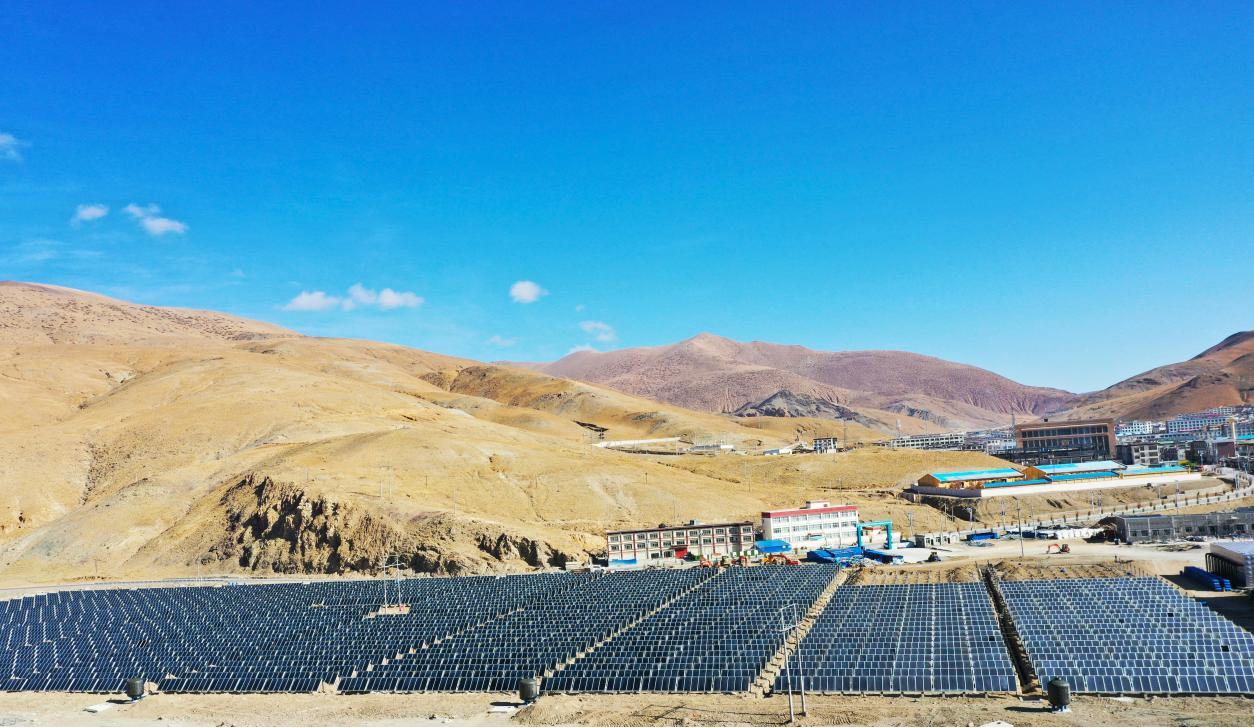
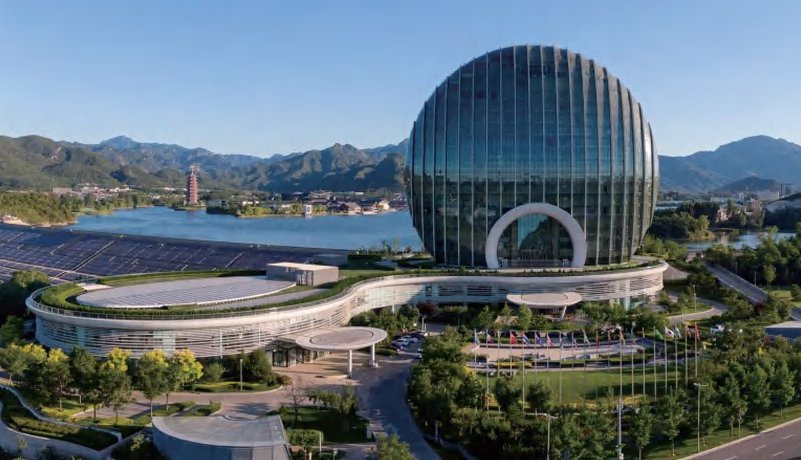
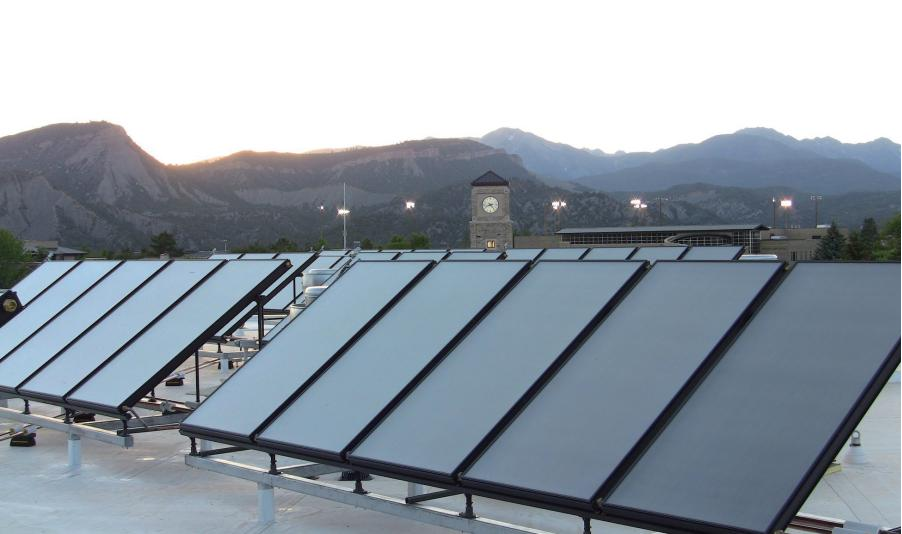
Factory buyers need proof that a supplier understands real hot water projects. SOLETKS public project references include:
| 프로젝트 | Year / Location | Scale | Reported Result / Relevance |
|---|---|---|---|
| APEC 정상회담 호텔 온수 시스템 | 2014년, 베이징 | 일 50톤 | Reported annual savings of 150,000 kWh and CO2 reduction of 74 tons. Useful reference for centralized commercial hot water. |
| 하르츠 교회 온수 프로젝트 | 2021년, 독일 | 일 22톤 | Engineering-grade collectors in series/parallel configuration for reliable hot water supply. Useful for commercial hot water layout. |
| 플로리다 리조트 빌라 온수 프로젝트 | 2022년, 미국 플로리다주 | 200 L/day per villa | Flat-plate water heaters supply daily hot water for resort villa applications. |
| 톈진 학교 TPV Pro + 히트 펌프 프로젝트 | 2024, Tianjin | 3,000㎡ | TPV Pro plus heat pump system meets heating needs while generating on-site electricity. Useful for hybrid solar plus heat pump thinking. |
| Saga County Centralized Solar Heating | 2019년, 티베트 시가체 | 107,000 m² heating coverage | EFPC115 large flat-plate collectors, reported coal reduction of 2,424 tons annually. Useful proof of large-scale flat plate solar thermal deployment. |
Not every project is a factory process-heating project, but these references show relevant system capabilities: large collector fields, centralized hot water, hybrid integration, series/parallel collector configuration and measurable energy savings.
Solar Fraction: Why 100 Percent Is Not Always the Goal
Solar fraction is the share of total heat demand supplied by solar energy.
In industrial projects, designing for 100 percent solar coverage is often unnecessary or uneconomical. Reasons include:
- Solar radiation changes by season.
- Factory demand may be higher than roof area allows.
- Oversizing can cause summer overheating.
- Extra storage can increase cost and heat loss.
- Backup heating is required anyway for reliability.
- Best ROI often comes from partial preheating.
A well-designed system often uses solar thermal to reduce the base heating load while boilers or heat pumps provide final temperature and backup.
Storage Tank Sizing Logic
Storage connects solar production with factory demand. A factory may use hot water early in the morning, late in the evening or during production peaks, while solar heat is collected during daylight hours.
Storage design should consider:
- Daily water demand.
- Peak flow.
- Production schedule.
- Solar collector area.
- Target temperature.
- Solar fraction.
- Backup heating strategy.
- Heat exchanger capacity.
- Available floor space.
- Tank insulation.
- Maintenance access.
A tank that is too small wastes useful solar heat. A tank that is too large may not reach useful temperature and may increase heat loss. For factory systems, storage should be selected after reviewing both daily volume and hourly demand.
Collector Selection Guide
Flat plate solar collectors
Flat plate collectors are suitable for many industrial hot water systems, especially in warm, moderate or mixed climates and low-to-medium temperature applications.
Choose flat plate collectors when:
- Target temperature is usually in the 40-70 °C range.
- Roof or ground area is sufficient.
- Long-term durability and lower maintenance are important.
- The project uses solar preheating before a boiler or heat pump.
- Visual integration or low-profile installation matters.
SOLETKS flat plate collector references include aluminum frames, highly selective absorption coating and optical performance data. Flat plate systems are also commonly used for centralized hot water, building heating and industrial thermal projects.
Evacuated tube solar collectors
Evacuated tube collectors use vacuum insulation to reduce heat loss. They are often selected when outdoor temperature is low, wind is strong or the system requires higher temperature.
Choose evacuated tube collectors when:
- The project is in a cold or windy region.
- Winter performance is critical.
- Higher hot water temperature is required.
- Roof area is limited and higher temperature output is valuable.
- The system has a strong commercial hot water or preheating load.
Heat pipe evacuated tube collectors
Heat pipe collectors are a type of evacuated tube collector. They can be useful in pressurized systems and can simplify tube maintenance.
Choose heat pipe collectors when:
- Pressurized solar hot water is needed.
- Serviceability matters.
- The project requires good heat transfer.
- Freeze protection logic is important.
- Commercial hot water reliability is important.
PVT hybrid solar panels
PVT panels generate electricity and recover heat from the same module. SOLETKS PVT pages describe PVT-E, PVT-T and TP/V Pro type products for projects that need both power and heat.
Choose PVT when:
- Roof area is limited.
- The factory needs both electricity and low-temperature heat.
- The recovered heat can be stored or used consistently.
- The project is designed as a hybrid clean-energy plant instead of heat-only solar.
For most pure industrial hot water projects, solar thermal collectors remain the simpler first option. PVT becomes more attractive when the buyer has both electrical and thermal demand on the same site.
Heat Exchanger Selection
The heat exchanger is the bridge between the solar loop and the factory water system. It should not be an afterthought.
Important selection points include:
- Heat transfer capacity at design flow.
- Temperature approach between solar loop and tank water.
- Pressure rating.
- Water hardness and scaling risk.
- Chloride level and corrosion risk.
- Ability to isolate, clean and service the exchanger.
- Whether the solar loop uses glycol or water.
- Whether hygiene separation is required.
For factories with hard water or process contamination risk, an external plate heat exchanger with isolation valves and service access is often easier to maintain than an internal coil that cannot be cleaned easily.
Control Strategy and Monitoring
Good control logic protects performance and equipment. The controller should manage:
- Pump start and stop based on collector and tank temperature difference.
- Maximum tank temperature.
- Freeze protection.
- Overheat and stagnation protection.
- Backup heater sequence.
- Return circulation.
- Fault alarms.
- Flow monitoring.
- Energy monitoring when required.
At larger scale, monitoring is not just a nice feature. It helps prove savings, detect pump problems, identify sensor failures and prevent silent performance loss.
Boiler and Heat Pump Integration
Most industrial solar hot water systems should integrate with existing boilers or heaters.
Solar plus boiler
Solar preheats the water before the boiler. The boiler then supplies the final temperature. This is a practical retrofit strategy because it reduces fuel consumption while keeping the original reliability of the boiler plant.
태양광과 히트 펌프
Solar preheats water or supports the thermal side of a heat pump system. This can reduce electricity consumption when controls are designed correctly. It is suitable when the factory wants lower carbon emissions or when fuel supply is expensive.
Solar plus existing storage
If a factory already has storage tanks, the design must confirm:
- Tank condition.
- Pressure rating.
- Insulation quality.
- Temperature stratification.
- Heat exchanger capacity.
- Sensor positions.
- Service access.
- Whether the tank can safely accept solar input.
Do not assume an existing tank is suitable just because it is large.
Water Quality and Material Selection
Water quality can decide whether the system stays efficient.
Ask for:
- Hardness.
- Chloride.
- pH.
- Total dissolved solids.
- Scaling history.
- Corrosion history.
- Whether the water is treated.
High hardness causes scale on heat exchangers, coils and tank surfaces. High chloride can attack the wrong stainless steel grade. Poor pH control can shorten tank and pipe life. Factory water is often harsher than residential water, so material selection should be based on real water analysis where possible.
SOLETKS tank references include material options such as SUS304 / SUS316L and heat exchange coil options. For industrial projects, the final tank and exchanger material should be selected according to pressure, temperature, water chemistry and maintenance plan.
Financial Evaluation and ROI
Industrial buyers usually care about payback. A useful evaluation should include:
- Current fuel or electricity price.
- Daily heat demand.
- Expected solar contribution.
- Collector field cost.
- Storage and installation cost.
- Backup energy savings.
- Maintenance cost.
- Operating days per year.
- Carbon reduction value if relevant.
- Expected system life.
- Local incentives if available.
SOLETKS commercial hot water pages show payback examples ranging from about 1.8 to 4.5 years for different commercial scenarios, and 2.2 to 3.5 years for the Latin American industrial laundry reference scenario. These numbers should be treated as scenario references, not universal guarantees. Actual ROI depends on fuel cost, solar irradiation, demand consistency, collector area, storage design and installation cost.
A serious ROI model should show at least three scenarios:
| 시나리오 | Fuel Cost Assumption | 태양 에너지 비율 | Expected Payback Logic |
|---|---|---|---|
| Conservative | Low fuel cost or weak irradiation | 30-45 percent | Longer payback, lower investment risk |
| Base case | Normal fuel cost and good load consistency | 45-65 percent | Balanced ROI and system size |
| High-return | Expensive diesel/electricity and strong irradiation | 60-75 percent | Faster payback if storage and roof area fit |
Avoid any supplier that gives a single payback number without showing assumptions.
Common Design Mistakes
1. Sizing by roof area only
The collector field should match useful heat demand, storage, solar fraction and budget. Filling the entire roof can create overheating and wasted heat.
2. Ignoring peak demand
Average daily demand is not enough. Peak demand affects tank size, heat exchanger size, pump flow and backup heating.
3. No clear backup strategy
Factories need reliable hot water. Solar should reduce energy use, not create production risk.
4. Wrong collector for temperature
Low-temperature loads and higher-temperature preheating need different collector decisions. Climate also changes the choice.
5. Weak pipe insulation
Long pipe runs with poor insulation can waste a large portion of collected heat.
6. Ignoring water quality
Scaling and corrosion can reduce performance. Heat exchangers, treated water or different tank materials may be necessary.
7. No maintenance access
Collectors, pumps, valves, sensors, exchangers and tanks must be accessible. Industrial systems need service planning from the beginning.
8. Treating dormitory and process loads as identical
Dormitory DHW and process water may have different peak times, temperature needs and hygiene requirements. They often need separate control logic.
SOLETKS Engineering and Service Process
For international projects, SOLETKS describes a project workflow that is useful for factory buyers:
- Requirement intake: building type, user quantity, daily water demand, local energy prices, roof direction and available area.
- Preliminary system sizing: consumption and solar-yield simulation to recommend capacity and configuration.
- ROI and financial analysis: annual savings, payback period, energy substitution and 10-20 year benefits.
- Site survey when needed: remote survey, local EPC inspection or engineering drawing validation.
- Final solution package: system layout, hydraulic diagrams, technical specification sheets and bill of materials.
- Equipment supply and remote installation guidance.
- After-sales and lifetime support.
This matters for industrial buyers because a factory project needs engineering deliverables, not only a product price.
What SOLETKS Needs for a Quick Evaluation
To reduce friction, send these six data points first:
| Minimum Data | 중요한 이유 |
|---|---|
| Country and city | Determines solar radiation, climate and freeze protection. |
| 일일 온수 사용량 | Determines heat load and initial storage direction. |
| Cold water inlet temperature | Determines temperature rise. |
| Target outlet temperature | Determines collector type and backup role. |
| 적용 분야 | Dormitory, laundry, food, textile, boiler preheat or other use. |
| Existing heating equipment | Determines boiler, heat pump or electric integration. |
With these six points, SOLETKS can start a preliminary concept instead of only sending a generic catalog.
What SOLETKS Needs for an Accurate Quote
For an engineering-level quotation, provide:
- Factory country and city.
- Industry type.
- Use case: process preheating, dormitory DHW, canteen, laundry, cleaning or mixed loads.
- Daily hot water volume by load.
- Hourly or shift demand profile.
- Cold water inlet temperature by season.
- Required outlet temperature by load.
- Peak demand time and peak flow.
- Operating days per year.
- Existing boiler, heat pump or electric heater details.
- Fuel or electricity price.
- Available roof or ground area.
- Roof orientation, tilt and shading information.
- Photos, drawings or roof plans.
- Water quality data if available.
- Minimum outdoor temperature.
- Required pressure level.
- Local certification or documentation requirements.
- Desired payback period.
With this information, SOLETKS can recommend collector type, storage volume, hydraulic layout, backup integration and a quotation-ready bill of materials.
구매자가 요청해야 할 서류
For a professional factory project, ask the supplier for:
- Product datasheets.
- Collector performance information.
- Tank specifications.
- System layout drawing.
- Hydraulic diagram.
- Collector stringing configuration.
- Pump and flow-rate basis.
- Heat exchanger selection basis.
- Control logic description.
- Installation manual.
- O&M checklist.
- Certificate documents.
- Warranty terms.
- Packing information for export.
- Bill of materials.
SOLETKS public pages state that the company can provide system layout drawings, collector stringing configuration, flow-rate and delta-T design tables, pump sizing and hydraulic balance, control logic description and long-term O&M recommendations.
Related SOLETKS Resources
Use these internal links to help buyers move from education to product evaluation:
- Commercial / Industrial Solar Hot Water System
- 태양열 온수 시스템
- 태양열 집열기 제품
- 평판 태양광 집열기
- 공학용 온수 평판 집열기
- 대형 평판 태양광 집열기
- PVT 태양광 패널
- Factory Solar Water Heating Guide
- SOLETKS에 문의하기
Key Engineering Takeaways
Industrial solar hot water systems reduce factory heating energy by using solar collectors, storage tanks, pumps, controls and backup heating to preheat or heat process water. A professional design should be based on daily water volume, temperature rise, operating schedule, peak demand, solar fraction, collector type, collector area, storage volume, climate, water quality and boiler or heat pump integration.
For many factories, the highest-ROI strategy is not 100 percent solar coverage. It is a stable preheating system that reduces the fuel or electricity consumed by the existing heating plant while leaving backup capacity in place for production reliability.
자주 묻는 질문
What is an industrial solar hot water system?
An industrial solar hot water system is a solar thermal system designed to heat or preheat water for factories, laundries, food processing, textile facilities, agricultural processing, cleaning lines, boiler feedwater or staff facilities.
How do you size an industrial solar hot water system?
Start with daily heat demand: water volume multiplied by temperature rise and the heat capacity of water. Then select a practical solar fraction, estimate collector area, define storage volume, size the heat exchanger, and integrate backup heating based on climate, schedule and budget.
Can solar hot water replace an industrial boiler?
Usually no. In most factory projects, solar reduces boiler fuel use rather than replacing the boiler completely. The boiler or another backup heater is still needed for final temperature, cloudy weather and peak demand.
Which collector is best for factories?
Flat plate collectors work well in many moderate climates and low-to-medium temperature applications. Evacuated tube and heat pipe collectors are often better for colder climates or higher temperature demand. PVT is useful when the factory needs both electricity and heat.
What temperature range is realistic for factory solar hot water?
Many commercial and industrial hot water projects operate around 40-70 °C. Solar can support higher-temperature systems as preheating, but ordinary solar hot water should not be treated as a direct steam or high-temperature process replacement.
How much storage does a factory solar hot water system need?
Storage depends on collector area, peak demand and production schedule. For many commercial solar hot water systems, early-stage storage estimates often use 50-80 L per m² of collector area, then adjust based on peak demand and site-specific engineering.
What is the best ROI strategy?
The best ROI is often solar preheating rather than 100 percent solar coverage. Solar handles the base heat load while existing boilers or heat pumps provide final temperature and reliability.
What data should I send for a quote?
Send country and city, daily hot water volume, inlet temperature, target temperature, application, roof or ground area, existing heating equipment, energy cost, operating schedule and photos or drawings.
Can one system serve dormitory hot water and process preheating?
Yes, but the design should separate the load profiles. Dormitory DHW and process preheating may need different temperatures, peak schedules, storage logic and hygiene control. A shared solar field can feed different branches if the hydraulics and controls are designed correctly.
Does the system work in winter or cloudy weather?
Yes, with lower solar output. A properly designed system includes a backup boiler, heat pump or electric heater, so hot water supply remains stable while solar reduces average energy consumption.
Send Factory Data for Engineering Review
Send SOLETKS six project data points: factory location, daily hot water volume, inlet temperature, target temperature, application and existing heating equipment. SOLETKS can return a preliminary system concept with heat load, recommended collector direction, storage logic, backup integration path and RFQ checklist.
For an accurate proposal, also send roof or ground area, photos or drawings, peak schedule, operating days, water quality, fuel or electricity price and any local certification requirements.