
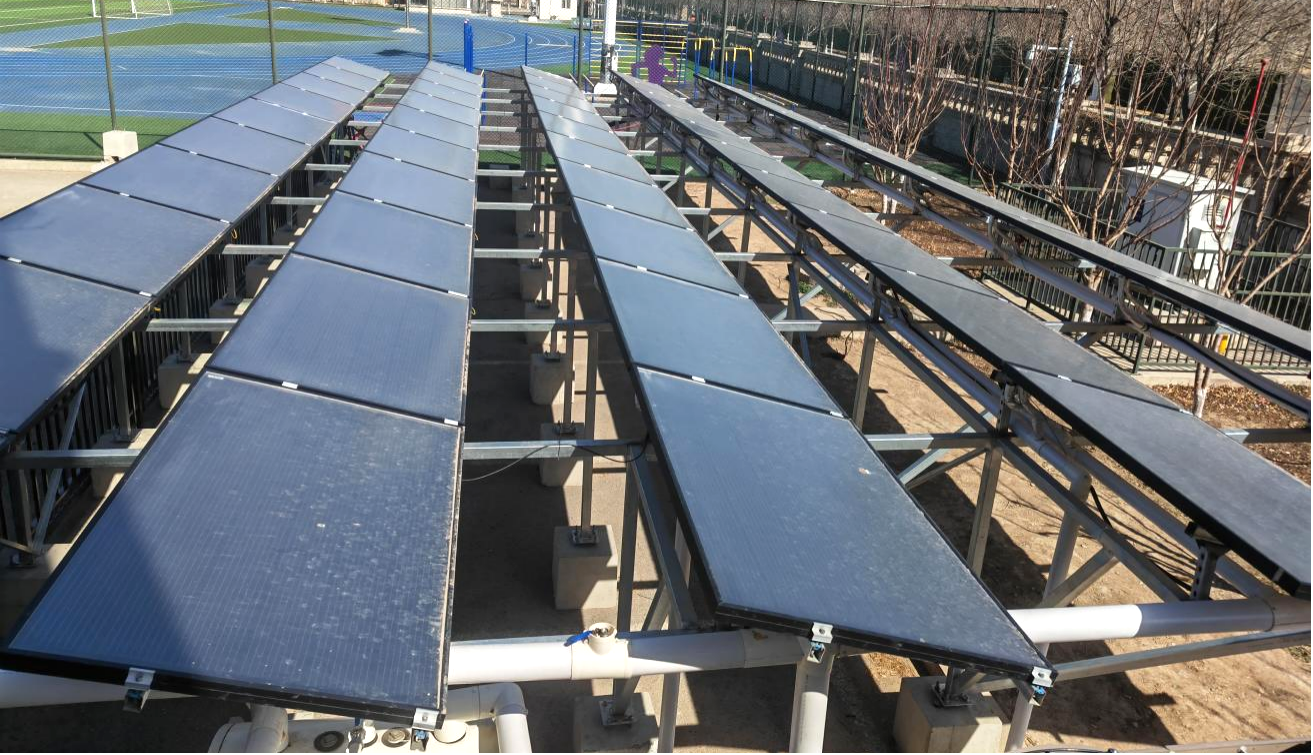
A PVT heat pump system combines photovoltaic thermal solar panels with a heat pump. The PVT panels produce electricity and collect low-to-medium temperature heat. The heat pump upgrades that heat to a useful temperature for domestic hot water, space heating support, swimming pools, or industrial preheating.
Why Combine PVT Panels with a Heat Pump?
PVT panels and heat pumps solve different parts of the same energy problem. A PVT panel can collect solar heat, but output temperature depends on sunlight, ambient conditions, flow rate, and system design. A heat pump can raise low-temperature heat to a higher useful temperature, but its efficiency depends on the temperature of the heat source.
When combined correctly:
- The PVT panel supplies solar heat to the system.
- The heat pump upgrades that heat to the required temperature.
- The PV side produces electricity that can offset part of the system’s electrical demand.
- The storage tank balances solar production and hot water usage.
This makes PVT plus heat pump a hybrid solar solution rather than a single product.
Basic System Architecture
A typical PVT heat pump system includes:
| Komponentas | Funkcija |
|---|---|
| PVT solar panels | Generate electricity and collect heat |
| Thermal loop | Moves heat from panels to tank or heat pump |
| Heat pump | Raises heat to useful temperature |
| Apsaugos bakas | Stabilizes source loop or thermal storage |
| Domestic hot water tank | Stores usable hot water |
| Valdiklis | Selects operating mode and protects the system |
| Circulation pumps | Move heat transfer fluid |
| Heat exchanger | Separates loops where required |
| Backup heater | Ensures supply during peak or low-solar periods |
| PV inverter | Converts PV electricity for building use |
The exact layout depends on whether the PVT loop heats the tank directly, feeds the heat pump source, or does both.
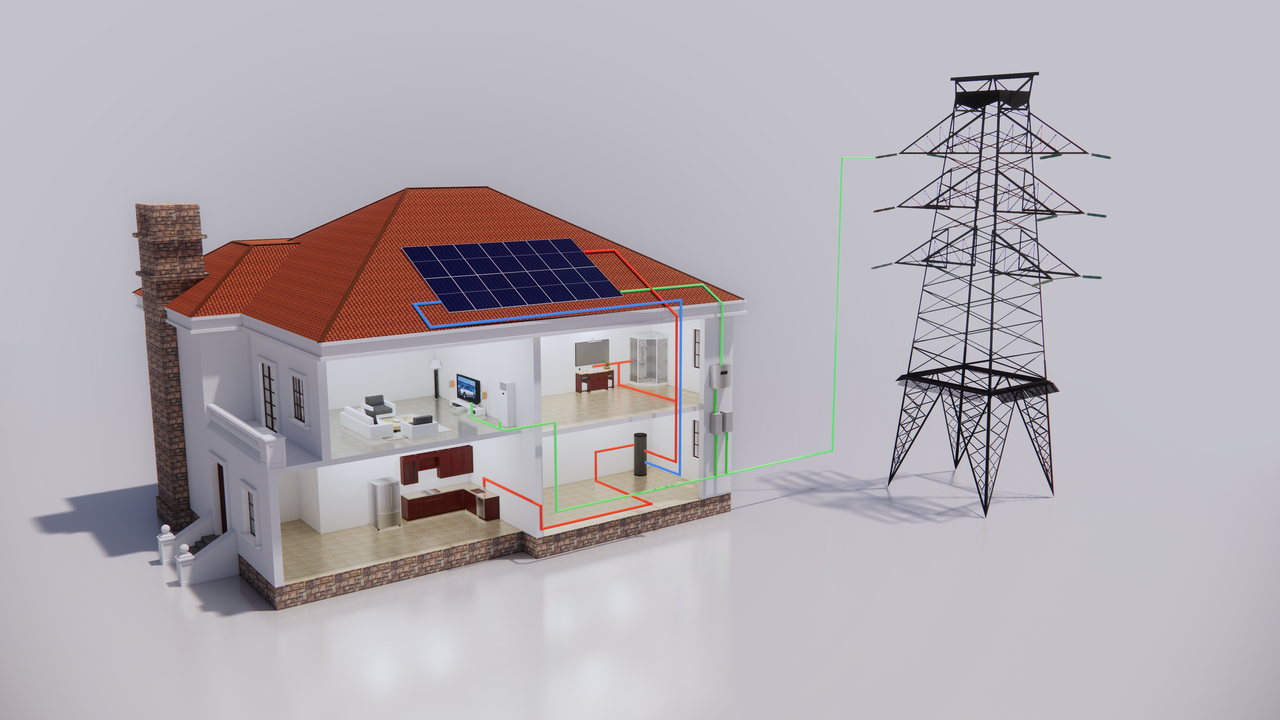
Kaip veikia sistema
Why Source Temperature Matters
Heat pump performance depends on the temperature lift it must provide. The smaller the difference between source temperature and output temperature, the easier the heat pump’s job.
Heating water from a very cold source to 55 C requires more work than heating from a warmer source. If the PVT loop can raise the source temperature, the heat pump may operate under more favorable conditions.
Performance depends on the full system
- PVT loop temperature and flow rate
- Ambient temperature and solar radiation
- Heat pump type and target hot water temperature
- Storage tank design and control strategy
- Daily heat demand schedule
Understanding COP
COP means coefficient of performance. It is a common measure of heat pump efficiency.
COP = Heat output / Electrical input
If a heat pump delivers 4 kWh of heat using 1 kWh of electricity, the COP is 4.
In a PVT heat pump system, the goal is not only to maximize COP in one moment. The real goal is to reduce total energy cost over the year while maintaining reliable hot water. A high COP claim without system context is not enough. Buyers should ask for expected seasonal performance under local climate and load conditions.
PVT Heat Pump vs Air Source Heat Pump
| Veiksnys | Air Source Heat Pump | PVT Heat Pump System |
|---|---|---|
| Heat source | Outdoor air | PVT thermal loop, solar heat, sometimes ambient heat |
| Solar electricity | Requires separate PV if desired | Integrated PV side |
| Roof use | Optional | Roof produces heat and electricity |
| System complexity | Lower | Higher |
| Best application | General hot water and heating | Hybrid solar projects with steady thermal load |
| Main design issue | Outdoor air temperature and defrost | Source loop, storage, controls, hydraulic design |
Air source heat pumps are simpler and widely used. PVT heat pump systems are better when the project wants integrated solar heat and electricity from the roof.
PVT Heat Pump vs Solar Water Heater
| Veiksnys | Saulės vandens šildytuvas | PVT Heat Pump System |
|---|---|---|
| Energy source | Solar thermal | Solar thermal plus heat pump plus PV electricity |
| Final temperature | Depends on solar and backup | Heat pump can lift temperature |
| Weather flexibility | Needs backup during low solar | Heat pump adds flexibility |
| System complexity | Vidutinis | Higher |
| Best use | Solar hot water with simple storage | Year-round hot water with hybrid energy design |
A cURL Too many subrequests. can be better for simple hot water projects. A PVT heat pump system is more suitable when the project requires electricity, thermal collection, and stable hot water.
Best Applications
Hotels and Villas
Hotels need electricity and hot water every day. Villas may combine domestic hot water, pool heating, floor heating support, and solar electricity.
Butai
Centralized apartment hot water systems can use storage tanks to balance PVT output and user demand.
Hospitals, Schools, Dormitories
Reliable hot water, predictable schedules, and storage planning are important for these applications.
Gyms, Pools, Factories
Pools, showers, washing, and process preheating create strong low-to-medium temperature loads.
Sizing Method
Step 1: Calculate Daily Heat Demand
Use:
Heat demand (kWh/day) = Water volume (L/day) x Temperature rise (C) x 4.186 / 3600
cURL Too many subrequests.
- Daily hot water demand: 10,000 L
- Cold water: 15 C
- Target: 55 C
- Temperature rise: 40 C
10,000 x 40 x 4.186 / 3600 = about 465 kWh/day
This is the useful heat demand before system losses, storage losses, and backup margin.
Step 2: Define Target Solar Contribution
The PVT system does not need to cover all heat demand. A practical system may target a realistic annual solar contribution and let the heat pump and backup cover the rest.
Step 3: Select Storage Volume
Storage must match daily demand and solar production. For commercial projects, separate solar buffer and hot water storage tanks may improve control.
Step 4: Select Heat Pump Capacity
Heat pump capacity should cover required recovery time and peak usage. Oversizing can increase cost and cycling; undersizing can cause hot water shortage.
Step 5: Evaluate Roof Area
Available roof area limits both PV and thermal output. PVT makes sense when the roof can support hydraulic and electrical installation.
Control Strategy
Control logic is what turns components into a working system. A good controller should decide:
- When to circulate the PVT thermal loop
- Whether to send heat to a buffer tank or heat pump source
- When to run the heat pump
- When to activate backup heating
- How to protect against freezing
- How to prevent overheating
- How to prioritize solar energy before backup energy
Poor control can waste solar heat, run the heat pump at the wrong time, or cause uncomfortable hot water supply.
Storage Tank Strategy
Single Tank
A single tank is simpler but may mix solar preheat and final hot water zones.
Two-Tank System
A preheat tank and final hot water tank can improve solar utilization and final-temperature control.
cURL Too many subrequests.
A buffer tank can stabilize the heat pump source loop and prevent short cycling.
Choose by Load Profile
The best tank strategy depends on load profile, heat pump type, required temperature, and control design.
Freeze and Overheat Protection
Because PVT heat pump systems include roof piping, freeze protection is important in cold climates. Options include glycol loops, heat exchangers, drainback designs, insulation, and controller-based protection.
Overheating can happen if solar heat is collected but not used, especially during low-demand periods. Good design may include:
- Larger storage volume
- Pool heating mode
- Heat dumping where suitable
- System stagnation management
- Seasonal control logic
Common Mistakes
Treating PVT as PV Only
If the thermal side is not connected to a useful load, the project loses the main value of PVT.
Undersizing Storage
Without enough storage, solar heat may be wasted.
Ignoring Final Temperature
PVT panels may be excellent for preheating, but heat pump and backup design must match the application.
Overpromising COP
COP depends on operating conditions. Use seasonal performance expectations rather than one ideal number.
Pirkėjo kontrolinis sąrašas
Before purchasing a PVT heat pump system, confirm:
- Daily hot water load
- Target water temperature
- Peak demand schedule
- PVT panel electrical and thermal ratings
- Heat pump capacity and operating range
- Storage tank volume
- Heat exchanger design
- Freeze protection method
- Valdymo logika
- Backup heating method
- Roof area and installation angle
- Maintenance plan
- Warranty and service support
Why Choose SOLETK?
SOLETK supplies PVT solar panels, PVT-T type panels, PVT hybrid solar systems, solar water heaters, evacuated tube collectors, and flat plate collectors. This allows the system to be designed from the project load rather than forcing one product into every application.
SOLETK can support:
- Commercial PVT heat pump system planning
- Hybrid solar hot water solutions
- PVT panel and storage concept selection
- Heat pump integration support
- OEM and project supply
Išvada
PVT solar panels with a heat pump can create a strong hybrid energy system when the building needs both electricity and heat. The technology is not a simple plug-in replacement for PV or a normal heat pump. It requires careful design around hot water load, storage, source temperature, roof area, freeze protection, and control logic.
For commercial projects with daily hot water demand, SOLETK can help evaluate whether a PVT heat pump system is the right solution.
Frequently Asked Questions
Ready to Design a PVT Heat Pump System?
Send SOLETK your building type, roof area, daily hot water load, target temperature, climate conditions, and current heating method. We can help evaluate a PVT heat pump system for your project.
Request System Advice View PVT Hybrid Systems