
Specify vacuum-insulated solar thermal collectors for domestic and commercial hot water, preheating and project integration. Choose the collector design using required heat duty, model-specific thermal performance, pressure, climate and maintenance requirements.
Request Collector TDS & Quote on WhatsApp ↗Compare Collector Types ↓
Evacuated tubes reduce convective heat loss across the evacuated glass layer. Useful heat is transferred through the collector's absorber, fluid channels or heat-pipe system, depending on design. Performance must be checked at the required project conditions; “high efficiency” is not a stand-alone system specification.
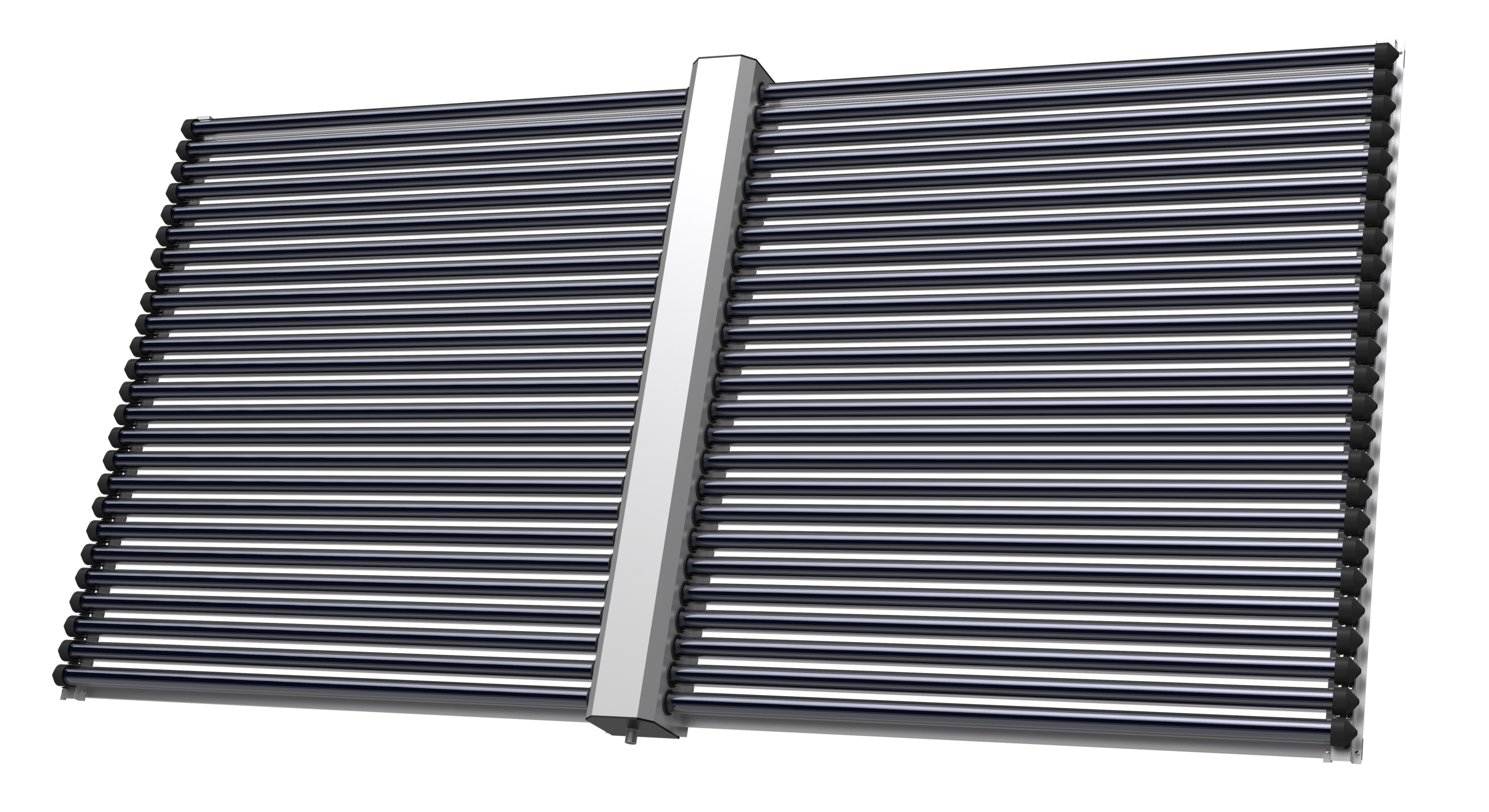
A vacuum tube collector range for water-heating applications. Evaluate water or transfer-fluid path, manifold construction, hydraulic ratings and project temperature needs.

Uses heat-pipe heat transfer for selected solar thermal applications. Confirm allowed tilt, condenser interface, operating pressure, stagnation behavior and service parts.
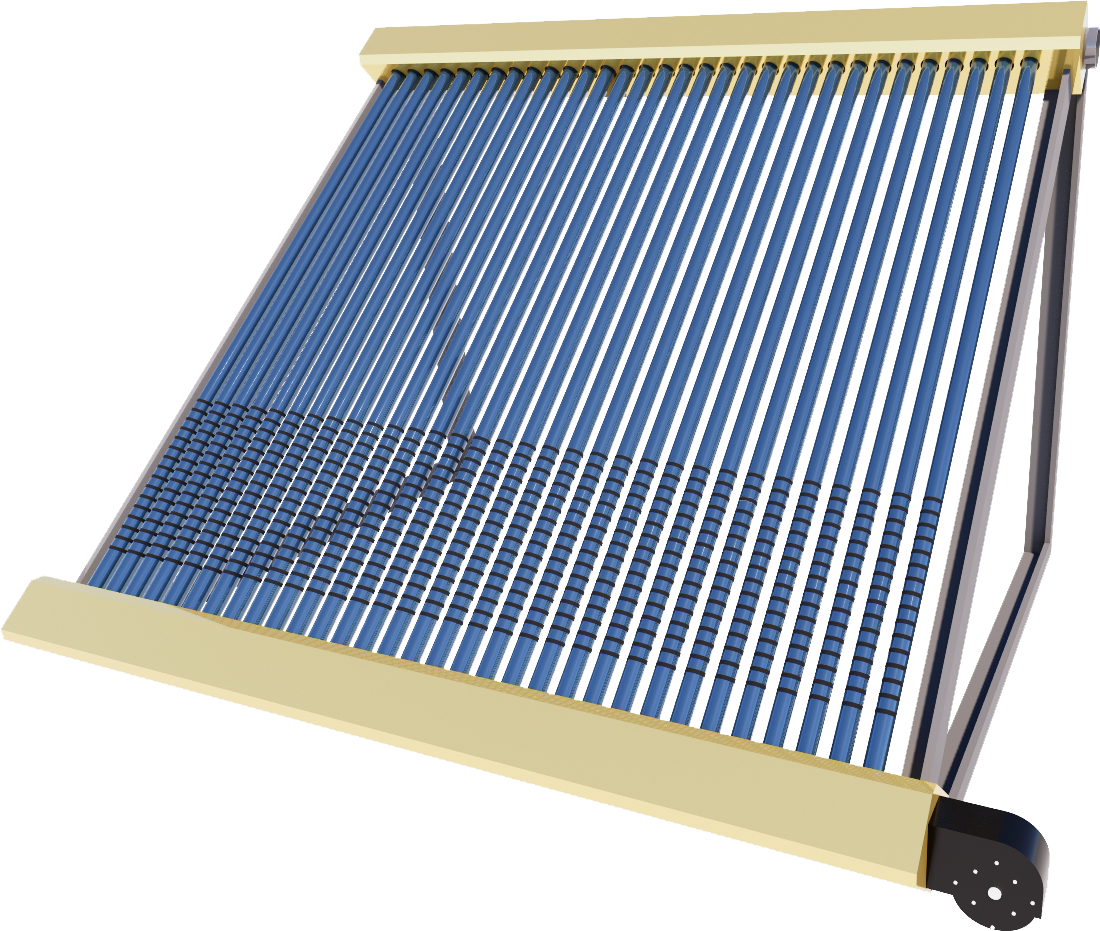
Designed for solar air heating, ventilation preheating and drying rather than the hot-water loop on this page. Select it only where heated air, not water, is required.
| Voce | Technical decision | SOLETKS document to request |
|---|---|---|
| Model and collector area | System energy yield, shipping and roof layout | Gross and aperture area; tube dimensions/count; collector L × W × H and dry/filled weight |
| Thermal test values | Output at specific irradiation, fluid temperature and ambient temperature | Model-specific efficiency coefficients, curve, reference area and test conditions |
| Hydraulic type and pressure | Direct versus indirect circuit; piping and pump duty | Heat-transfer path, pressure limits, connections, recommended flow and pressure-drop data |
| Glazing, absorber and fluid | Corrosion, tube replacement, materials compatibility | Glass and absorber construction, approved fluids and water-quality conditions |
| Installation constraints | Roof, tilt, wind/snow, service access and freeze protection | Mounting manual, tilt limits, fixing details, thermal protection approach |
| Testing, certification, supply | Applicable market compliance and ordering confidence | Model-matched test/certificate evidence if available, packing list, spare parts and quotation scope |
Do not assume that the CTC, HPC and DVC ranges share the same output, connection type or certifications. Ask for specifications of the exact model to be supplied. No unverified efficiency or performance guarantee is used here.
Annual thermal yield depends on collector heat losses, weather, system operating temperature, irradiation and control design. For higher temperature differences or cold climates, model-specific evacuated tube performance may be relevant — compare on equal reference-area and test-condition bases.
Include fluid selection, pump head, pipe insulation, storage and heat exchange, expansion and pressure protection. The collector may need safety design for stagnation, freezing and service access.
Commercial domestic hot water, hotel laundry, school showers and process preheating have different temperature and demand patterns. In large projects, the storage and backup strategy may matter as much as the collector model.
No. The result depends on the specific tested collector, operating temperature, site climate, irradiation, system configuration and how performance is measured. Use model-specific curves and project calculations.
Some configurations can be designed for cold climates, but pipework, manifolds, fluid, controls and installation still need verified freeze protection. The glass vacuum alone does not protect the entire system.
Collector-only procurement is separate from a complete storage, piping, control and backup package. Define your RFQ scope with SOLETKS.
Send your project country, hot-water duty, required temperature, approximate collector area/quantity, climate and intended system configuration. Ask for current CTC/HPC technical data, model-specific test evidence, mounting details and quoted supply scope.
Discuss Your Collector RFQ on WhatsApp ↗Direct WhatsApp inquiry; no form.