

Di Team tecnico di SOLETKS, the solar thermal application group that prepares collector and system selection guidance for B2B drying, ventilation, and process-heating projects.
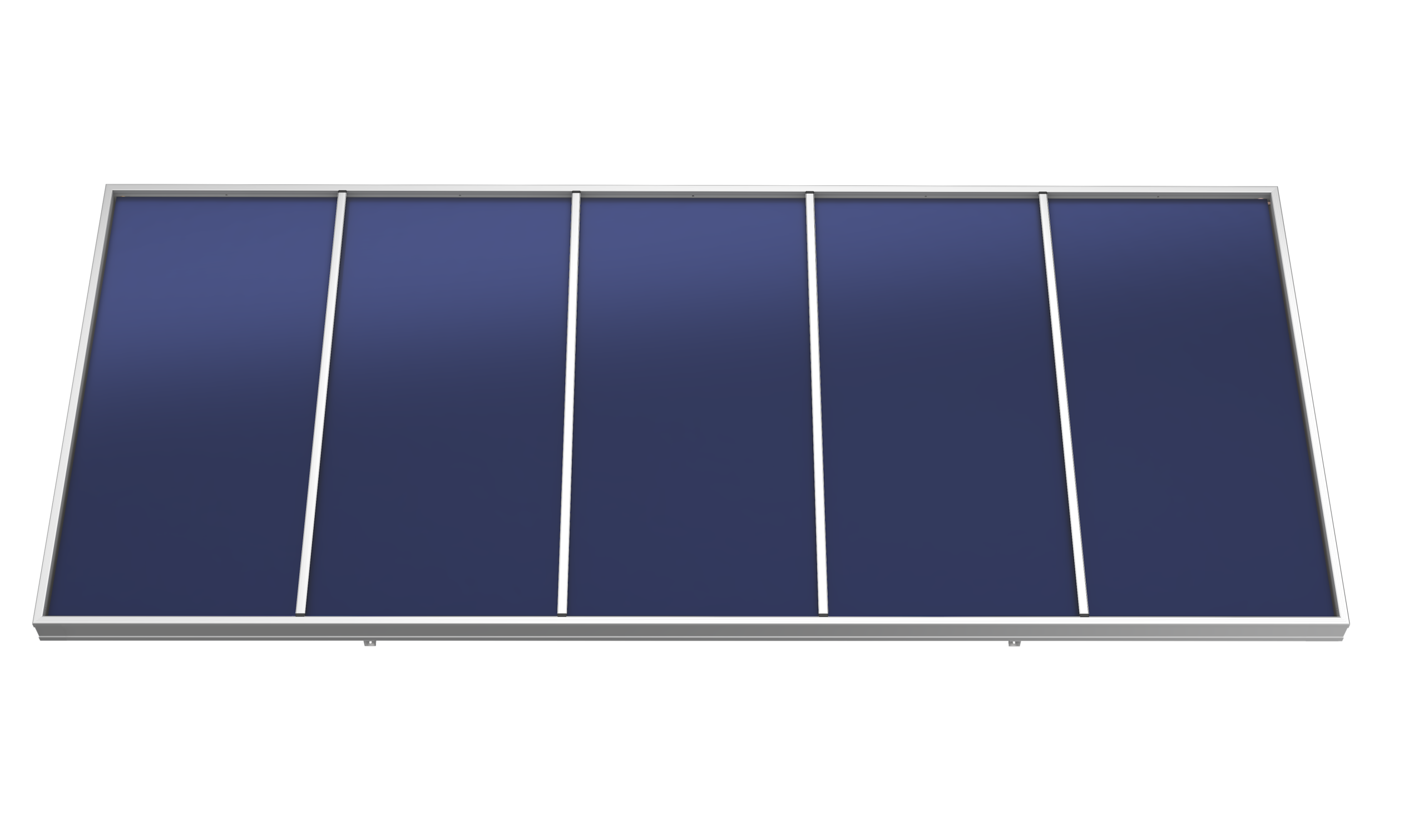
A solar air collector for industrial drying should be selected by drying temperature, airflow stability, product moisture sensitivity, backup-heater strategy, and how the collector will connect to the dryer chamber. For moderate-temperature drying, ventilation preheating, and building air heating, start with the Collettore d'Aria Solare AFPC. For higher-temperature industrial drying and process-air preheating, use the Collettore d'Aria Calda ATPC with forced airflow, insulation, dampers, and backup heat sized as one system.
Risposta rapida
Choose AFPC when the project needs clean warm air, steady ventilation, and drying support with lower system complexity. Choose ATPC when the drying chamber needs higher supply-air temperature, faster heat delivery, or more demanding process conditions. In both cases, send SOLETKS the wet-product mass, inlet moisture, target outlet moisture, drying hours, allowable air temperature, local solar resource, and backup energy source before requesting a quote.
Why Solar Air Collectors Fit Industrial Drying
Solar air collectors fit industrial drying when the process needs heat more than electricity and the plant uses daytime heat directly or through a controlled air path. The U.S. Department of Energy notes that solar thermal systems serve industrial process heat across a wide temperature band, while the IRENA/ETSAP technology brief discusses solar heat for industrial processes and drying applications. For drying lines, the useful question is not “Can solar replace every heater?” but “How much inlet-air preheating will solar provide without damaging product quality or disrupting production?”

Air drying is especially suitable because the working medium is air, not water or glycol. A collector heats incoming air, a fan moves it through the dryer or mixing box, and dampers blend solar-heated air with ambient or backup-heated air. This avoids a water-to-air heat exchanger in many layouts and reduces freeze risk compared with liquid circuits. The tradeoff is that air has lower heat capacity than water, so duct size, fan power, pressure drop, and leakage control matter from the first design stage.
SOLETKS positions AFPC for drying, ventilation, and building heating, while ATPC is positioned for high-temperature drying and industrial heat applications. That product split gives a practical decision rule: use AFPC for stable warm-air contribution and ATPC when supply temperature and insulation become the limiting design factors.
AFPC vs ATPC Selection Matrix
The right collector is the one that matches the drying curve, not the one with the strongest headline. A tea, seed, herb, timber, coating, or sludge dryer can all need warm air, but each has different limits on temperature, humidity, residence time, contamination risk, and shutdown behavior.
| Decision point | Collettore d'Aria Solare AFPC | Collettore d'Aria Calda ATPC | Buyer rule |
|---|---|---|---|
| Primary use | Drying support, ventilation air, building air heating | Higher-temperature drying and industrial process air | Use AFPC for warm-air contribution; use ATPC when the dryer needs hotter, more stable supply air. |
| Temperature sensitivity | Better fit for products that lose quality under aggressive heat | Better fit for processes that use hotter air with controls | Send the maximum allowed product air temperature in °C. |
| Airflow control | Fan and damper control are still required | Fan, damper, insulation, and backup heater control become more critical | Specify airflow in m³/h and target chamber temperature range. |
| System risk | Main risks are under-sizing, air leakage, and weak controls | Main risks are overheating, uneven airflow, and insulation loss | Use high-limit temperature protection and bypass dampers. |
| Best project type | Agricultural drying, ventilation preheat, workshop or warehouse warm air | Industrial drying, process-air preheating, faster batch recovery | Match collector type to drying schedule, not only roof area. |
| SOLETKS category fit | Collettore d'Aria Solare AFPC | Collettore d'Aria Calda ATPC | Compare both under the Collettore solare category. |
A Practical Drying Load Calculation
A solar air drying proposal should start with a moisture-removal calculation before roof area is discussed. The example below is a screening calculation, not a final thermal design.
Example Input
- Wet product entering dryer: 1,000 kg/day
- Initial moisture content: 40% wet basis
- Target moisture content: 16% wet basis
- Planned drying window: 8 h/day
- Screening latent-heat allowance: 2.4 MJ/kg water removed
- Collector-system useful heat available during sun hours: 450 kWh/day
Source note: these are worked example inputs for sizing logic; the latent-heat allowance is a rounded pre-design value, and final design should use product-specific drying curves plus a full heat-loss model.
Calculate dry solids
1,000 × (1 − 0.40)600 kg dry solidsFinal product mass
600 ÷ (1 − 0.16)714 kg final productWater removed
1,000 − 714286 kg water/dayEvaporation heat
286 × 2.4 = 686 MJ ÷ 3.6191 kWh/dayCompare with solar
450 ÷ 191235% screening fractionSolar Air Drying System Layout
The safest industrial design treats the solar collector field as one controlled heat source inside a larger drying system. A fan-only, collector-only layout is rarely enough for B2B production because it cannot protect product quality during clouds, batch changes, or high-temperature peaks.
Solar air drying control diagram: outdoor air intake → collector field → supply fan → mixing/bypass damper (with backup heater and sensor control) → dryer chamber → exhaust path.
Warm-Air Contribution
- The dryer accepts moderate warm-air input instead of a fixed high-temperature setpoint.
- Product quality is more sensitive to overheating than to slightly longer drying time.
- The plant wants solar preheat to reduce fuel use, not to remove the backup heater.
- Ventilation, dehumidification support, or workshop air heating stays in the warm-air range.
- A distributor, EPC, or agricultural processor needs a simpler collector-field path.
AFPC is not a magic heater — useful performance depends on solar resource, collector area, airflow rate, duct insulation, fan control, and exhaust strategy.
Higher-Temperature Process
- The chamber needs a higher, more stable supply-air temperature than ventilation preheat provides.
- Batch time matters — e.g. drying must finish inside 6–10 hours.
- The process already uses fuel, steam, electric, or heat-pump backup and wants solar to carry the daytime load.
- Duct losses are significant, so insulation and collector outlet stability matter.
- Sensors, bypass control, and high-temperature protection are part of the collector package.
ATPC still needs a backup heater. The right promise is fuel reduction and better daytime preheating, not “solar-only operation.”
Temperature, Moisture & Product Quality Rules
Drying quality is controlled by temperature, humidity, airflow, and residence time together. Heat alone does not make a good dryer. If air temperature rises but exhaust humidity stays high, the product develops defects such as case-hardening, mold risk, deformation, cracking, oxidation, color loss, or flavor loss.
| Product / process condition | Design rule | Perché è importante |
|---|---|---|
| Heat-sensitive food, herbs, seeds, or medicinal materials | Put the maximum product-air temperature in the RFQ and use staged drying control. | Product value falls faster than fuel cost improves when temperature is too high. |
| Thick material, stacked trays, or timber | Design for uniform airflow and pressure balance before adding more collector area. | Uneven airflow creates wet zones even when average air temperature looks acceptable. |
| High-humidity climate | Add exhaust control, partial recirculation only after humidity measurement, and backup heat. | Warm air with poor humidity removal slows drying and creates quality risk. |
| Dust, fibers, or sticky product | Add filtration and service access. | Blocked screens and dirty ducts increase pressure drop and reduce airflow. |
| Continuous production | Keep backup heat and automatic dampers in the scope. | A cloud event should not stop a production line. |
Failure Modes to Prevent
Most solar air drying failures are system failures, not collector failures. They happen when the collector, fan, duct, dryer chamber, and controls are quoted separately with no shared design point.
Under-airflow causes the collector to run hotter while the chamber receives too little useful heat. Set design airflow in m³/h together with allowable pressure drop, duct length, number of elbows, filter resistance, and fan control method before purchase.
Surriscaldamento happens when collector output is strong but product moisture is already low, the batch is delayed, or exhaust dampers are closed. The fix is a bypass damper, high-limit thermostat, and backup-heater logic that reduces heat input when chamber temperature reaches the upper limit.
Condensation and corrosion occur when warm humid exhaust meets cold metal ducting, roof penetration, or poorly insulated sections. The fix is insulation, drainage, corrosion-resistant materials where needed, and first-batch commissioning with at least 3 readings: supply temperature, chamber humidity, and exhaust temperature.
Poor commissioning hides problems until the first production run. SOLETKS states its quality workflow includes procurement, design, manufacturing, integration, testing, and delivery, with inspection and testing before shipment. The pre-shipment stage includes temperature cycling and weather simulation; after field commissioning, keep at least 6 mesi of operating logs to compare airflow drift and drying time against the accepted baseline.
Dati da inserire nella richiesta di preventivo (RFQ) per SOLETKS
Send these inputs with your request
Complete inputs let the team compare AFPC, ATPC, backup heat, and duct layout faster.
SOLETKS lists contact routes through its website, including WhatsApp, phone, email, and a project form for specification support. For distributor or EPC projects, ask for the collector model recommendation, airflow range, duct connection advice, control logic, packing information, and commissioning checklist in one specification pack.
Lista di controllo delle specifiche
| Voce | Minimum confirmation |
|---|---|
| Collector type | AFPC, ATPC, or mixed collector field |
| Design airflow | m³/h at design pressure drop |
| Supply-air target | Normal range and maximum high-limit temperature |
| Ducting | Diameter or section size, insulation thickness, material, support spacing |
| Control | Fan control, damper control, backup-heater interlock, sensor locations |
| Sicurezza | Over-temperature bypass, fire-risk method from local code, electrical protection |
| Maintenance | Filter access, duct cleaning access, fan service access |
| Documentazione | Datasheet, drawings, packing list, wiring diagram, installation guidance |
| Quality records | Model-specific certificate or test report when required for the project |
The SOLETKS quality page lists international quality and safety standards resources, including Solar Keymark, CE, and ISO references. Buyers should request the certificate or report that applies to the exact product model and destination market, rather than assuming one certificate covers every collector variation.
Standards & Certificates to Specify
Use standards as a purchasing filter, not as decoration. ISO identifies ISO 9806:2017 as a test-method standard for solar thermal collectors, while the Solar Keymark program links collector certification to recognized European testing routes.
| Standard / certificato | Ambito di applicazione | RFQ decision rule |
|---|---|---|
| ISO 9806:2017 | Solar thermal collector test method | Ask whether the collector has model-specific test data under ISO 9806:2017. |
| Solar Keymark | European solar thermal collector certification route | Use it when the buyer needs European collector certification evidence. |
| CE marking | EU market conformity pathway | Request CE documentation for the supplied product and electrical package. |
| ISO 9001 | Quality management system evidence | Use it to qualify the supplier process, not as a substitute for product test data. |
| IEC 60204-1 | Electrical equipment of machinery | Apply it when the project includes a machine-integrated control panel. |
| UL 508A | Industrial control panels for North American projects | Use UL 508A when the panel is supplied for a market that requires it. |
| EN 12975 | Legacy European solar collector testing context | Treat as legacy reference and ask for the current test basis used in the report. |
Lifecycle & Maintenance Planning
Lifecycle cost depends on cleaning access, fan power, filter load, duct leakage, and downtime. The intervals below are starting points for an RFQ; dusty products, fibers, sticky exhaust, coastal air, and continuous operation shorten them.
| Componente | Baseline interval | Service action | TCO risk if ignored |
|---|---|---|---|
| Air filter / inlet screen | 1 month (dusty seasons) | Clean or replace before pressure drop reduces airflow | Fan power rises and drying time lengthens. |
| Duct insulation & joints | 6 mesi | Check damage, leakage, and condensation marks | Heat loss increases; roof penetrations become corrosion points. |
| Fan, belt & bearings | 3 months (continuous) | Inspect noise, vibration, current draw, bearing condition | Airflow drift creates uneven drying. |
| Temperature & humidity sensors | 12 mesi | Calibrate or replace per plant QA rules | Controls overheat or under-dry product. |
| Dampers & bypass actuator | 6 mesi | Verify open/close response and fail-safe position | Cloud events and high-limit trips become harder to control. |
| Collector glazing & absorber surface | 3–6 months (by dust) | Clean with the approved method for the supplied collector | Optical gain drops before operators notice a fault. |
When Not to Use a Solar Air Collector
A solar air collector is non the right first choice when the process needs 24/7 fixed-temperature heat, has no daytime drying window, lacks roof or ground area, or cannot tolerate any fluctuation in supply-air temperature. It is also weak when the product requires sterile or tightly filtered air and the plant has no plan for filtration, duct hygiene, and cleaning access.
In those cases, specify a Solar Hot Water System, heat-pump integration, steam-to-air coil, or hybrid system instead. Solar air collectors are strongest when the plant uses daytime hot air directly and treats backup heat as a stabilizer rather than the only heat source.
Frequently Asked Questions
Is AFPC or ATPC better for industrial drying?
Do solar air collectors replace a gas or electric dryer heater?
What data is needed to size a solar air drying system?
Do solar air collectors work in humid climates?
What should distributors ask SOLETKS for before quoting a dryer project?
Fonti
- SOLETKS product pages: Collettore solare, Collettore d'Aria Solare AFPC, e Collettore d'Aria Calda ATPC.
- Dipartimento dell'Energia degli Stati Uniti, Solar-Thermal Power and Industrial Processes Basics; IRENA & ETSAP, Solar Heat for Industrial Processes Technology Brief.
- SOLETKS Quality Assurance page.
- SOLETKS Contact page.
- ISO, ISO 9806:2017 Solar energy — Solar thermal collectors — Test methods; Schema di certificazione Solar Keymark.
- Solarthermalworld.org, Industrial solar heat projects in Spain e Solar air heating and drying market assessment.
- University of Georgia National Center for Home Food Preservation, Drying Foods.