
The Real Sales Question
On paper, both thermosiphon and forced circulation systems use free solar energy to produce hot water. In the field, however, they solve very different problems. One is simple, compact, and attractive for straightforward residential jobs. The other is more flexible, easier to scale, and better suited to buildings where layout, control, and reliability matter more than lowest first cost.
The U.S. Department of Energy still frames solar water heating around the same active-versus-passive distinction, and manufacturers like SOLETKS reflect this split across their product lines — from compact integrated units to split-system configurations designed for commercial projects.
The real sales question is not “Which one is better?” It is “Which one is easier to sell, install, support, and defend for this building type, this climate, and this buyer?”
At a Glance: Thermosiphon vs Forced Circulation
These labels describe how heat-transfer fluid circulates. They do not automatically tell you whether the domestic hot-water tank is pressurized, which collector model is used, or where the tank must be located.
| Design factor | Thermosiphon (passive natural circulation) | Forced circulation (pump-driven) |
|---|---|---|
| Heat-transfer principle | Natural buoyancy drives movement with suitable pipe/tank arrangement | Pump and controls drive the collector loop |
| Collector/tank arrangement | Tank elevation and piping geometry must support natural circulation; many compact designs place the tank near/above collector | Allows more flexibility in siting the storage tank and collector array, subject to pump head and pipe losses |
| Electrical dependence | No circulation pump required in passive operation; auxiliary systems may still need electricity | Requires pumps and controller operation for active collection |
| Design and commissioning | Verify buoyancy circulation, roof loads and pipe losses | Specify flow, pump duty, sensors, control logic and freeze strategy |
| Service demands | Fewer moving collector-loop parts in many designs | Additional pump, sensors, valves and control service |
| Pressurized water delivery | A separate tank/plumbing specification; verify potable-water pressure rating and user demand for either architecture | |
| Best initial purchase decision | Consider for suitable small installations with simple demand and structural support | Consider for plant-room storage, complex/large loads or controlled hydraulic distribution |
Related buying question: read Pressurized vs Non-Pressurized Solar Water Heaters separately. Pressure class and circulation architecture are not interchangeable product names.
What Is a Thermosiphon Solar Water Heater?
A thermosiphon system is a passive solar water heater: density differences cause warmer heat-transfer fluid to rise and cooler fluid to return, provided that the collector, storage and pipework are correctly arranged. Compact rooftop systems are common, but exact geometry and potable-water pressure must be checked for the selected model. Natural circulation can reduce dependence on pumps; neither efficiency nor reliability is universally superior without comparing actual operating conditions, system design and maintenance.
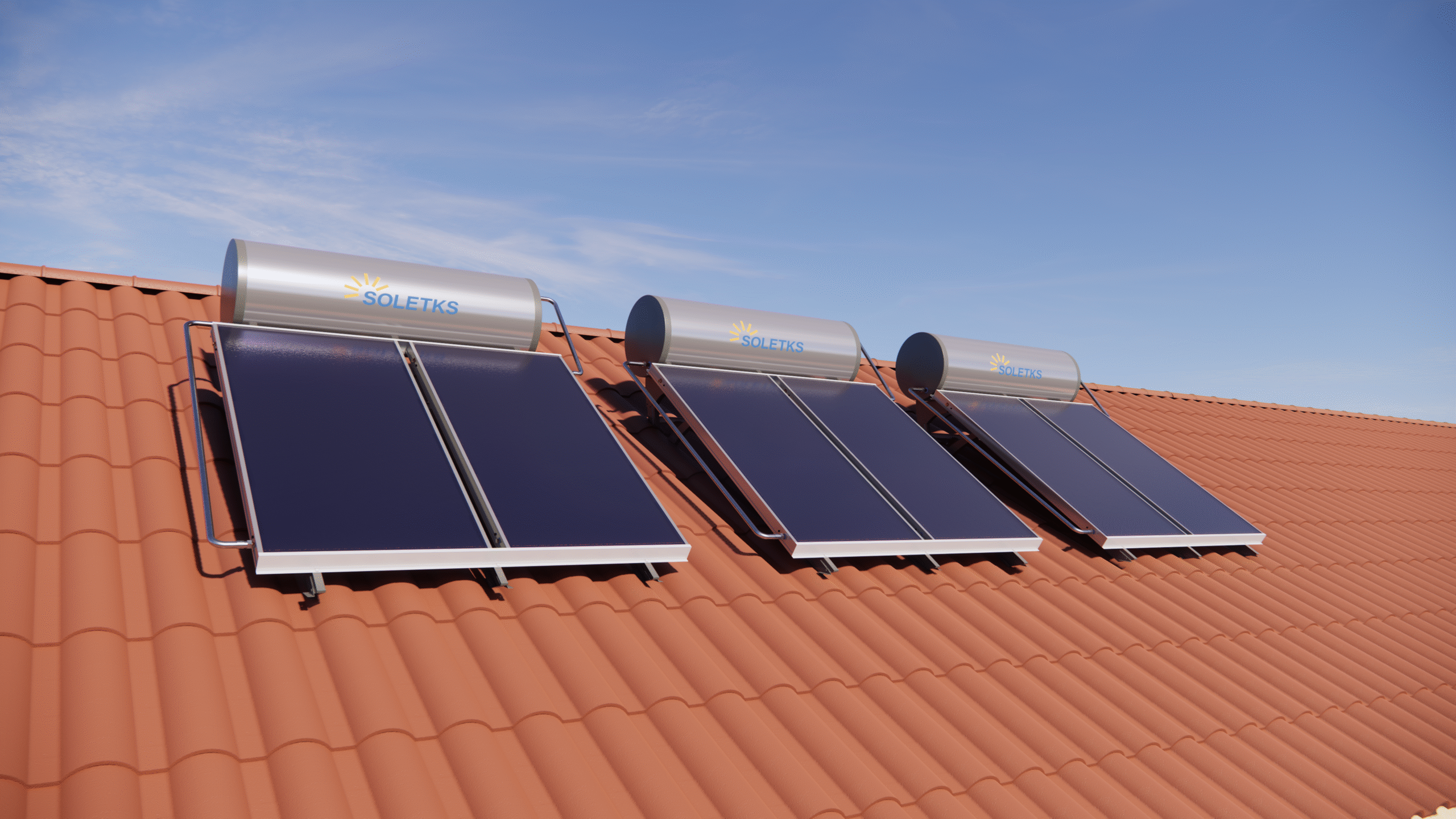
SOLETKS integrated solar water heater: a compact rooftop unit where the collector and storage tank are installed together — the classic thermosiphon format
Terminology Note
Thermosiphon describes a circulation method — how water moves through the system without a pump. It does not automatically define the product format. Some integrated rooftop units use thermosiphon circulation, while others may use pressurized designs with different operating characteristics. When evaluating products, check whether the unit operates on natural gravity-fed circulation or uses a pressurized loop, because that distinction affects system behavior, freeze tolerance, and building compatibility.
How Thermosiphon Circulation Works
From a sales perspective, thermosiphon is easiest to position as a compact, lower-complexity solution for homes and light residential projects. It works especially well where buyers want a straightforward system, service resources are limited, and the roof can safely carry the tank.
What Is a Forced Circulation Solar Water Heater?
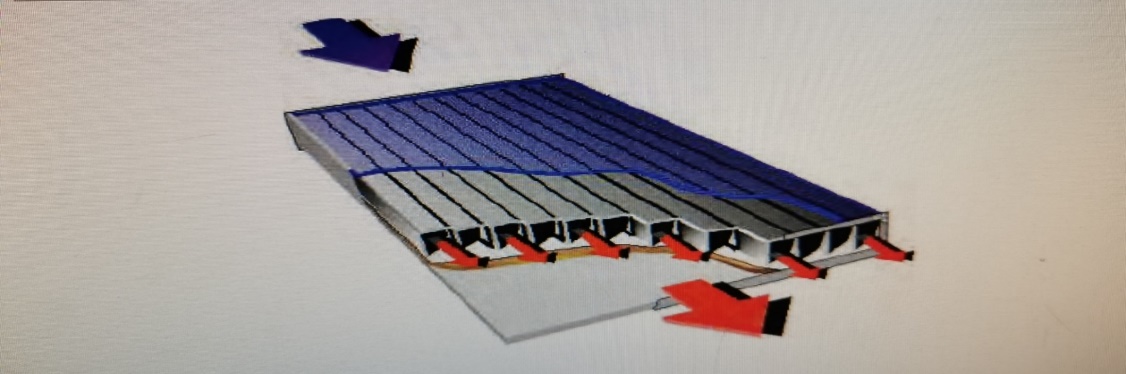
A forced circulation system is an active solar water heater. It uses a pump and controller to move water or heat-transfer fluid between the collectors and the storage tank. In direct systems, pumps circulate household water — and these work best where freezing is rare. In indirect systems, the pump circulates a non-freezing heat-transfer fluid through a heat exchanger, which is why they are common in colder climates.
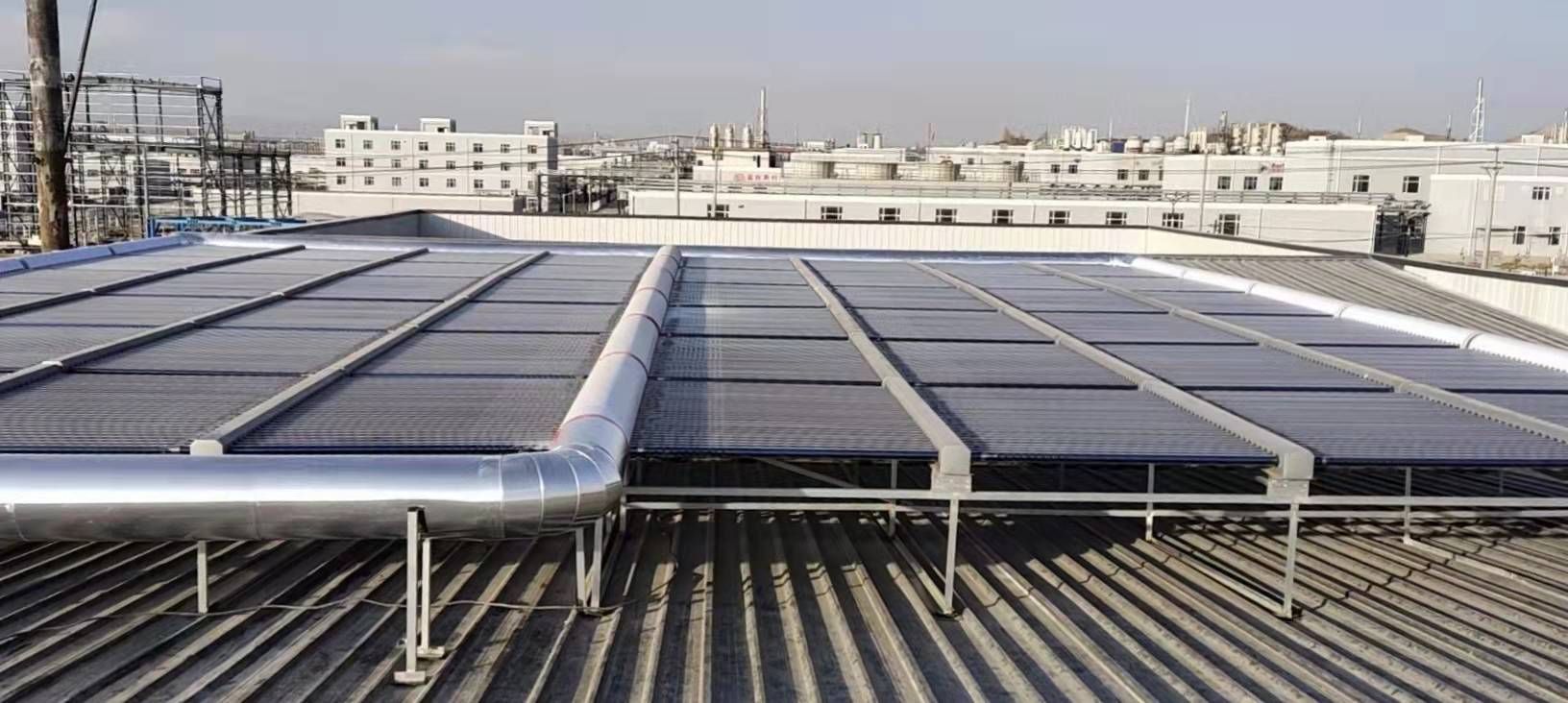
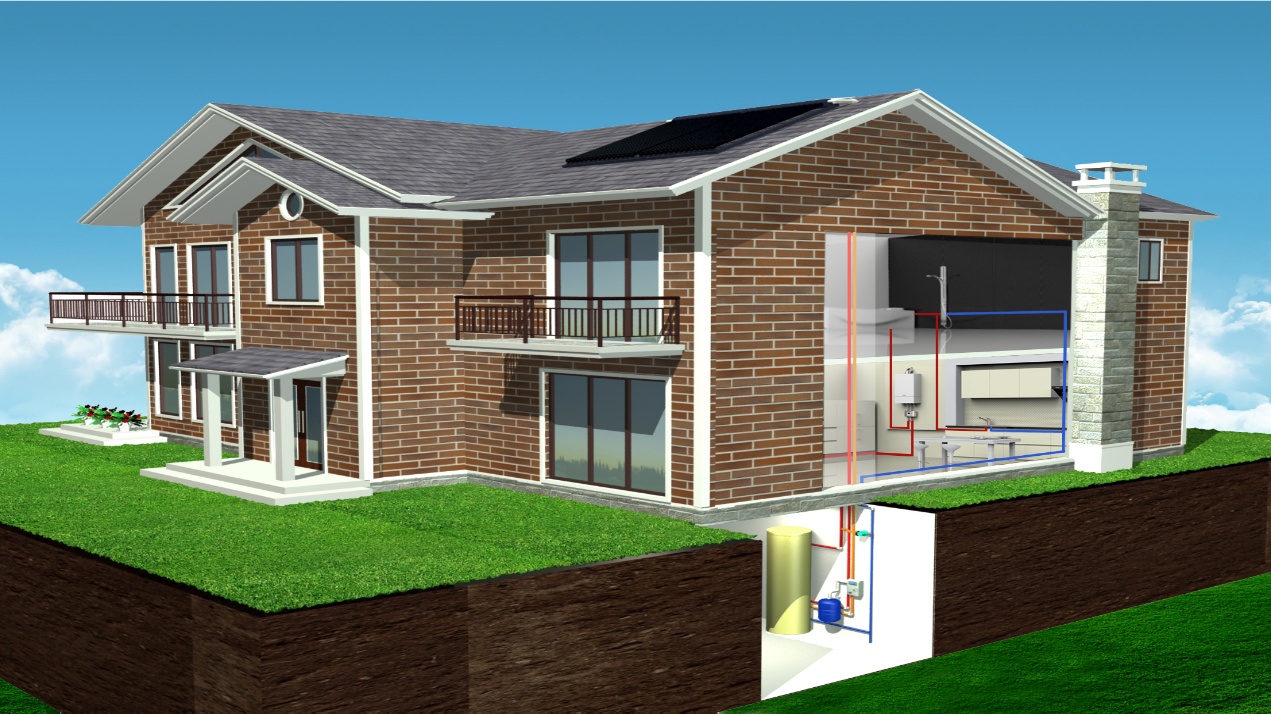
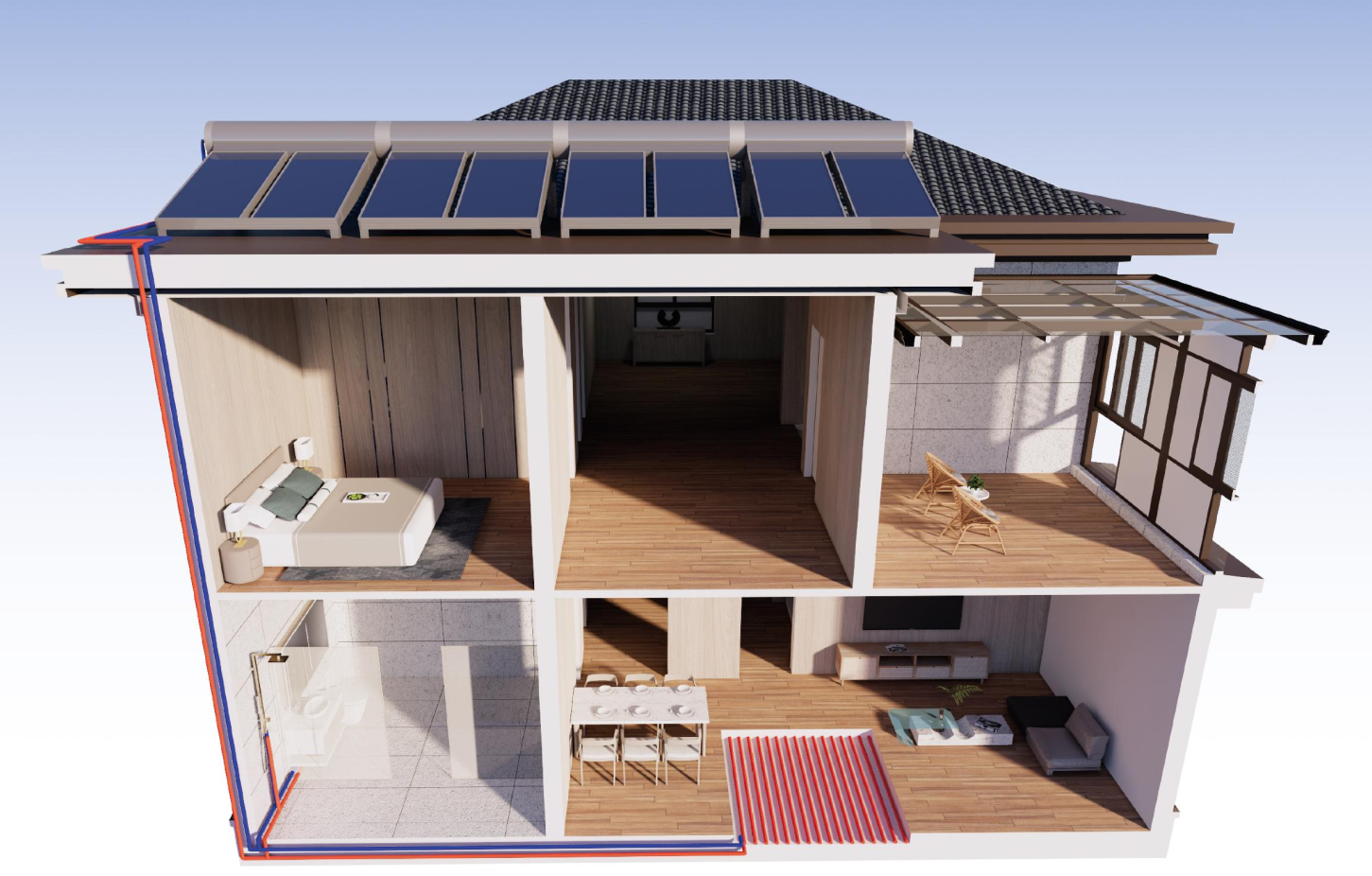
In commercial terms, forced circulation usually means a split installation layout: collectors on the roof, storage tank indoors or in a plant room, and a controlled loop between them. The SOLETKS flat plate split solar water heater is positioned around this architecture — flexible installation, lower roof load, reduced heat loss, and stronger freeze protection.
How Forced Circulation Works
When Thermosiphon Is the Easier Product to Sell
Thermosiphon is usually the easier sale when the project is small, residential, and price-sensitive.
For a villa, single-family house, or light domestic hot water application, the simplicity of a compact rooftop package is a real advantage. There is no separate pump station to explain, fewer controls to commission, and fewer electrical dependencies. That simplicity often matters more than squeezing out the last bit of thermal performance. The U.S. Department of Energy also notes that passive systems are usually less expensive and may last longer because they avoid pumps and controllers.
Integrated solar water heaters on residential rooftops: multiple mounting angles (0°, 25°, 45°) accommodate villas, flat roofs, and sloped surfaces
Lower First Cost
No pump station, no controller, no expansion tank. The compact package keeps the BOM simple and the landed cost lower — a direct advantage in price-sensitive residential markets.
Fewer Callbacks
Fewer components means fewer points of failure. In markets where after-sales service is thin and spare-parts support limited, this simplicity reduces warranty risk.
Fast Installation
Preassembled core modules streamline on-site work. One crew, one day, one rooftop — no indoor plumbing routing or controller wiring to complicate the job.
But the sale only stays easy if the building actually fits the product.
Where Thermosiphon Starts to Become Hard to Defend
The biggest issue is not theory. It is the building.
A rooftop thermosiphon assembly introduces significant structural and maintenance considerations. For a preliminary weight estimate, 200 L of water contributes roughly 200 kg of water mass and 300 L contributes roughly 300 kg, before adding the tank, collector, frame, piping and applicable environmental design loads. These are water-only mass estimates, not certified SOLETKS product weights. Request the selected manufacturer’s fully filled equipment weight and mounting drawings, then obtain local structural verification.
Roof Structure Is Often the Deciding Factor
If a building’s roof cannot safely support a full water tank plus the collector assembly, the thermosiphon option is off the table regardless of its other advantages. This is especially common with lightweight steel or older flat-roof commercial buildings. Experienced distributors always ask for roof type and load capacity before quoting a rooftop integrated unit.
Published design literature on integrated and compact systems also flags the same pain points: exposed outdoor tanks increase heat loss, building integration is harder, aesthetics can suffer, and the format is less suitable for broader building applications. In frozen regions, compact systems need anti-freezing measures such as draining the pipeline or electric heat tracing.
That means thermosiphon becomes much harder to defend when the project involves:
- Multi-storey buildings with complex layouts
- Long pipe runs between roof and point of use
- Strict facade or aesthetic control requirements
- Difficult roof access for maintenance
- Cold climates with regular freezing temperatures
When Forced Circulation Becomes the Better Business Decision
Forced circulation is rarely the simplest product, but it is often the better project answer.
The split layout separates the collector from the storage tank, which makes installation far more flexible. The collector can stay on the roof while the tank is placed indoors, under the roof, on a balcony, or in a plant room. Research on split solar water heater integration specifically highlights that this format is better suited to villas, multi-storey buildings, high-rise buildings, offices, factories, hotels, hospitals, and schools — because the collector arrangement is more flexible and the system integrates better with the building.
Commercial forced circulation system: flat plate collectors on the hotel roof, storage tanks in the plant room below — split architecture designed for scale
This is also where the sales story becomes stronger for B2B buyers. A hotel, hospital, school, or factory does not buy solar hot water because the system looks simple. It buys because the system fits the load profile, can be controlled, can be maintained, and can scale. That is exactly why the kommersielle solvarmesystem section on the SOLETKS site — and the accompanying commercial sizing guide for hotels and hospitals — are more commercially relevant for project buyers than a generic residential product page.
For commercial-scale projects, the collector choice also matters. Standard residential-sized flat plate collectors may work for small split systems, but hotels, hospitals, and factories with higher thermal loads often require engineering-grade large-format collectors designed for centralized hot water systems, where higher output per unit area, reduced installation complexity, and lower cost per watt become critical.

Performance and Hot-Water Delivery: What the Evidence Shows
A useful comparison must hold the collector, tank, draw schedule, weather and evaluation boundaries as constant as possible. One peer-reviewed experimental paper, First Law Comparison of a Forced-Circulation Solar Water Heating System with an Identical Thermosyphon (Energies, 16(1), 431), compared similar water-heating systems during a short monitored period in spring.
| Reported four-day study indicator | Thermosiphon | Forced circulation |
|---|---|---|
| Solar fraction during trial | 0.48 | 0.62 |
| Calculated system thermal efficiency during trial | 53.3% | 68.2% |
| Additional delivered hot-water heat | Reference | 5.4 kWh thermal over trial |
| Pump electrical consumption | No collector-loop pump | Approximately 0.07 kWh electrical over trial |
How to Read This Study
These are study-specific four-day results, not SOLETKS product test results or typical annual savings. The original paper’s climate, season, loads, instruments and flow conditions determine its applicability. A forced-circulation design may allow more hydraulic control, but that does not prove a fixed performance advantage for every building. Request a matched annual energy assessment for your project.
Freeze Protection and Climate Risk
Climate is one of the clearest dividing lines.
The U.S. Department of Energy states that direct circulation systems work well where freezing is rare, while indirect circulation systems use a non-freezing heat-transfer fluid and are popular in climates prone to freezing. DOE’s heat-transfer-fluid guidance also notes that non-toxic propylene glycol is typically used for freeze protection, and that antifreeze fluids degrade over time and normally need replacement every three to five years.
| Climate | Thermosiphon Suitability | Forced Circulation Suitability | Sales Logic |
|---|---|---|---|
| Tropical / warm | Utmerka | Utmerka | Thermosiphon wins on simplicity + cost |
| Mild temperate | God | Utmerka | Either — depends on building |
| Variable / seasonal freeze | cURL Too many subrequests. | Utmerka | Forced circulation easier to defend |
| Cold / regular freeze | Unsuitable without major mitigation | Good (glycol loop) | Forced circulation required |
Channel Strategy Point: For distributors operating across multiple climate zones, a forced circulation product range with indirect-loop capability covers a wider geography than a thermosiphon-only portfolio. That is a channel strategy point, not just a technical one.
Maintenance Reality: Simple System vs Professional System
Thermosiphon is usually easier to understand and easier to keep running in low-service markets. That is its strongest channel advantage.
Forced circulation, on the other hand, is the professional system. It rewards better installation, better controls, and better maintenance. That is why it fits stronger service channels and more demanding projects. The SOLETKS commercial maintenance guide positions commercial solar hot water systems as long-life assets that depend on consistent care — and that is a much better fit for hotels, hospitals, and other critical-load buildings than a purely “cheap and simple” message.
| Dimension | Thermosiphon | Forced Circulation |
|---|---|---|
| Ease of understanding | High — simple concept, few parts | Moderate — requires technical knowledge |
| Maintenance burden | Low — occasional inspection | Planned — pump, controller, glycol checks |
| Channel fit | Low-service, retail-oriented | Professional, project-oriented |
| Revenue model | Transactional — sell and move on | Relationship — sell, install, maintain |
| System lifespan (well-maintained) | 15–20 years | 20–25 år |
For distributors, this is not just a technical distinction. It is a business model distinction. Thermosiphon is easier to move. Forced circulation is easier to build into an engineering-led project pipeline.
Distributor and EPC Selection Checklist
Choose circulation architecture using actual installed conditions—not a general sales rule that passive is always cheap or active always more efficient.
| Procurement question | What to establish |
|---|---|
| Building and customer | Housing, villa, hotel, hospital, apartment or industrial use; daily and peak loads |
| Roof and plant-room access | Full rooftop assembly mass, orientation, route to storage, clearance and structural approval |
| Climate and water quality | Winter low temperature, freeze protection, hardness, chloride and materials compatibility |
| Hydraulic circulation | Natural circulation geometry versus pump, flow, pressure drop and controls |
| Potable-water pressure | Independent tank/valve rating, water supply and delivery-pressure expectations |
| Service and backup | Installer skill, spare parts, auxiliary heater and maintenance access |
| Actual product scope | Collector + tank + controller/pump + mounting versus complete packaged system |
Consider Thermosiphon
Appropriate passive piping geometry, verified rooftop structure, simple load and acceptable maintenance access.
Consider Forced Circulation
Separate plant-room storage, complex piping, multiple collector banks, programmed control or larger/variable building demand.
Compare actual product models: Integrert solvarmar og Flat Plate Split Solar Water Heater.
Before You Request a Quote: What We Need from You
Correct system selection depends on real project inputs — not assumptions. This is consistent with how commercial solar hot water sizing is handled for serious project inquiries.
Before we recommend thermosiphon or forced circulation, send us:
cURL Too many subrequests.
Residential, hotel, hospital, school, factory, or other — this determines system architecture.
cURL Too many subrequests.
In liters or gallons, or the number of rooms/beds/users if exact volume is unknown.
Climate & Winter Minimum
So we can evaluate freeze risk and solar fraction for your location.
Roof Photos or Layout
To assess structural suitability, orientation, available area, and shading conditions.
Backup Heat Source
Electric, gas, diesel, heat pump, or other — so integration can be planned from the start.
Installation Constraints
Tank location preferences, pipe run distances, facade requirements, and access conditions.
With these inputs, we can tell you which system architecture fits the project, recommend collector area and storage sizing, and provide a quotation-ready configuration.
Distributor RFQ and OEM Order Details
For a first OEM or distributor quote, include target country, specific water-pressure and climate conditions, preferred integrated/split architecture, estimated annual and first-order quantity, proposed branding, available installation team, local compliance documents and required spare parts. Obtain an itemized bill of materials, model-specific datasheets, warranty, packaging and Incoterms before approving the order.
Product routes: Integrated Water Heater · Delt solvarmepumpe · Water Heater Product Range. Use the WhatsApp request below; no form is required.
What to Verify When Selecting SOLETKS as a Supplier
Technical buyers should evaluate manufacturer documentation and project-fit evidence, not general ranking, patent or certification claims without supporting records. Ask SOLETKS to provide the following for the exact quoted model:

SOLETKS website manufacturing image. Photography alone does not establish product certification, ranking or technical performance.
| Supplier evidence | What your purchasing team should review |
|---|---|
| Product TDS | Model, test ratings, tank/collector configuration, pressure and operating limits |
| Manufacturing QA | Current relevant inspection, traceability, factory-test and material records |
| Certification | Model-level certificate where applicable, issuing body, standard edition and validity |
| Engineering support | Load and layout assumptions, pipe and hydraulic design boundaries, system integration documentation |
| Commercial readiness | MOQ, packing, lead-time confirmation, spare parts, service manual and warranty terms |
Use the SOLETKS Solar Water Heater Range to identify a model before requesting a quotation.
Final Answer: Which One Should You Sell?
The Bottom Line
If your channel is residential, price-sensitive, and service-light, thermosiphon is often the faster and easier product to sell.
If your channel is project-driven, climate-sensitive, and expects more engineering discipline, forced circulation is usually the safer long-term product to sell.
The Principle That Matters
Do not sell by collector type alone. Sell by building type, roof condition, service capability, and operating risk.
That is the difference between moving a product and closing the right project.
Ready to Match the Right System to Your Next Project?
Send your building type, estimated daily hot water demand, roof layout, winter minimum temperature, and backup heating preference. We will recommend whether thermosiphon or forced circulation is the better fit — and provide a quotation-ready system configuration.
For Project Buyers
- ✓ System architecture recommendation
- ✓ Collector area & tank sizing
- ✓ Hydraulic design support
- ✓ Quotation-ready configuration
- ✓ ROI & payback analysis
For Distributors & Partners
- ✓ Portfolio planning for your climate zones
- ✓ Technical training & documentation
- ✓ Product line evaluation
- ✓ Channel strategy consultation
- ✓ OEM/ODM capability
Engineering support available for hotels, hospitals, factories, and large-scale residential projects
Frequently Asked Questions
Is thermosiphon cheaper than forced circulation?
Usually yes on first cost, because thermosiphon avoids pumps and controllers and uses a more compact layout. But lower upfront cost does not automatically mean better project value — if the roof load, heat loss, or building layout makes the system a poor fit, the total installed cost and lifetime performance can shift the equation.
Is forced circulation more efficient?
It often can be, especially where controlled flow, better tank placement, and stronger system management matter. In one side-by-side study, forced circulation outperformed thermosyphon over a four-day nonstop test with higher solar fraction (0.62 vs 0.48) and thermal efficiency (68.2% vs 53.3%), though seasonal results can vary.
Which system is better for hotels and hospitals?
Forced circulation is usually the better choice because these buildings have higher and more continuous demand, more complex layouts, and greater need for controllability and maintainability. Split-system design and commercial sizing methodology both point in that direction.
Which system is better for villas and houses?
Thermosiphon is often the simpler fit for straightforward domestic projects in warm climates, especially when low first cost and easy installation matter most. However, in cold regions or where roof load is a concern, a split forced-circulation system may still be preferable even for residential applications.
Does forced circulation need glycol?
Not always. Direct active systems circulate water and work well where freezing is rare. But in colder climates, indirect active systems commonly use a non-freezing heat-transfer fluid — typically non-toxic propylene glycol — for freeze protection. Glycol-based fluids degrade over time and normally need replacement every three to five years.
Can an integrated rooftop system be pressurized?
Yes — some integrated solar water heaters operate under pressure and use pressurized tanks, which means they are not traditional gravity-fed thermosiphon systems even though they share a similar rooftop installation format. When evaluating integrated units, always confirm whether the system uses natural thermosiphon circulation or a pressurized configuration, because this affects performance, freeze behavior, and system compatibility.
Is roof structure a deciding factor when choosing between thermosiphon and forced circulation?
Often, yes. Thermosiphon places a full water tank on the roof, and 300 L of stored water alone has approximately 300 kg of water mass before the tank, collector, mounting and pipework are added. If the roof structure cannot handle that weight safely — which is common with lightweight steel roofs or older flat-roof buildings — forced circulation with an indoor tank becomes the practical choice by default.
What information should a buyer send before asking for a quotation?
At minimum: building type, daily hot water demand (liters or gallons), roof layout or photos, installation constraints, winter minimum temperature, and preferred backup heat source. Those inputs allow a manufacturer to recommend the right system architecture and provide a quotation-ready configuration.