

A coastal solar water heater needs a maintenance plan for the complete installation: collectors, tank, mounting frame, connections, insulation and controls. A stainless-steel tank specification does not describe the condition of every exposed component or establish compatibility with the water entering the system.
Start with three records: the installed equipment schedule, the water-quality report and a set of commissioning photographs. Then use repeat inspections to identify what has changed. Assign each finding to a named person, with a response date and evidence that the issue was resolved.
This guide focuses on maintenance after installation. For initial tank selection, use the separate SUS316L, SUS304 and vitreous-enamel comparison.
Separate atmospheric exposure from internal water conditions
Salt carried by wind reaches external surfaces. The water supply creates a different exposure inside the tank and domestic-water components. A closed collector loop introduces a third fluid whose condition must be assessed separately.
| Exposure path | What belongs in the maintenance record? | What does not prove suitability? |
|---|---|---|
| External marine atmosphere | Salt deposits, coating condition, sheltered damp areas and photographs of frames and fasteners | A stainless inner-tank label |
| Water inside the storage system | Water source, relevant laboratory results and the selected product's written limits | Distance from the shoreline alone |
| Fluid inside a closed solar loop | Fluid identification, supplier test requirements, service history and abnormal operating events | A potable-water test report |
This separation helps avoid the wrong remedy. Washing a collector frame does not correct unsuitable tank water. Changing the tank material does not restore damaged insulation or repair a leaking fitting.
Solahart's thermosiphon owner's manual illustrates why water chemistry and anode selection belong in product-specific maintenance and warranty documentation. Its limits and intervals apply to the listed Solahart systems; they must not be adopted as SOLETKS requirements.
Establish a baseline before corrosion becomes a complaint
Create a short record for each installation rather than relying on a folder of unlabelled photographs.
| Baseline field | Example of useful information |
|---|---|
| Equipment identity | Tank and collector model numbers, serial numbers and commissioning date |
| Materials | Inner tank, outer jacket, frame, fasteners and major fittings as supplied |
| Site exposure | Roof orientation, prevailing marine wind, sheltered areas and visible salt accumulation |
| Water supply | Municipal, well, treated or blended source; report date and sampling location |
| Operating reference | Relevant tank temperatures, loop pressures and backup operation under recorded conditions |
| Maintenance responsibility | Owner contact, service contractor and manufacturer support details |
| Photographic reference | Repeatable views with component labels and dates |
Take photographs before insulation conceals the pipework and before the installation becomes difficult to access. The aim is to make a later comparison possible, not simply to document that equipment was delivered.
Use a component-by-component inspection sheet
The following worksheet is a proposed inspection framework. It does not diagnose corrosion from appearance alone, and it does not authorize an owner to open electrical or pressurized equipment.
| Komponent | Visible finding to record | Follow-up question for the service team |
|---|---|---|
| Collector glazing | Salt film, dirt, cracked glass or persistent internal moisture | Is approved cleaning sufficient, or does the collector need inspection? |
| Frame and anchors | Damaged coating, rust deposits, missing fasteners or movement | Is the protective finish damaged, or has load-bearing capacity been affected? |
| Tank outer jacket and base | Staining, blistering, damp insulation or water collecting beneath the tank | Is the moisture from the jacket, a connection, drainage, condensation or the vessel itself? |
| Exposed pipe joints | Mineral deposits, staining or recurring dampness | Is there an active leak, and is the fitting suitable for the local conditions? |
| Insulation and weather covering | Open seams, wet sections, tears or exposed pipe | Where did moisture enter, and can the underlying pipe be inspected? |
| Controller and cable entries | Damaged seals, visible moisture or repeated faults | Does a qualified technician need to assess ingress and electrical condition? |
| Relief discharge arrangement | Persistent or changed discharge behaviour | What do the model instructions require, and is pressure or temperature control abnormal? |
Owners can record externally visible conditions from safe access points. Roof access, opening enclosures, disturbing insulation around suspected leaks, and working on pressure-containing components belong to the appropriate service personnel. Never obstruct a relief discharge to stop a symptom.
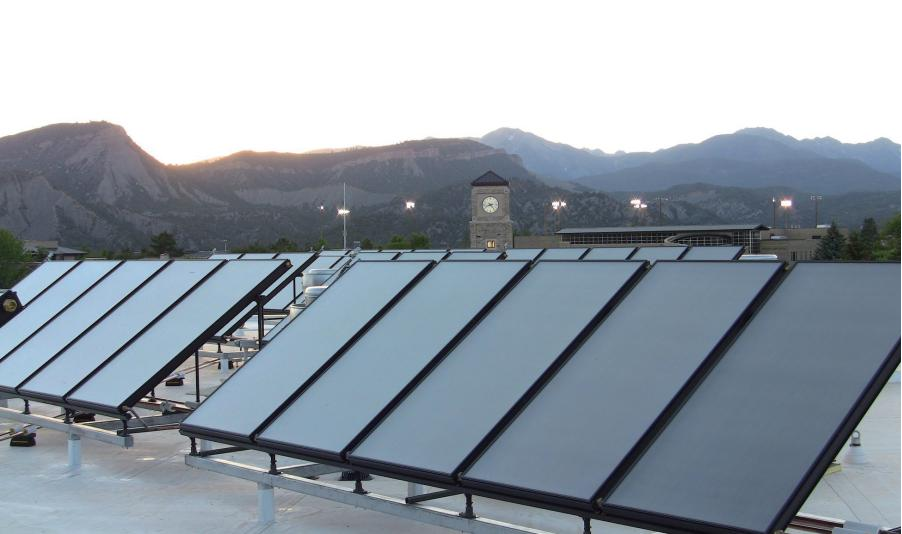
Clean compatible surfaces without damaging their protection
For exposed stainless steel, ASSDA explains that salt deposits and local surface conditions influence tea staining. It recommends appropriate washing and cautions against chloride-containing or abrasive cleaners. Its tea-staining guidance supports removing deposits with suitable mild cleaning products, rinsing and maintaining drainage.
Use that advice only for the compatible stainless surface. Collector glazing, painted jackets, seals and electrical enclosures have their own cleaning instructions. Ask the equipment supplier to approve the cleaning method for each material rather than applying one chemical across the installation.
Solahart's manual also identifies salt spray on collector glass as a maintenance concern and discusses cleaning when collectors are cool. For the installed system, follow its own access and cleaning procedure; do not assume rainfall has cleaned sheltered surfaces.
Record the product used, affected component, date and before/after condition. That makes it possible to see whether deposits recur unusually quickly or a stain persists after cleaning.
Set inspection frequency from actual exposure
There is no single calendar interval suitable for every coastal installation. Use the selected equipment's mandatory maintenance schedule as the starting point. Add earlier observations where exposure or recorded changes justify them.
The event-based plan below supplements that schedule; it does not replace required servicing.
| Event or condition | Proposed response |
|---|---|
| Commissioning | Record equipment, water conditions, baseline photographs and responsible contacts |
| Early operation at a new coastal site | Agree an initial follow-up visit to check whether the planned routine matches actual exposure |
| Heavy salt spray, storm or nearby construction | Arrange a safe visual assessment after conditions allow |
| Recurring deposits before the next planned cleaning | Review cleaning frequency and sheltered locations with the service provider |
| New water source or treatment change | Reassess water compatibility against the tank and component documentation |
| New leak, abnormal discharge, loose support or electrical fault | Escalate promptly under the equipment's service procedure |
| Periodic professional service | Complete the manufacturer-required checks and close outstanding findings |
For a resort or multi-villa development, use one central log but keep records by system. A sheltered installation and an exposed seafront installation may require different attention even when they use the same equipment.
Treat water quality and anodes as model-specific work
Ask the tank supplier which water parameters must be checked and which values affect its warranty. Depending on the product, relevant information may include chloride, pH, conductivity or TDS, hardness, temperature and treatment chemistry. A result is useful only when the units, sampling location and applicable acceptance criteria are clear.
Where a tank uses a sacrificial or powered anode, record its type and the manufacturer's inspection requirements. Do not assume all stainless tanks are anode-free, or that every enamel tank uses the same replacement interval. Inspection access should have been included in the installation layout.
For a closed collector circuit, follow the heat-transfer-fluid supplier's condition-testing requirements. Fluid assessment and potable-water testing answer different questions. The U.S. Department of Energy's solar water-heating technology assessment identifies scaling, pumps, tanks, controls and antifreeze-fluid condition as maintenance considerations; its historical service-life examples are not used here as replacement schedules.
Distinguish a visible stain from a service decision
ASSDA describes tea staining as a surface appearance issue. That does not make every brown mark harmless: another component may be corroding, a connection may be leaking, or a deposit may conceal deeper damage.
Use a record-and-assess process:
- Identify the exact component and its material, where known.
- Photograph the mark and note whether the area is damp or changing.
- Compare it with the previous inspection.
- Ask the service provider to classify the finding and specify the response.
- Reinspect after the corrective work and record the outcome.
For example, repeated staining below one tank connection should be logged as a recurring local finding. Repeatedly cleaning the jacket without establishing the moisture source leaves the underlying question unanswered.
Frequently asked questions
Does SUS316L mean the system is maintenance-free?
No. It identifies a material option, not a maintenance plan for the full installation. External parts, seals, controls, fluid conditions and any model-specific protective components still require the prescribed attention.
Can a coastal solar water heater use seawater?
A coastal location does not establish seawater suitability. Obtain explicit approval for the actual fluid and operating conditions; a stainless material label alone is insufficient.
How often should salt be washed off?
Follow the equipment's instructions, then adjust the agreed routine to observed exposure. Record how quickly deposits return, particularly in sheltered locations. There is no universal coastal washing interval.
Should a brown stain trigger tank replacement?
Not automatically. Establish the source and condition of the affected component first. A cosmetic mark, fitting leak and pressure-vessel defect require different responses.
Request a coastal maintenance review
Kontakt SOLETKS with the equipment model, site photographs, installation date, water-source information, latest relevant water report and any recurring symptoms.
Ask for a written component inspection scope, approved cleaning instructions, applicable water-quality limits and the required maintenance records. For larger facilities, connect this coastal worksheet to the existing commercial solar thermal O&M plan.
References
- ASSDA — Tea Staining: exterior stainless-steel surface condition and cleaning principles.
- Solahart — Thermosiphon Owner's Manual, December 2024: manufacturer-specific collector care, water chemistry and anode requirements; not SOLETKS warranty terms.
- U.S. Department of Energy — Solar Water Heating Technology Assessment: general solar water-heating maintenance considerations.
- SOLETKS — Coastal Tank Material Decision Matrix: related initial-selection guide.